1 October 2025
Alumnus Brijesh Soni’s Research Journey from Ahmedabad to Ohio State University
Spectrum occupancy in licensed bands is a serious challenge. Traditionally, the government assigned a specific, fixed channel to each service. Though reliable, research studies have shown that such occupancy is very low.
With more devices connecting to the internet, the idea is to allow the unlicensed users to opportunistically access the spectrum of licensed bands, which are under occupied. The solution lies at the intersection of machine learning, wireless systems, and communication theory addressed through Dynamic Spectrum Access (DSA). This approach makes wireless communication more efficient and flexible, improving the conventional, rigid system.
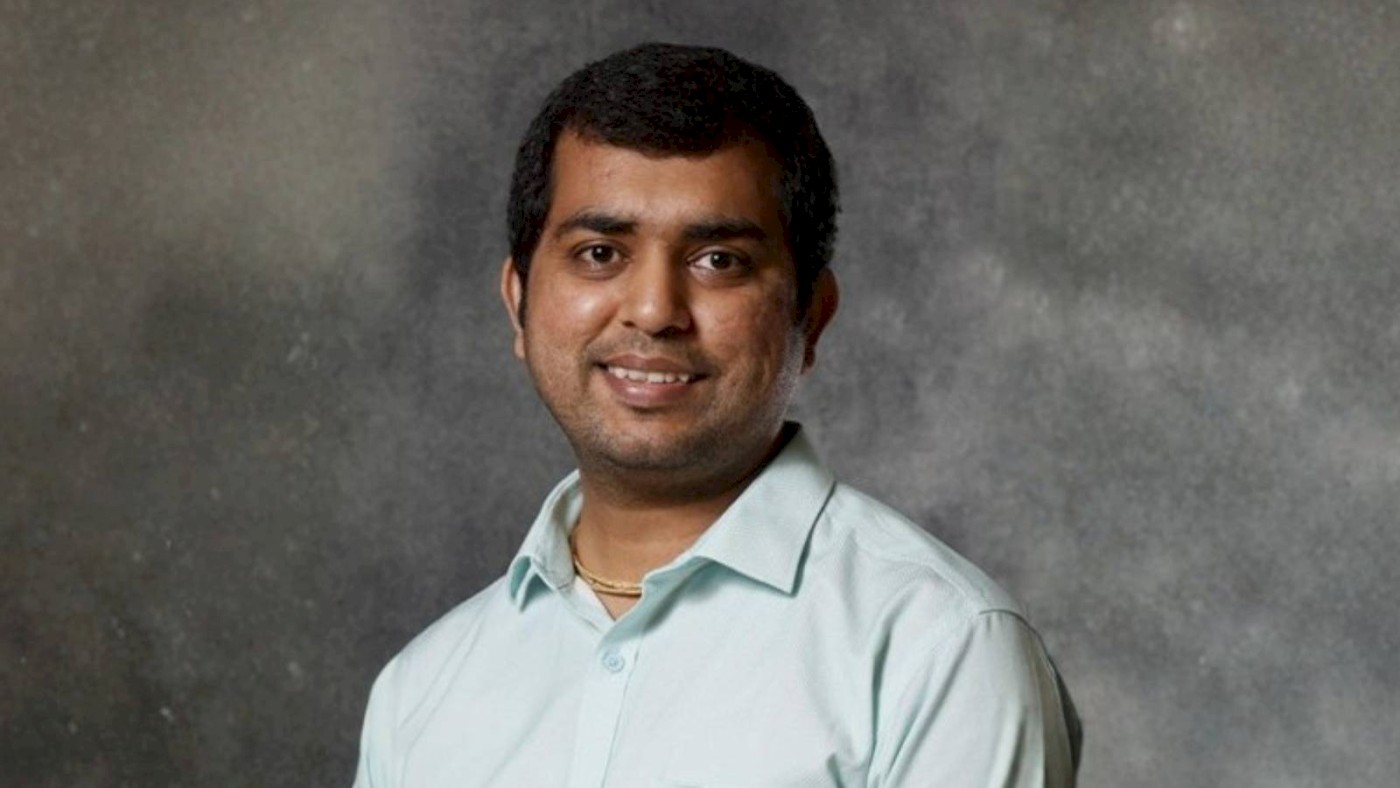
By reimagining this challenge through the lens of machine learning, our alumnus Brijesh Soni, a PhD scholar from Ahmedabad University and now an Assistant Professor at Ohio State University, explored how data-driven approaches could recast spectrum management, making wireless networks more adaptive, efficient, and future-ready. He studied how machine learning could extract patterns of licensed user activity from real-world wireless datasets. Unlike earlier research that relied on theoretical models often disconnected from practice, his approach was data-driven.
“Ahmedabad University is where I began my actual research journey and it has been incredibly enriching,” said Professor Soni. “The academic environment was highly encouraging, with the freedom to explore ideas, pursue interdisciplinary work, and experience international exposure, all of which are essential ingredients for becoming an impactful researcher. I am very grateful to my PhD advisor, Professor Dhaval Patel, for his mentorship and support. I had significant freedom in deciding how I wanted to approach my research, while still maintaining strong academic rigour.”
During his doctoral work, Professor used deep learning techniques to learn activity patterns from empirical datasets and applied them to enhance the detection accuracy of idle channels. By learning the behaviours of primary users, such as idle and busy periods, he showed how spectrum sensing could become more robust, improving performance.
This exploration shaped his postdoctoral research at Boston College, where he worked on machine learning-based band-switching mechanisms in multiband networks for 5G and beyond. With sub-6 GHz frequencies already congested, the future of wireless technology depends on systems that combine multiple frequency bands, from mmWave to Terahertz. However, these high-frequency bands consume far more power at the device level.
Professor Soni’s postdoctoral work developed an optimisation framework to minimise power use while sustaining high data rates, employing machine learning to make intelligent band-switching decisions. This contribution aligned with global trends, wherein organisations have formally included AI/ML integration in their latest releases for cellular networks. “I am thankful and grateful to my Postdoc mentor, Professor Siddhartan Govindasamy, for all his support and guidance.”
Looking ahead, Professor Soni sees even greater possibilities. “In my opinion, Non-Terrestrial Networks (NTNs) hold tremendous potential for significant societal impact in the coming decade to achieve truly last-mile connectivity across the globe. By enabling access in remote or underserved regions, NTNs can bridge the digital divide, making information, education, healthcare, and financial services more equitable and universally available. The integration of NTNs with emerging technologies like 5G/6G, edge intelligence, and low-Earth orbit (LEO) satellite constellations is particularly exciting, as it paves the way for a truly connected world.”
Today, Professor Soni has taken his study to another level at the Ohio State University (OSU). There, he works on the blockage prediction at high frequency systems. He is also exploring large language models (LLMs), the foundation of generative AI systems like ChatGPT, for network-related downstream tasks. Building on the foundation laid during his doctoral studies, this expertise is also enabling him to contribute to workforce development initiatives, such as designing an online certification course in at the 5G-OH Broadband Connectivity Center at OSU, aimed at training the next generation of professionals in wireless broadband and intelligent network systems.
Reflecting on his journey, Professor Soni said, “Looking back, I can clearly see how these experiences, though geographically and culturally distinct, have perfectly aligned to shape my career. At Ahmedabad University, its emphasis on academic rigour, interdisciplinary research, mentorship, and global exposure equips scholars to thrive in any part of the world. I am a testament to this fact."