




Why do some new ventures attract investors while others, with seemingly similar ideas, struggle to get their attention? What makes an investor trust a founder who has little or no track record? And what happens to entrepreneurs when the venture they have invested so much of themselves in begins to fail?
These questions drive the research of Sumit Jaiswal, Assistant Professor at Amrut Mody School of Management, Ahmedabad University.
He came to entrepreneurship by an unconventional route: from working as an engineer at Larsen & Toubro to co-founding a food venture and subsequently working with rural women entrepreneurs. These experiences left him with a recurring question: why do some ventures survive and grow while others struggle and eventually fail?
One strand of his research examines how investors evaluate early-stage ventures. When a young company has little business history, investors must make judgements with limited information. His research on Indian startups explores how founding teams' educational backgrounds, particularly degrees from prestigious engineering and management institutions, shape investors' perceptions of a venture's legitimacy. Such credentials can help investors make sense of an otherwise uncertain proposition. Investors, however, are not all alike. Their own backgrounds, including gender, education and entrepreneurial experience, influence how they interpret the same signals. For Professor Jaiswal, the interesting question is not simply whether prestigious degrees matter, but how and why investors arrive at their judgements.
He also studies what happens when ventures do not survive. Drawing on interviews with entrepreneurs who have shut down their businesses, his research examines entrepreneurial failure as a process rather than a single event. It explores how founders' relationship with their ventures evolves as they move from trying to keep the business alive to confronting the personal and professional implications of its eventual closure.
His work also reaches beyond venture-backed startups, which represent only a small part of India's entrepreneurial landscape. He looks at entrepreneurs who often remain on the margins of mainstream conversations about entrepreneurship, including those with disabilities. Their experiences show how social structures and institutions can open or close entrepreneurial opportunities.
These interests also inform his views on what makes a business successful. Professor Jaiswal is cautious about equating entrepreneurship with rapid growth or large funding rounds. "The focus should be on the sustainability of the business; it shouldn't only be on scale," he says. He has encountered entrepreneurs who have built profitable businesses without raising equity or taking on debt. For him, these are important reminders that there is more than one way to build a successful venture.
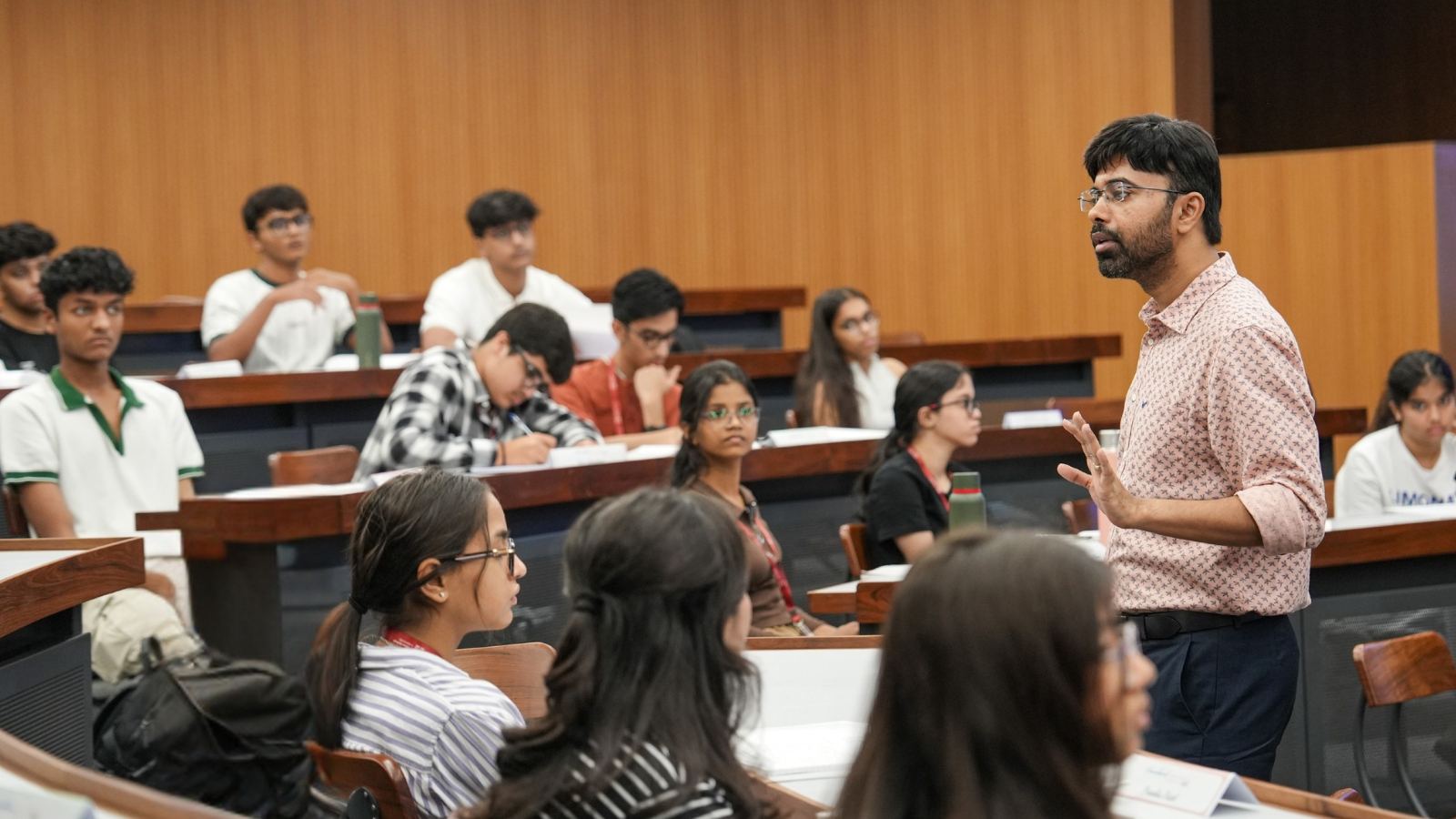
The same habit of looking beyond the obvious shapes his classroom. In one exercise, students walk around the university campus in silence, observing their surroundings without immediately jumping to conclusions. They then discuss what they noticed and the problems or opportunities that might lie beneath the surface. The exercise encourages observation, questioning assumptions, and independent thinking. At a time when artificial intelligence is changing how we access information, Professor Jaiswal believes that critical thinking, creativity, and an understanding of human experience will become even more important.
Across his research and teaching runs a common thread: looking at entrepreneurship beyond its visible successes, at the realities of building and sustaining a venture.
Students and researchers interested in his work can reach Professor Sumit Jaiswal through the faculty page at Ahmedabad University.