


• About Ahmedabad
  • Stepwell
  • Student Affairs
  • Alumni and Advancement
  • Collaborate With Us
  • Media
  • Academics
    • Schools & Centres
      • Amrut Mody School of Management
      • Bagchi School of Public Health
      • School of Arts and Sciences
      • School of Engineering and Applied Science
      • Undergraduate College
      • Graduate School
      • Ahmedabad Design Lab
      • Centre for Heritage Management
      • Centre for Learning Futures
      • Global Centre for Environment and Energy
      • International Centre for Space and Cosmology
      • Sahyog: Centre for Promoting Health
      • Stepwell Centre for Asian Futures
      • The Climate Institute
      • The Institute of Manufacturing and Economy
      • VentureStudio
    • Programmes
      • Undergraduate Programmes
      • Graduate Programmes
        • Masters Programmes
        • Doctoral Programmes
      • Continuing & Executive Education
    • Learning Initiatives
    • Libraries
    • Interdisciplinary Learning
    • Academic Calendar
  • Admission
    • Undergraduate Admission
    • Graduate Admission
      • Masters Admission
      • Doctoral Admission
    • Fees & Financial Aid
  • Faculty
    • Amrut Mody School of Management
    • Bagchi School of Public Health
    • School of Arts and Sciences
    • School of Engineering and Applied Science
    • Centre for Heritage Management
    • Centre for Learning Futures
    • Global Centre for Environment and Energy
    • International Centre for Space and Cosmology
    • Stepwell Centre for Asian Futures
    • The Institute of Manufacturing and Economy
    • VentureStudio
  • Research
  • About Ahmedabad
  • Stepwell
  • Office of the Dean of Students
  • Alumni and Advancement
  • Collaborate With Us
  • Media
  • Academics
    Schools & Centres Programmes Learning Initiatives Libraries Interdisciplinary Learning Academic Calendar
  • Admission
    Undergraduate Admission Graduate Admission Doctoral Admission Fees & Financial Aid
  • Faculty
  • Research

Blog Detail Page

Featured

  • Careers After Heritage Management: Beyond Conservation to Climate, Policy, and Sustainability

    By Aditya Ghosh September 29, 2026
  • Learning by Doing, Decoded: What FIELD Project is Really Teaching You

    September 23, 2026
  • How Passion and Perseverance Led Nishra Shah to KUDO Gold

    By Nishra Shah September 16, 2026
  • Beyond the Classroom: How Route Camp Reshaped My MBA Experience

    By Neel Patel September 10, 2026
  • My MBA Journey at AMSOM: Learning Beyond the Classroom

    By Harihara Manisree Ikkurthi September 09, 2026
  • Two Months In: And the MBA Plot Has Just Begun

    By Drashti Punwani September 08, 2026
  • Real Problems. Real Clients. Real You! FIELD Projects at AMSOM

    By Kunal Pandya September 05, 2026
  • How a Chance Encounter Landed me an Internship with Forbes Marshall

    By Pranav Deora October 27, 2025
  • A Doctoral Programme Graduate’s Journey of Purpose and Impact

    October 13, 2025
  • Key Skills Recruiters Seek in Management Degrees Holders

    October 01, 2025

Categories

  • Ahmedabad Blogs
  • Arts and Humanities
  • Beyond Classrooms
  • Business and Commerce
  • Careers and Employability
  • Engineering
  • Personal Musings
  • Perspective
  • Social Sciences
  • Sciences

A Story of Plants, their Partners, and their Clever Ways

September 25, 2026

Perspective, Sciences

6 minutes read
Jitesh Jhawar

Jitesh Jhawar

1600_x_900_jitesh_jhawar_blog.jpg

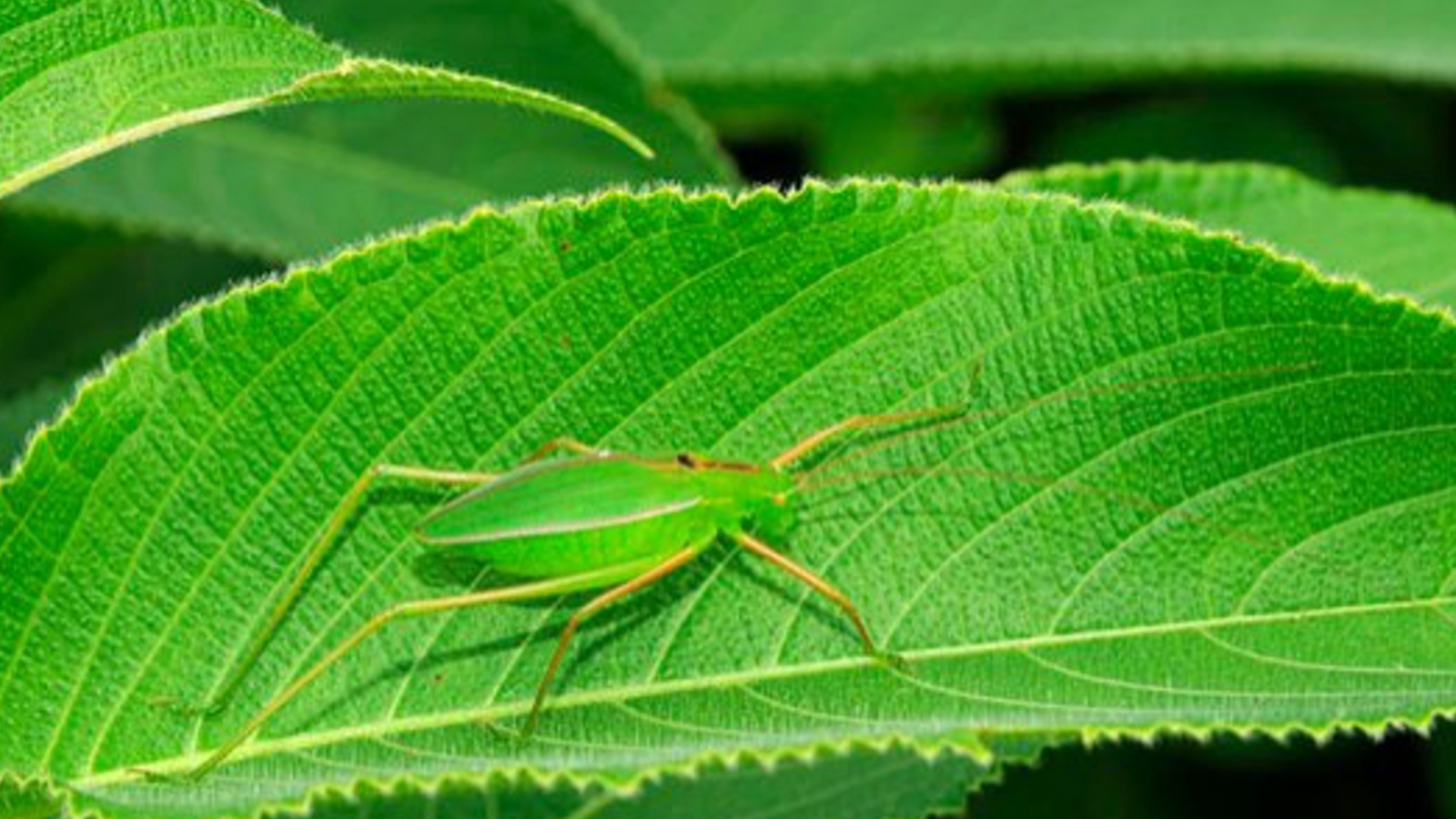
Image credits: Santosh Yadav. The write-up was inspired by a fascinating lecture by Santosh Yadav (Botanist) at a nature event at Ahmedabad University

We often look at plants as still and silent, but the moment we begin to follow their story, they become some of the most inventive organisms around us. They capture sunlight using chlorophyll, an ancient formula that evolved long ago and has remained astonishingly successful ever since. From algae in ponds to trees, grasses, crops, and forests, this same green machinery continues to power life on Earth.

The first plants lived in water. Moving onto land was no simple achievement. They had to find water and minerals, stand upright against gravity, and reproduce in a much drier world. Early prehistoric plants had primitive or “false” roots. Over time, true roots, xylem, and phloem evolved, enabling plants to anchor themselves, absorb minerals, and transport water and food throughout their bodies.

As this long story unfolded, ferns appeared, followed by gymnosperms such as Cycas, the familiar “living fossil” that gives us a glimpse of a much older world. The layered arrangement of a cone can, in a broad sense, be seen as part of the long evolutionary story that eventually led to the extraordinary diversity of structures we see in flowering plants, including flowers and petals.

With flowers came new possibilities for reproduction. Pollination then turns into a remarkable courier service. In the beginning, plants relied largely on wind and water to move pollen. Over time, many plants evolved a more precise and inventive approach: they recruited insects, birds, and other animals as couriers.

Sometimes they offer nectar or shelter. Sometimes they use scent, colour, and elaborate architecture. And sometimes they resort to deception. Orchids that mimic bees are a wonderful example. They imitate their intended visitors so closely that pollen is carried onward from one flower to another. Plants, it seems, can commit all sorts of “crimes” in the service of pollination.

Yet transferring pollen between blossoms captures merely a fraction of this journey. To ensure survival, plant life developed resourceful strategies for safeguarding and scattering its offspring across the landscape. Seeds are equally full of strategy. Some pods are covered in itchy hairs; some seeds are poisonous; others are wrapped in hard protective coverings.

Rice and wheat have chosen a particularly successful path. We may think that we cultivate them because we eat their seeds, but in another sense, they have made us their caretakers. We plant them, water them, protect them, harvest them, and carry them across the world. Their evolutionary success is tied to our labour.

Grasses, with their shorter life cycles, have many more opportunities to change and adapt across generations. This helps explain their extraordinary success in so many landscapes, from grasslands to farms. Their story is a reminder that speed, resilience, and adaptability can be as powerful as size or longevity.

Yet plants do not simply adapt to their environments individually. They also interact with the organisms around them. Imagine a troop of Hanuman langurs descending on a forest patch, stripping leaves and feeding intensely before moving far away. The plants left behind are not simply silent victims.

An attack can trigger warning signals: through airborne chemicals and connections with fungi around their roots, nearby plants may receive an early alert and prepare their own defences. What appears above ground as a troop moving through the forest may, below ground, set off a quiet support network among plants.

And then there is the fig tree and its tiny fig wasp—one of nature’s most astonishing relationships. A large fig tree may tower over an entire landscape, yet its hidden flowers are timed and structured for a particular, minute wasp. The wasp finds its way into the fig through a narrow opening, pollinates the flowers within, and lays its eggs; in return, the fig gives the wasp a place for its young to develop. Each fig species is often linked to its own specialised wasp.

It is remarkable how a massive tree and a tiny insect can be so finely attuned to each other, forming a partnership that sustains an entire forest ecosystem through continuous, year-round fruiting.

Seen together, these stories change the way we might think about plants. They are not a passive background to the world of animals. They are engineers of habitats, masters of chemical defence, clever recruiters of pollinators, and active participants in underground and above-ground networks.

Their story is one of resilience, collaboration, competition, deception, and an extraordinary ability to make the rest of life work around them.


Author's Profile


Jitesh Jhawar

Jitesh Jhawar serves as an Assistant Professor at the School of Arts and Sciences, Ahmedabad University, and holds a PhD from the Indian Institute of Science, Bengaluru.

Professor Jhawar’s research focuses on understanding group dynamics and underlying mechanisms that also fall under self organisation in biological systems. His research is driven by fundamental proximal questions on animal behaviour while they are in groups. Therefore, he is interested in asking these questions in different systems – birds, ants, fish, etc. His research is also highly interdisciplinary as he uses techniques like computer vision, motion detection, and machine-learning based techniques for data collection from videos of animal groups. He is setting up a new laboratory and would like to explore different systems out in the field in natural and semi-natural habitats to understand collective behaviour and the underlying mechanisms right where they have evolved. He completed his PhD at the Indian Institute of Science, Bengaluru (2019) where he studied schooling dynamics in fish and found an interesting mechanism of schooling based on simple pairwise interactions (Jhawar et. al., Nature Physics, 2020). He used data-driven models and computer simulations to infer such mechanisms. After completing his PhD, he moved to Max Planck Institute of Animal Behaviour and the University of Konstanz, Konstanz, Germany, for postdoctoral work where he worked on understanding the role of heterogeneity among individuals in collective dynamics. He also authored several grant proposals and won the prestigious Alexander von Humboldt Postdoctoral Fellowship.

Tags:

Share this article:


Photo Gallery

Ahmedabad University

Navrangpura, Ahmedabad 380009
Gujarat, India

info@ahduni.edu.in
+91.79.61911000/200/201

  • About Ahmedabad
  • Our Purpose
  • University Leadership
  • Board of Management
  • Board of Governors
  • Schools & Centres
  • Research
  • Programmes
  • Admission
  • Tenders and Vendors
  • Resources
  • Careers
  • Accreditations and Compliance
  • IQAC
  • NIRF
  • Campus Visit
  • Contact
  • Privacy Policy

Auris

SUBSCRIBE TO OUR NEWSLETTER

COPYRIGHT AHMEDABAD UNIVERSITY 2026

CONNECT WITH US

Download Brochure

Please enter information in the form below. The download will start automatically on submission of the form.

Download Brochure

Please enter information in the form below. The download will start automatically on submission of the form.