
Tuesday
24
February 2026
11:00 AM - 12:30 PM IST
Location
Room 209, School of Arts and Sciences
Central Campus
Share
Why Single Genes Still Matter: Building Crop Innovation in the Age of Omics
Arts and Sciences Research Seminar Series
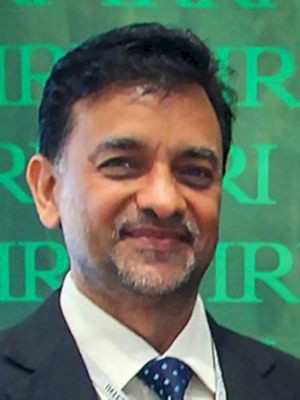
Ajay Kohli
Former Interim Director General
International Rice Research Institute, Philippines
Speaker
Over the last two decades it has become clear that drought tolerance in rice is most gainfully addressed by looking for yield under drought. This paradigm change led to the discovery of many large-effect QTLs for yield under drought. Further genic characterisation of one of such QTL demonstrated the multi-gene nature of the QTL as opposed to a QTL effect being pinned down, after fine-mapping, to a single causative gene. One of the genes in the QTL is highly pertinent to nitrogen use efficiency in plants and holds the promise of reducing nitrogen fertiliser application in rice and other crops. Another gene which codes for a multifunctional protein carrying out three different enzyme activities, and the work on which started nearly 15 years back, has recently been characterised to affect rice grain starch structure. The seminar will present data on these two gene functions but more importantly it will look at the future research prospects raised by the results for innovative crop improvements through molecular tools and technologies.
Speaker
Ajay Kohli
Dr Ajay Kohli is a plant molecular biologist and research leader with over 35 years of experience in discovery science and applied agricultural research. His work has focused on crop improvement, climate resilience, and sustainable food systems. He previously served as Deputy Director General – Research at the International Rice Research Institute (IRRI), including a nine-month term as Interim Director General, where he helped guide institute-wide research strategy and strengthen links between basic and applied science.
Dr Kohli has extensive international experience across Asia, Europe, Africa, and the United States. He is an alumnus of IIT Kharagpur and completed his PhD at the John Innes Centre, Norwich, UK. His research has primarily examined abiotic stress in crops—especially drought tolerance in rice—and more recently nutrient dynamics and nitrogen use efficiency. His career has included academic appointments at the University of Newcastle upon Tyne, UK, and research roles at institutions such as the Indian Institute of Science, Jawaharlal Nehru University, and ICGEB New Delhi. He has also contributed to research in human genomics, including early work related to gene regulation in beta-thalassemia.
He is a Fellow of the National Academy of Agricultural Sciences, India, serves on the Scientific Advisory Board of the Ignite Life Science Foundation, and was awarded the Vietnam President’s Friendship Medal in recognition of his contributions to agricultural science collaboration. Dr Kohli has authored nearly 120 peer-reviewed publications and has served in editorial roles for journals including Plant Molecular Biology, Food Security, and Frontiers in Plant Science.
In today’s seminar, Dr Kohli will discuss how characterisation of individual gene functions can inform crop improvement, with examples from research on rice grain starch modification and nitrogen use efficiency.


