
Wednesday
08
April 2026
4:30 PM IST
Location
Room 318, School of Arts and Sciences
Central Campus
Share
Timely Control of Autophagy in Humans: Identification of Rate-Limiting Steps and Acceleration Nodes
Arts and Sciences Research Seminar Series
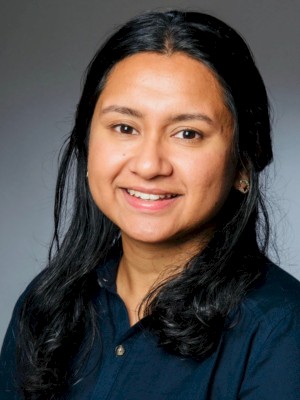
Anoshi Patel
Postdoctoral Associate
Max-Planck Institute for Multidisplinary Sciences
Speaker
Autophagy is a conserved process of regulated degradation in eukaryotic cells. Initiation of autophagy is marked by the prompt convergence of ‘ATG’ initiation proteins in spatially defined autophagic hubs. To understand the initiation cascade in detail, in vitro reconstitution of key autophagy complexes was performed. A small protein named ATG101 is essential for initiating autophagy in mammalian cells, but its function was unknown. To elucidate the function of ATG101, recombinant ATG101 was purified from insect cells. Its interaction kinetics with other ATG proteins were monitored using a fluorescence polarisation-based assay. Extremely slow interaction rates were observed. Finally, a combination of biophysical techniques, cross-linking mass spectrometry, and structure prediction methods identified a previously unidentified dimerisation step in the autophagy initiation cascade. This dimerisation, in turn, led to acceleration of the slow interactions, providing a way to dictate the assembly rate of autophagy initiation.
Speaker
Anoshi Patel
Originally from Ahmedabad, India, Anoshi Patel did her Bachelor’s in Biochemistry at St. Xavier’s College, Ahmedabad. She then went on to pursue a Master’s from Germany at the University of Göttingen. Her Master’s thesis was on ribosomal frameshifting in slippery mRNA, using single-molecule FRET and TIRF microscopy.
She further got the opportunity to pursue a doctorate at the Max-Planck-Institute for Multidisciplinary Sciences in the department of Biochemistry of Signal Dynamics. There, with in vitro reconstitution using human proteins purified form insect cells, she got expertise in different protein biophysical techniques, engineering fold mutants and enzyme kinetics.
She went on to continue her postdoc at the MPI and is now aiming for further steps towards an academic career. Her thesis was titled ‘Identifying rate-limiting steps of autophagy initiation’, which she will talk about today.


