
Wednesday
03
September 2025
2:30 - 4:00 PM IST
Location
Room 202, School of Arts and Sciences
Central Campus
Share
The Enduring Silhouette Of Nationalism?
Arts and Sciences Research Seminar Series
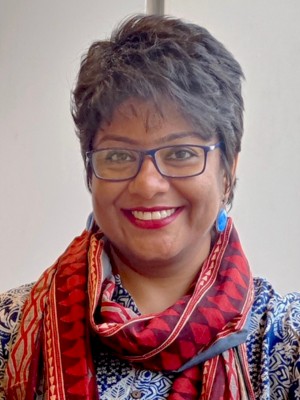
Ranu Roychoudhuri
Associate Professor
School of Arts and Sciences
Speaker
If in the last decades of the 20th century, scholars critically interrogated the idea of nations, nationalisms and nation-states for modern South Asia, current scholarship has further expanded our conceptual and geographical understanding of the region far beyond the territorial boundaries. Concerns of climate change and explorations of not just land based but water based migration of people, communities, and ideas have completely altered our understanding of the region. Yet, does this mean that the conceptual potency of nations and its associated ideas have lost its appeal? Or, has the genealogy of critical questioning of the nation inaugurated, most prominently by subaltern studies collective and postcolonial theorists, nevertheless placed us on a trajectory of reifying a profoundly diffuse, heterogeneous, non-territorial idea of the nation-form. Developed through long-term conversations with colleagues specialising in constitutional history, legal history, and literary history, this presentation interrogates how the analytical frameworks deployed to think about visual culture in modern South Asia have negotiated the category of the nation, even as they sought to underscore its limits.
Speaker
Ranu Roychoudhuri
Ranu Roychoudhuri is Associate Professor in the division of Performing and Visual Arts in the School of Arts and Sciences. She is a historian of modern and contemporary art in South Asia with an emphasis on intellectual histories of art, art historiography, and postcolonial studies, publishing across peer-reviewed journals, edited volumes, and art magazines. Her scholarship, teaching, and curatorial practices emphasize entangled histories of visual aesthetics, photographic techno-materiality, intellectual commitments, and political processes that exemplify cosmopolitan belonging. Earlier this year, Routledge published her co-edited volume titled Documenting Industry: Photography, Aesthetics, and Labor in India (2025).


