
Wednesday
15
April 2026
2:30 - 4:00 PM IST
Location
Room 408, School of Arts and Sciences
Central Campus
Share
Sweet Excess: Crafting Mishti in Bengal
Arts and Sciences Research Seminar Series
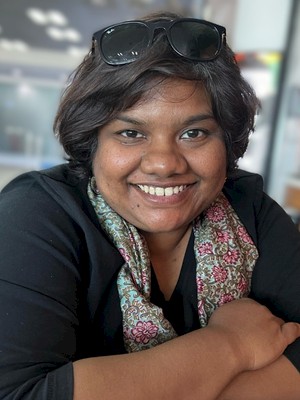
Ishita Dey
Assistant Professor
Department of Sociology Faculty of Social Sciences
South Asian University
Delhi
Speaker
This talk will be based on my recently published ethnographic work Sweet Excess: Crafting Mishti in Bengal (Routledge, 2026). Based on a decade-long field work of a single food substance — sweets — it follows sweet-making in sweetshops, domestic spaces, fairs, festivals and its representation in recipe books to understand how caste, religion, science and law inform the life of a food item with an extremely short shelf life. It shows how food items of conspicuous consumption find a meaning in everyday lives of people through its socio-cultural meanings - ritual, pride of craftsmanship, heritage and cultural identity. It also shows how sweets continue to be a ubiquitous part of ‘Bengali’ diet in a geography that has been witness to acute hunger, starvation, food movements and social welfare programmes to ensure food security. As a multi-sited ethnography on sweetness in diverse settings and its associated meanings in West Bengal and Bangladesh, this book explores everyday workplace hierarchies between artisans that reveal how caste and religion inform the choice of who is hired into this line of work. It also highlights how discourses on food safety and the overpowering presence of World Trade Organization have affected the life of the Bengali mishti.
Speaker
Ishita Dey
Ishita Dey is the author of Sweet Excess: Crafting Mishti in Bengal (Routledge, 2026). She teaches at the Department of Sociology, South Asian University, Delhi. Her areas of interest are smell, food, labour, infrastructure, and migration. She is currently researching food infrastructures in Indian Railways and migrant journeys. Her articles on food and labour have appeared in Critical Collective, Migration Story, and journals such as Contributions to Indian Sociology, Gastronomica, Senses and Society, and South Atlantic Quarterly. She has undertaken several collaborative art research projects and is part of the collaborative project called Gastrofeminism.


