
Wednesday
01
April 2026
2:30 - 4:00 PM IST
Location
Room 408, School of Arts and Sciences
Central Campus
Share
Party Retrenchment and Political Centralisation in India
Arts and Sciences Research Seminar Series
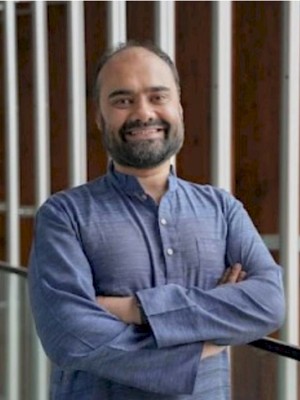
Neelanjan Sircar
Associate Professor
School of Arts and Sciences
Ahmedabad University
Speaker
Successful regional parties like the Bahujan Samaj Party (BSP), Rashtriya Janata Dal (RJD), and Trinamool Congress (TMC) have dramatically different social bases and political histories, yet structurally they look quite similar—ideologically amorphous and centred around leaders and their families. What explains the emergence of this structural form in India’s party system?
To address this question, I introduce a model of “party retrenchment,” in which resource constraints oblige smaller political parties to respond to the factionalism and candidate promiscuity endemic in Indian politics by centralising authority in a dominant leader. Party retrenchment implicitly engenders direct accountability-based linkages between citizens and the leader at the top, instead of between citizens and their local representatives, while minimising political uncertainty due to political defection and factionalism.
To demonstrate the logic of the model, I trace the historical evolution of India’s party system from the era of Congress dominance and ideologically-oriented opposition to a more fragmented, ideologically-inchoate landscape comprised of small, leader-driven parties exhibiting high levels of party retrenchment. I argue that the Emergency was a “critical juncture,” in which an explicitly ideologically inchoate coalition emerged under the banner of the Janata Party. The inevitable fracturing of the Janata Party, combined with changes in the resource environment for parties, generated the conditions for the emergence of leader-driven, regional parties.
Finally, I discuss how the model of party retrenchment can help us understand the role that Prime Minister Narendra Modi plays in Indian politics, as well as its implications for democratic accountability and political representation in India.
Speaker
Neelanjan Sircar
Neelanjan Sircar is an Associate Professor in the School of Arts and Sciences at Ahmedabad University. He was previously a Senior Fellow at the Centre for Policy Research in Delhi. His work has focused on party and electoral behavior, welfare delivery, urbanisation, as well as environmental and health policy. Professor Sircar (with Sanjoy Chakravorty) is a co-editor of the volume Colossus: Anatomy of Delhi (Cambridge University Press, 2021), which seeks to understand the social, spatial, and structural inequalities in the National Capital Region (NCR) of Delhi. His work has appeared in leading academic journals, including Contemporary South Asia, Economic and Political Weekly, Perspectives on Politics, Urbanisation, Proceedings of the National Academy of Sciences, and Environmental Research Letters. He is also a regular contributor to newspapers and television on elections in India.


