
Wednesday
08
April 2026
2:30 to 4:00 PM IST
Location
Room 408, School of Arts and Sciences
Central Campus
Share
Papers in Play: SIR and the Dalit Refugees of Bengal Borderland
Arts and Sciences Research Seminar Series
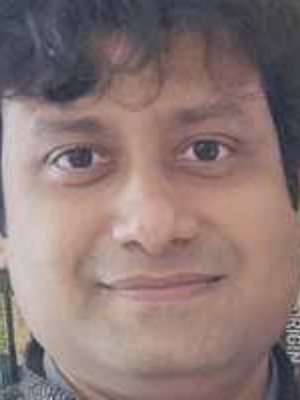
Himadri Chatterjee
Assistant Professor
Department of Political Science
University of Calcutta
Speaker
Since November 2025 the ECI had begun the process of revising electoral rolls before the upcoming assembly elections in multiple states in the country. In West Bengal the process took a quick turn to controversy as the ruling Non-BJP regime of the state has taken a hard turn towards linguistic and ethnic nationalism and perceives the attempts at roll revision as an act of heartland aggression on federal structure and cultural autonomy. The BJP led NDA regime at the centre further exacerbated the war of words by hinting that the state government has been soft on illegal immigration, which, given the status of West Bengal as the pre-eminent border state in eastern India became a sensitive issue culturally, historically and demographically. This paper focuses on settlements of Dalit refugees of Partition and Liberation war period in the border districts of southern West Bengal. The paper argues that the experience of caste and refugeehood has produced a language for negotiating with ever tightening matrices of state identificatory regimes. Socially and legally precarious subjects, like dalit refugees and borderland residents have evolved mechanisms for self-documentation in dialogue with agents of the state. Such marginalised populations have built their own form of bureaucratic logic and argumentation along with local institutions of support.
Speaker
Himadri Chatterjee
Himadri Chatterjee teaches Political Science at the University of Calcutta. His research interests include dalit refugee politics and the intersection between migration and urban development in West Bengal. He completed his doctoral research from Centre for Political Studies, JNU, New Delhi. The title of his PhD was Partitioned Urbanity: Refugee Politics and Planning in Kolkata. He was a member of the South Asia Research Cluster for the major collaborative research initiative on Global Suburbanism anchored at York University. Himadri has served as a writing fellow at the Calcutta Research Group and a visiting candidate at CEMIS, Goettingen. His post-doctoral research, pursued as a fellow at IISER, Mohali, explored the impact of digitisation of land records on rural politics in West bengal. Currently he is engaged in ethnographic fieldwork on dalit refugee politics and interface with emerging identificatory regimes.


