
Thursday
06
November 2025
Location
Room 004, School of Arts and Sciences
Central Campus
Share
Not India’s Ocean: Ideology and Hierarchy in China’s Presence in the Indian Ocean
Asian Futures Dialogue
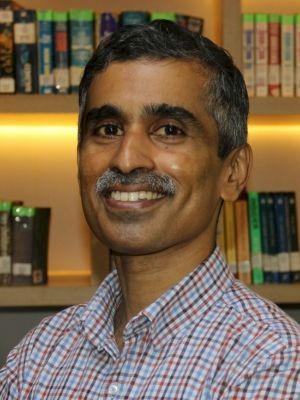
Jabin T. Jacob
Associate Professor, Department of
International Relations and Governance Studies
Director, Centre of Excellence for Himalayan Studies
Shiv Nadar University
Speaker
China is a significant economic player in the Indian Ocean Region, and it is also well on its way to becoming a major security actor. Over a decade since its launch, China’s Belt and Road Initiative has changed the landscape – often, literally – in several Indian Ocean littoral states. But Chinese initiatives are more than about filling infrastructure development gaps in the developing world. They are also about countering dominant Western liberal ideals, undermining them and then entering the resulting vacuum to fill it with a Chinese view of the world. The uniqueness of the Chinese model, however, lies not just in its pursuit of these objectives through frontal attacks on Western values, norms, and interests though these do take place. Rather, it is in the use of Chinese material capacities – infrastructure development, their scale and speed of implementation – to promote an argument of the inefficiency and failure of Western liberalism and democracy. It is this performance – and the resulting narrative – that allows Beijing to exploit tensions between the Global South and the Western developed world over political behaviour and norms, and to encourage local ruling elites to align with its interests. What, however, is the Chinese view of the world? What might Pax Sinica look like? This presentation uses examples from China’s presence in the Indian Ocean Region to argue that a Chinese order, while no less hegemonic than any order it would replace is also going to be different in terms of how it deploys ideology and hierarchy to work around Western (and Indian) presence as well as potential local opposition. And in this difference lies the attractiveness of the ‘China model’ and its ability to win without firing a shot.
Speaker
Jabin T. Jacob
Jabin T. Jacob is Associate Professor, Department of International Relations and Governance Studies, and Director, Centre of Excellence for Himalayan Studies, Shiv Nadar University, Delhi NCR. He was formerly Fellow and Assistant Director at the Institute of Chinese Studies. His research interests include Chinese domestic politics, Sino-Indian border areas, Indian and Chinese worldviews, and centre-province relations in China. Jacob’s latest publications include two co-edited special issues for the China Report on the Communist Party of China’s 100th anniversary (February 2022 and August 2022); two volumes on How China Engages South Asia titled respectively, Themes, Partners and Tools (2023); and In the Open and Behind the Scenes (2025) for the Centre for Social and Economic Progress, New Delhi. Some of his work can be found at https://indiandchina.com/


