
• About Ahmedabad
  • Stepwell
  • Student Affairs
  • Alumni and Advancement
  • Collaborate With Us
  • Media
  • Academics
    • Schools & Centres
      • Amrut Mody School of Management
      • Bagchi School of Public Health
      • School of Arts and Sciences
      • School of Engineering and Applied Science
      • Undergraduate College
      • Graduate School
      • Ahmedabad Design Lab
      • Centre for Heritage Management
      • Centre for Learning Futures
      • Global Centre for Environment and Energy
      • International Centre for Space and Cosmology
      • Sahyog: Centre for Promoting Health
      • Stepwell Centre for Asian Futures
      • The Climate Institute
      • The Institute of Manufacturing and Economy
      • VentureStudio
    • Programmes
      • Undergraduate Programmes
      • Graduate Programmes
        • Masters Programmes
        • Doctoral Programmes
      • Continuing & Executive Education
    • Learning Initiatives
    • Libraries
    • Interdisciplinary Learning
    • Academic Calendar
  • Admission
    • Undergraduate Admission
    • Graduate Admission
      • Masters Admission
      • Doctoral Admission
    • Fees & Financial Aid
  • Faculty
    • Amrut Mody School of Management
    • Bagchi School of Public Health
    • School of Arts and Sciences
    • School of Engineering and Applied Science
    • Centre for Heritage Management
    • Centre for Learning Futures
    • Global Centre for Environment and Energy
    • International Centre for Space and Cosmology
    • Stepwell Centre for Asian Futures
    • The Institute of Manufacturing and Economy
    • VentureStudio
  • Research
  • About Ahmedabad
  • Stepwell
  • Office of the Dean of Students
  • Alumni and Advancement
  • Collaborate With Us
  • Media
  • Academics
    Schools & Centres Programmes Learning Initiatives Libraries Interdisciplinary Learning Academic Calendar
  • Admission
    Undergraduate Admission Graduate Admission Doctoral Admission Fees & Financial Aid
  • Faculty
  • Research

Tuesday

09

April 2024

4 PM IST/ 6:30 EDT
Location

Online Via Zoom

Share

Mòzĭ’s Moral Cosmos

Humanities and Languages Division Seminar Series
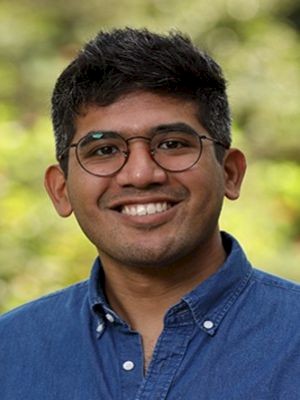
Zachary Joachim | Assistant Professor, Denison University

Zachary Joachim

Assistant Professor
Denison University
Speaker


If “God” (an all-knowing, all-powerful, all-benevolent being) exists, then no “evil” (unjustified suffering) exists; but evil exists; thus, no God exists. So goes the “problem of evil.” However, bad things below the threshold of “evil,” yet also without moral cause—the ‘undeserved pain’ of insomnia, or wet socks, or hangnails—happen too. Indeed, how could any bad ever happen, if there is a God? This is a problem upstream from the problem of evil. Call it the “problem of a moral cosmos”.

In this paper, Professor Zachary Joachim presents Mòzǐ 墨子 (c. 468–376 BCE) as the first to pose the problem of a moral cosmos in East Asian thought. According to Mòzǐ, everything happens for a moral reason: any good is Heaven’s reward, any bad is Heaven’s punishment, and Heaven is “God”. Against prominent interpreters, who (i) fail to distinguish the moral-cosmos problem from the evil-problem, yet (ii) try to show that Mohism can resolve the moral-cosmos problem, Professor Joachim argues that Mohism cannot really resolve it, and that this is good. For by recognising that Mòzǐ’s moral cosmos stands as a problem, we expose something that subsequent Chinese thought—asserting Heaven’s moral ambiguity (Ruism) or even vacuity (Daoism)—is animated by, and characteristically rejects. Professor Joachim thus submits Mòzǐ as the Chinese tradition’s early inoculation against the very idea of God.

Speaker

Zachary Joachim

Dr Zachary Joachim’s areas of research lie in the global history of philosophy: late modern European philosophy (1781– 20th c. CE), which begins in the wake of Kant’s Critique of Pure Reason, and classical East Asian philosophy (6th c. BCE –221 BCE), which ends in the creation of imperial China. His primary interest in these old German and super-old Chinese books is what they have to say about what philosophy even is. In late modern philosophy, his work focuses on interpreting the phenomenological tradition inaugurated by Edmund Husserl, illuminating its connections to both German idealism and analytic philosophy. To that end, he is at work on a few papers on the connection between logic and subjectivity in Husserl, as well as a volume edited with Vicente Muñoz-Reja under contract with Brill, Phenomenology, Ontology, Metaphysics. In classical East Asian philosophy, he is working on a few papers, including one on Nāgārjuna, an Indian philosopher but principal figure for the Mahāyāna school of Buddhism that took over East Asia. One day, he will write a book on Zhuāngzǐ—the most interesting philosopher he has ever read. Dr Joachim teaches, among other courses, Ancient Chinese Philosophy, Phenomenology, Existentialism, and a first-year writing course on the idea of a human life.

Related Events

ETHOS

Chiasma 2022

32nd Annual Convention of the National Academy of Psychology (NAOP)

Ahmedabad University

Navrangpura, Ahmedabad 380009
Gujarat, India

info@ahduni.edu.in
+91.79.61911000/200/201

  • About Ahmedabad
  • Our Purpose
  • University Leadership
  • Board of Management
  • Board of Governors
  • Schools & Centres
  • Research
  • Programmes
  • Admission
  • Tenders and Vendors
  • Resources
  • Careers
  • Accreditations and Compliance
  • IQAC
  • Campus Visit
  • Contact
  • Privacy Policy

Auris

COPYRIGHT AHMEDABAD UNIVERSITY 2026

CONNECT WITH US

Download Brochure

Please enter information in the form below. The download will start automatically on submission of the form.

Download Brochure

Please enter information in the form below. The download will start automatically on submission of the form.