Making Selves, Making Claims through Property, Aspirations, and Affect
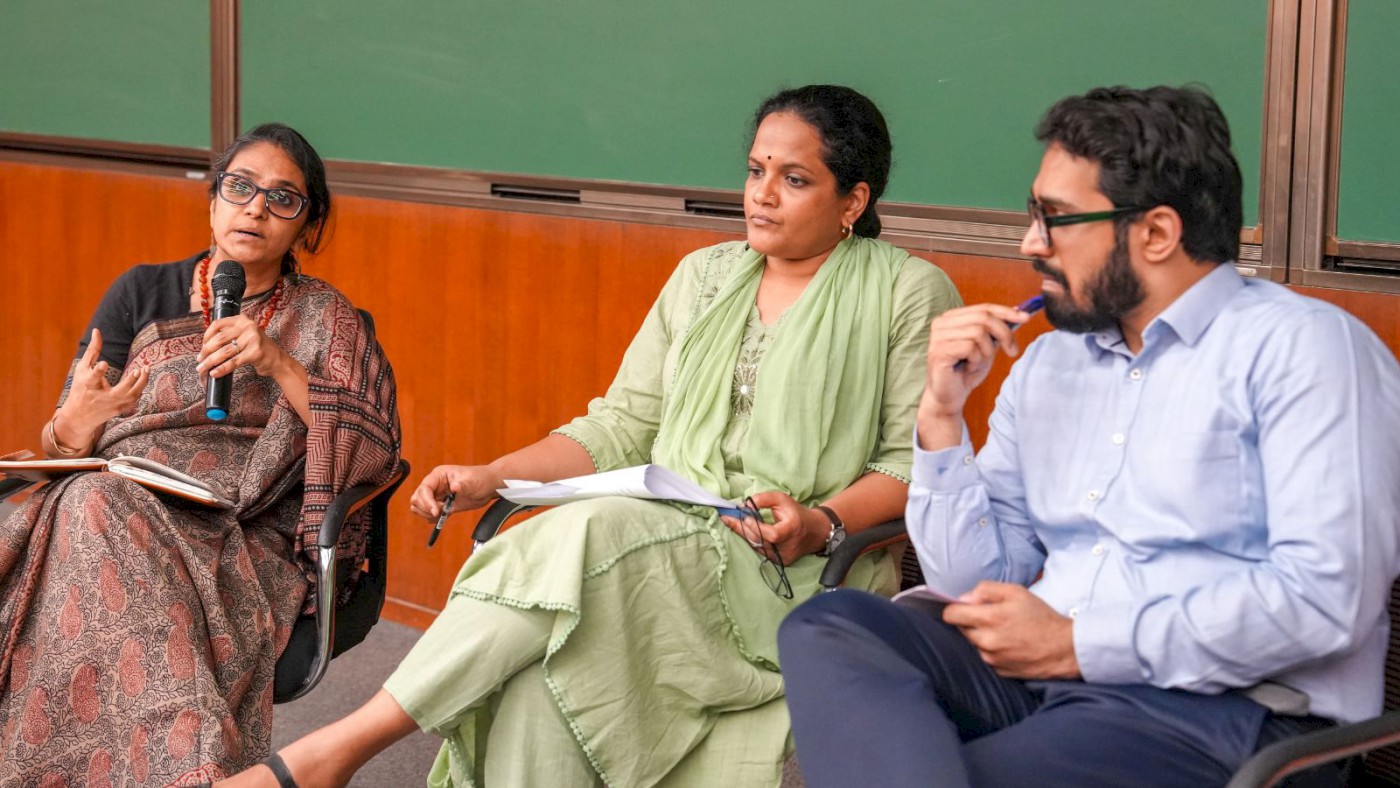
Bringing historical and ethnographic perspectives into conversation, this panel explores how possession, aspiration, and affect shape lives across diverse contexts in India. The papers examine the making of material claims, collective futures, and ethical selves amid colonial disruption, neoliberal urbanisation, and contested indigeneity, revealing how belonging and authority are continuously narrated and enacted in everyday life.
Date: Wednesday, February 11, 2026
Time: 3:00 - 4:30 PM IST
Venue: Room 113, School of Arts and Sciences, Central Campus
Fluid Lands: Possession and Property in the Forest Fringes of Central India
Maya Ratnam, Assistant Professor, School of Arts and Sciences
This paper examines narratives of land ownership and possession in an adivasi or indigenous village in rural central India. Indigeneity-based land and forest claims have been historically fraught issues in India. Legal and activist efforts to settle the rights of forest-dwellers to forest lands frequently invoke the sacrality, ecological uniqueness and inviolability of adivasi territories as spaces removed from the realm of everyday circulations and transactions. This paper attempts to re-situate land and possession claims in the flux of everyday life and rural social relations. In the villages studied, conflicting claims over village and forest lands frequently erupted in disputes over encroachment or ‘atikraman’. Tracking a longstanding atikraman dispute between two neighbouring groups, the paper draws out the idea of property as a form of storytelling wherein maintaining possession becomes a matter of who can more persuasively enact and narrate their claim. Furthermore, narratives of possession encode histories of neighbourly relations of reciprocity, exchange, betrayal and animosity. Juxtaposing the ownership narratives of adivasi villagers with anthropological debates on property and possession, this paper offers a fresh perspective on the adivasi-land question, not in terms of the frequently invoked binary between meaning and materiality, but as the moving ground of social life, tethering individuals and groups to particular lifeworlds and social histories.
Herding Aspirations: Pastoralist Youth, Rockstar Shamans and the 'New Pastoralist Ethic' in urbanising Gujarat
Mona Mehta, Associate Professor and Associate Dean, Arts, School of Arts and Sciences
This paper examines how pastoralist youth, specifically the rabaris of Gujarat, with a history of socio-economic marginalisation, have shifted away from their traditional occupations and attempted to position themselves in the new urban economy. Their ability to operate in the rapidly urbanising landscape of post-liberalisation Gujarat has relied upon crafting a "new pastoralist ethic", which is a shared worldview about the self and community that is closely tied to specific practices of survival in, resistance to, and the embrace of neoliberal urbanisation. Key tenets of this new pastoralist ethic, creatively reinterpret traditional rabari identity, remake community networks, and challenge caste stigma to pursue caste-based assertion and economic aspirations for social mobility. Drawing on ethnographic fieldwork conducted among rabari youth in Ahmedabad, Gandhinagar, and Gandhidham (Kutch), the paper shows how the new pastoralist ethic is crafted across generations, reflected in and produced through everyday narratives of migration to cities, popular folk songs and rockstar shamans, revealing the dynamic idioms of urbanisation in Gujarat.
Affect and Shari’ah: Exploring emotions among the Muslims of Malabar in turbulent colonial settings
Safwan Amir, Assistant Professor, School of Arts and Sciences
Ever since the affective turn in the social sciences, emotions are understood to play a key role in cultivating selves. To think of affect and emotions in the Islamic tradition is tricky because it is the act itself that is evaluated on the basis of the five key rulings (ahkam). And yet intentions, will, feelings are almost always the mainstay of any Islamic principle – whether it relates to etiquettes or rituals. This paper attempts to elaborate on these connections between ahkam and affect by making use of a historical-anthropological lens. It examines shifts in emotions during the colonial period in Malabar to show how it directly impacts the shari’a and the Muslim subject henceforth. ‘Karaha’ and ‘yaqeen’ are two categories that are thought alongside contempt, surprise, and shock among the Muslims of Malabar in these turbulent times. The paper reads theological texts written around the seventeenth and nineteenth centuries alongside colonial archives.