
Wednesday
05
November 2025
3:00 - 4:30 PM IST
Location
Room 202, School of Arts and Sciences
Central Campus
Share
Listening to rāga Goṇḍa: Kingship and Cultural Production in the Borderlands of Early Modern Central India
Arts and Sciences Research Seminar Series
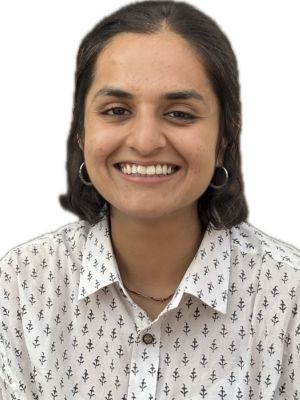
Ayesha Sheth
Assistant Professor
School of Arts and Sciences
Ahmedabad University
Speaker
This paper explores the discourse of kingship in early modern central India through a close study of a musicological text, the Rāgamālā, composed for the Gond king Jāṭava who ruled from his capital at Hariyagarh (modern-day Deogarh, Madhya Pradesh) at the end of the sixteenth century. While postcolonial scholarship has situated the study of indigenous communities within, and as opposed to, the political and intellectual designs of the colonial and modern state, this approach is rarely extended to pre-colonial studies of communities such as the Gonds and the Bhils who were active participants in the political life of the Mughal and Sultanate periods. Indeed, even within Persian court histories of the fifteenth and sixteenth centuries, the densely forested and hilly expanse of central India has been cast as a mere thoroughfare, a rich reserve for war-elephants, and as a wild zone inhabited by individuals that lay beyond the realm of state control. In light of recent scholarship that has illuminated non-court or court-adjacent milieus of cultural and literary production, this paper shall examine the Rāgamālā through the unique spatial and political context of its creation. In doing so, it draws attention to strategies of kingship within the so-called borderlands of early modern empires.
Speaker
Ayesha Sheth
Ayesha Sheth is a historian of early modern South Asia. She specialises in courtly culture and polity formation with a particular focus on music, literature, and comparative knowledge traditions in South Asia and the broader Persianate cosmopolis. She earned her PhD from the Department of South Asia Studies at the University of Pennsylvania. She is currently Assistant Professor at the School of Arts and Sciences, Ahmedabad University, Ahmedabad.


