
Wednesday
28
January 2026
2:30 - 4:00 PM IST
Location
Room 004, School of Arts and Sciences
Central Campus
Share
Lessons in State Capacity from Delhi's Schools
Arts and Sciences Research Seminar Series
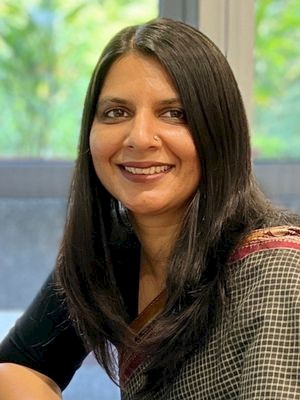
Yamini Aiyar
Senior Visiting Fellow
Saxena Center for Contemporary South Asia and Watson Institute
Brown University
Speaker
The voices of India’s frontline bureaucrats—teachers, health workers, district and block level administrators - charged with delivering a vast array of public services to citizens—are dismissed all too quickly. Public debates generally view them as corrupt, apathetic, incompetent and in urgent need of tighter monitoring and discipling. But is there another way to view their role, and thus reframe approaches to the challenge of building high-performing public sector organisations and improving State capacity in India?
This book draws on an ethnographic study of an ambitious effort to improve the quality of government schools, particularly their ability to equip students with foundational literacy and numeracy skills in the city-state of Delhi, India. This account of Delhi's efforts to reform schools trains its focus on voices at the frontlines of the public school system. In so doing, it captures the complex ways in which bureaucratic hierarchies, processes and belief systems shape state capacity. The culture these create determines not just degrees of state capacity but also how public sector organisations resist, distort and eventually adopt reform ideas and actions aimed at improving performance. Understanding, engaging and empowering the frontlines rather than disciplining them through the power hierarchies of the bureaucratic system lies at the heart of how state capacity is built and sustained.
Speaker
Yamini Aiyar
Yamini Aiyar is currently Senior Visiting Fellow, Saxena Center for Contemporary South Asia and Watson Institute, Brown University, where she is working on a comparison of welfare states in the Global South. Previously, she was President and Chief Executive of the Centre for Policy Research, a leading multidisciplinary think tank in New Delhi, from 2017-2024. Yamini's research spans the fields of contemporary politics, state capacity, welfare policy, federalism and India's political economy. Her latest book, Lessons in State Capacity from Delhi Schools, was published by Oxford University Press in December 2024.


