
Wednesday
17
December 2025
10:00 - 11:00 AM IST
Location
Room 201, School of Arts and Sciences
Central Campus
Share
How Membrane Organisation and Shape of Organelles Regulates Function?
Arts and Sciences Research Seminar Series
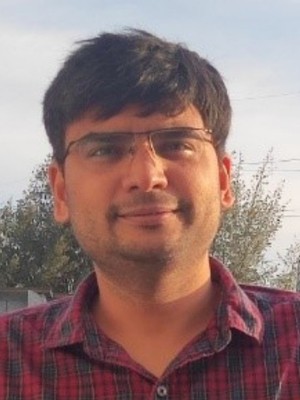
Gaurav Singh
Research Associate
Institute for Stem Cell Science and Regenerative Medicine (InStem)
Speaker
Mitochondria are central to cell function, and their dysfunction contributes to many human diseases. Yet most assays still rely on bulk bioenergetic measurements. I will present my work using new optical tools and imaging approaches to reveal novel regulators of mitochondrial function. In particular, I will discuss how we integrated fluorescence lifetime measurements with customised environment-sensitive probes to discover (1) that cells actively adjust the fluidity of the mitochondrial inner membrane (IMM) in response to changes in respiratory demand. Separately (2), we demonstrated that mitochondria can exhibit vastly different organelle networks independent of respiratory activity, and showed that cellular ROS – as a function of metabolic state - reversibly regulates mitochondrial morphology. These findings place membrane organisation and redox-driven shape transitions at the core of mitochondrial homeostasis. I will discuss how next-generation FLIM approaches can map membrane organisation across organelles and link it to cell physiology in diverse contexts.
Speaker
Gaurav Singh
Gaurav is a Research Associate Fellow at the Institute for Stem Cell Science and Regenerative Medicine (inStem), Bangalore. He earned his PhD in Nanoscale Science at the University of North Carolina at Charlotte, where he developed multi-pulse ultrafast fluorescence spectroscopy to dissect excited-state dynamics in colloidal nanocrystals. Since moving to cell biology, Gaurav has combined advanced fluorescence-lifetime imaging with molecular rotor- based biosensors and biochemical and genetics assays to investigate how mitochondrial membrane organisation regulates respiration and redox signalling. His research lies at the interface of chemistry and biology, and he is particularly interested in engineering next-generation optical tools to tackle fundamental questions in cell biology.


