
Thursday
23
April 2026
11:00 AM - 12:30 PM IST
Location
Room 201, School of Arts and Sciences
Central Campus
Share
Collective Web Building and Prey Capture in the Social Spider Stegodyphus sarasinorum
Arts and Sciences Research Seminar Series
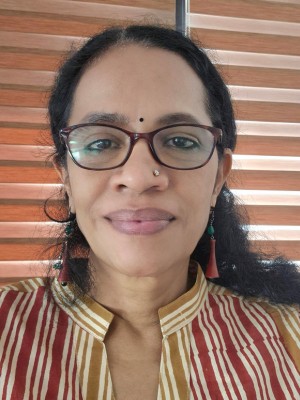
Hema Somanathan
Professor,
IISER Thiruvananthapuram
Speaker
Social spider webs are geometrically heterogeneous, asymmetric structures that function as a costly extended phenotype for prey capture. In Stegodyphus sarasinorum, these collectively built webs comprise dense strands lacking obvious directionality. In contrast to eusocial insects with fixed caste-based division of labour, social spiders exhibit flexible, decentralized task participation, with individuals contributing to both web construction and prey capture.
The vibrational response of webs was quantified using finite element analysis and prey capture behaviour was examined using both live prey and prey-mimicking vibrational stimuli on webs. Image analysis revealed coordinated group movement towards the prey source. Model simulations indicate that prey-induced vibrations propagate with minimal distortion, enabling rapid and reliable localization.
Following prey detection, spiders exhibit near-field task partitioning, with some individuals targeting extremities, others subduing central body regions, and continuous web repair occurring in proximity to the prey. These results suggest that efficient collective prey capture in S. sarasinorum emerges from decentralized coordination mediated by faithful transmission of vibrational cues, supporting rapid collective responses in a sit-and-wait predatory system.
Speaker
Hema Somanathan
Hema Somanathan is a faculty member at the Indian Institute of Science Education and Research Thiruvananthapuram. Her research focuses on how pollinators, especially bees and bats, perceive floral signals such as color, scent, and light, and how these sensory processes shape plant-pollinator interactions.
Another focus of her work is on the behavioural ecology of bee and spider societies. Using the Indian social spider Stegodyphus sarasinorum as a model system, her research examines how groups of individuals perform complex tasks such as collective web building and cooperative prey capture.
Her work integrates behavioral experiments, ecological field studies, and visual physiology, often exploring how environmental factors like light conditions influence foraging behavior and ecological networks.
At IISER TVM, she is also actively involved in teaching, mentoring undergraduate and graduate students, and developing research in ecology and evolution.
She has held administrative roles such as Chairperson, Biology, and Dean, Research and Development, at IISER TVM.


