
AI on the Stepwell
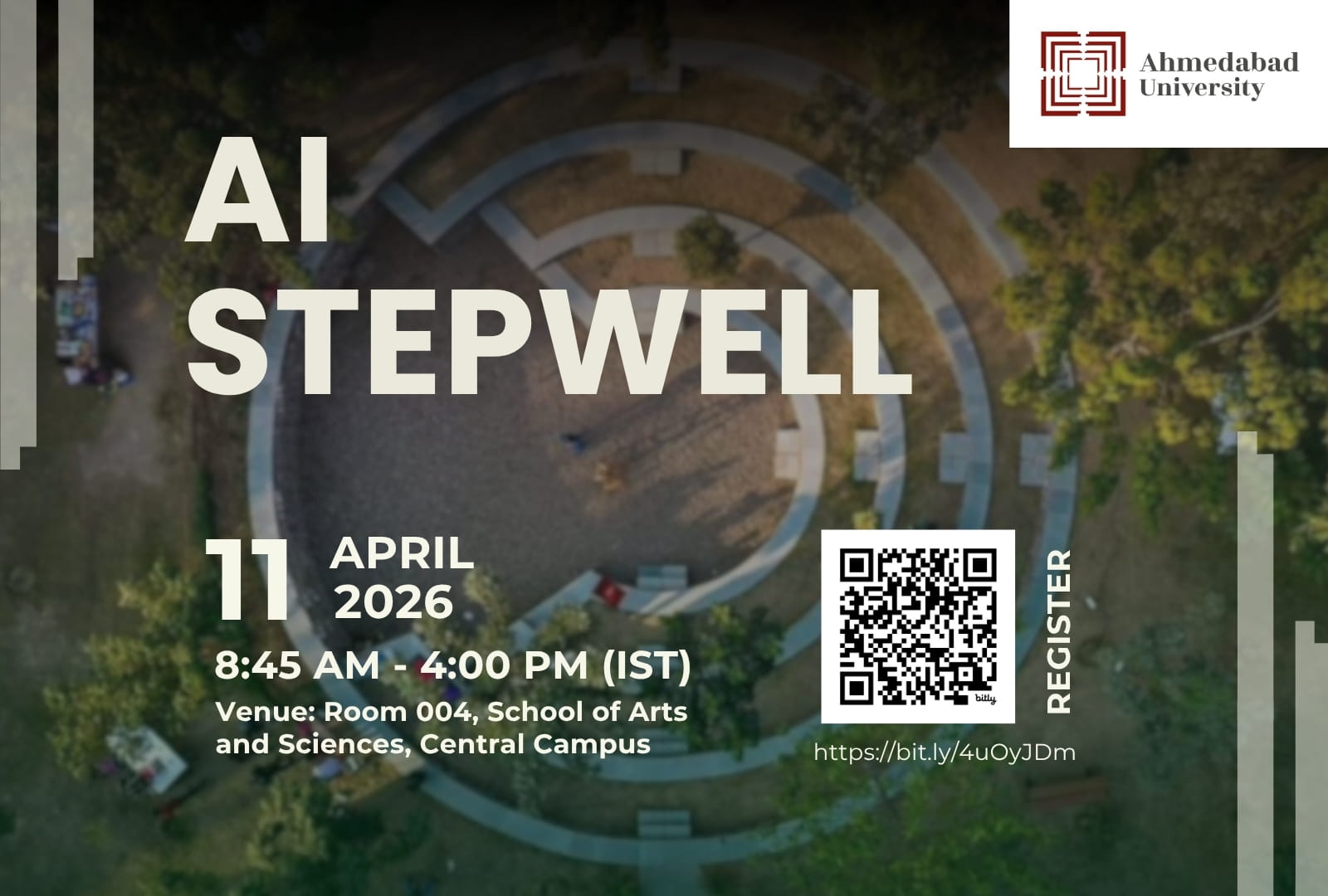
Rapid developments in artificial intelligence (AI) have taken the world by storm. Advances in computation technologies, business analytics, robotics and automation, and generative artificial intelligence all promise to disrupt the ways in which not just businesses, but society itself functions. We at Ahmedabad University too, are fascinated by not just the algorithms and the applications of AI, but also how some of these may affect human beings at the workplace and beyond. Many members of our inter-disciplinary research ecosystem are actively pursuing important questions related to AI - these include economists, management researchers, social scientists, philosophers, educationists, epidemiologists and of course, computer scientists and engineers.
In this day-long symposium, Ahmedabad University invites you to engage with some of the best artificial intelligence researchers and practitioners across India, spanning multiple disciplines and domains, including business analytics, drug discovery, education, finance, information systems and sustainability.
Date: Saturday, April 11, 2026
Time: 8:45 AM - 4:00 PM IST
Venue: Room 004, School of Arts and Sciences, Central Campus
Tourism in Ahmedabad
Welcome to Ahmedabad: Heart of Gujarat
Ahmedabad, often referred to as the heart of Gujarat, is a city that seamlessly blends its rich cultural heritage with modern infrastructure. As the first city in India to be inscribed in UNESCO’s World Heritage City list in 2017, Ahmedabad offers a unique experience that combines an exploration of its history with the opportunity to savour its contemporary delights.
Cultural and Historical Architecture
Ahmedabad boasts of an impressive array of heritage sites reflecting its rich cultural past. The Sidi Saiyyed Mosque, known for its exquisite and intricately carved stone latticework windows (jali), is a prime example of Islamic architecture. The famous 'tree of life' motif carved into the jali is a must-see. Another architectural marvel is the Adalaj Stepwell, built in the 15th century. This stepwell showcases a beautiful fusion of Indo-Islamic architecture with intricate carvings on its pillars and a natural cooling system that keeps the water six degrees cooler than the prevalent temperature. The city's heritage precincts of Pols and traditional clusters from the medieval period offer a glimpse into Ahmedabad’s historical narrative, making it a haven for history enthusiasts.
Mughal Architectural Influence
Several areas in Ahmedabad, such as Laal-Darwaja, Ratan-Pod, and the vicinity of Relief Road, exhibit a strong Mughal architectural influence. These neighbourhoods are perfect locations for a leisurely stroll to appreciate the historical essence of Ahmedabad and the distinct charm of Mughal-era constructions that still stand tall in the city.
Modern Infrastructure
Ahmedabad is not just about the past; it is also a city that also provides a glimpse into the future. The Sabarmati Riverfront and Atal Bridge are modern projects that not only offer scenic views but are also ideal places for enjoying a relaxing walk along the river. The Sindhu Bhavan and Satellite areas, home to numerous corporations and multinational companies, reflect the city's rapid economic growth, juxtaposed in stark contrast to its traditional roots. Ahmedabad is also known as a paradise for food lovers, offering a diverse range of cuisines. For a taste of local specialties, Manek Chowk is the place to be. This bustling night market on Sindhu Bhavan Marg offers a variety of street food and traditional dishes, ensuring a delightful culinary experience. Additionally, the city boasts of a variety of international multi-cuisine restaurants that cater to every palate, making Ahmedabad a foodie's haven.
Statue of Unity
The Statue of Unity, located 200 km from Ahmedabad, is the world's tallest statue, with a height of 182 metres. It is a memorial to Sardar Vallabhbhai Patel, India's first Home Minister. The statue is situated on an island near the Sardar Sarovar Dam. The area around the statue has other attractions, including an exhibition gallery, viewing gallery, the valley of flowers, a memorial, an audiovisual gallery, the Sardar Sarovar Dam, and river rafting and jungle safari options. With so many activities, a visit to the Statue is bound to be a fun-filled day trip with loads to do and see.
Polo Forest
The Polo Forest, located at a distance of 150 km from Ahmedabad, is a picturesque forested area with ancient Jain temples, a dam, and waterfalls. It is an ideal spot for trekking, cycling, riverside walks, and picnicking amidst lush green surroundings, especially during the monsoon season. The 1500-year-old Jain temple with intricate carvings is a highlight of the forest. Visitors can spend an entire day exploring the natural beauty and historical sites of Polo Forest.
Modhera Sun Temple and Rani ki Vav
The Modhera Sun Temple, located at a distance of 110 km from Ahmedabad, is an 11th century Hindu temple dedicated to the Sun God. It is known for its stunning architecture and elaborate carvings. Located nearby is Rani ki Vav, an 11th-century stepwell with intricately carved panels over seven levels of stairs. Both the temple and the stepwell are UNESCO World Heritage sites and visiting them makes for a fascinating day trip.
Nalsarovar Bird Sanctuary
Nalsarovar, located at a distance of 62 km from Ahmedabad, is Gujarat's largest wetland bird sanctuary. It is home to over 200 species of resident and migratory birds, especially during the winter months. Flamingos are a major attraction here. Visitors to the site can hire a guide for the day for exploring the sanctuary and surrounding plains to spot birds and other wildlife.
List of Hotels
- Hotel Cosmopolitan
- Regenta Central Antarim Hotel
- Hotel Dev Corporate
- SK Lords Eco Inn Ahmedabad
- Hotel Nalanda
- Lemon Tree Hotel, Ahmedabad
- Hyatt Regency Ahmedabad
- Fortune Landmark Ahmedabad
- Fairfield by Marriott Ahmedabad
- Welcomhotel By ITC Hotels, Ashram Road, Ahmedabad
- Ginger Ahmedabad (Vastrapur)
- Binori A Boutique Hotel
- The Grand Bhagwati
Registration Fees
Early Bird Registration Deadline: Wednesday, July 15, 2026
| Registration fees (Including GST) | Indian | Foreigner |
| Student | INR 4720 | USD 200 |
| Academic Delegate | INR 7080 | USD 475 |
| Industry Delegate | INR 10620 | USD 600 |
The dinner fees is INR 2360/ USD 120
Regular Registration Deadline: September 1, 2026
| Registration fees (Including GST) | Indian | Foreigner |
| Student | INR 5900 | USD 240 |
| Academic Delegate | INR 8260 | USD 600 |
| Industry Delegate | INR 11800 | USD 725 |
The dinner fees is INR 2360/ USD 120
Speakers
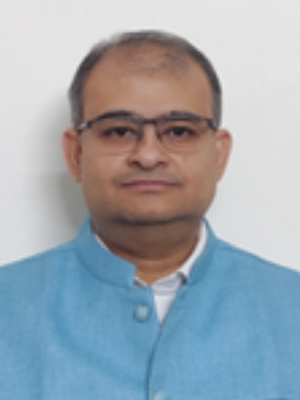
Arnab Banerjee
Senior Member of Technical Staff / Director
AI Solutions & Innovations – Enterprise AI
Micron Technology
India
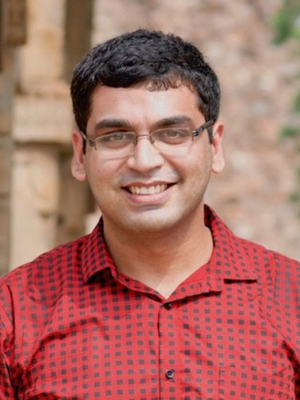
Nipun Batra
Associate Professor
Computer Science and Engineering
IIT Gandhinagar
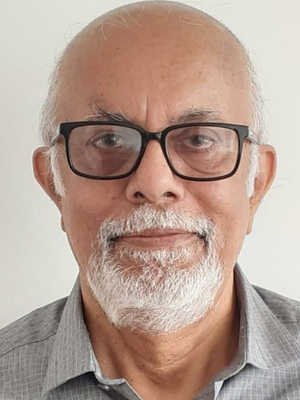
Santanu Datta
Co-founder and Mentor
Bugworks Research India Private Limited
Bangalore
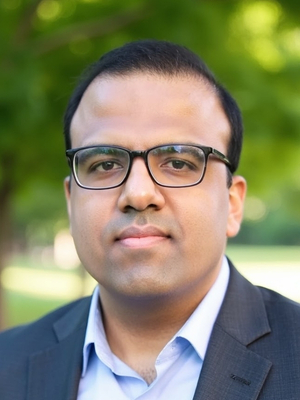
Arun Gupta
Associate Professor
Ahmedabad University
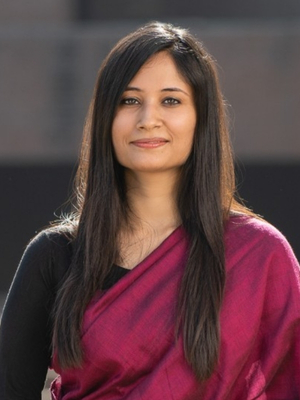
Adrija Majumdar
Assistant Professor
Information Systems
IIM Ahmedabad
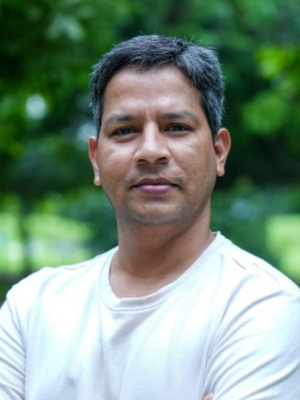
Shashi Kant Shankar
Assistant Professor
Ahmedabad Univesity
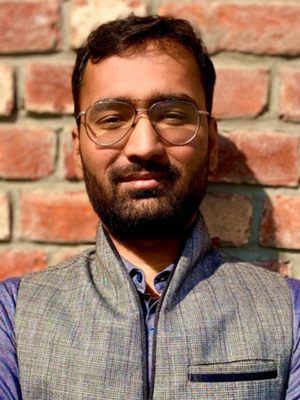
Harshit Kumar Singh
Assistant Professor
Information Systems
Xavier Labour Relations Institute
Jamshedpur
Schedule
| Time | Particulars |
|---|---|
| 8:45 - 9:15 AM | Breakfast and Registration |
| 9:15 - 9:30 AM | Inauguration and Opening Remarks Speaker: Pankaj Chandra, Vice Chancellor, Ahmedabad University |
| 9:30 - 11:30 AM | Session 1 Speakers: Arnab Banerjee, Nipun Batra, Santanu Datta, Arun Gupta |
| 11:30 - 11:45 AM | Tea Break |
| 11:45 AM - 1:15 PM | Session 2 Speakers: Adrija Majumdar, Shashi Kant Shankar, Harshit Kumar Singh |
| 1:15 - 2:15 PM | Lunch Venue: The Gulmohar, University Centre, Central Campus |
| 2:15 - 3:15 PM | Panel discussion: AI in the Workplace- The Way Ahead |
| 3:15 - 3:30 PM | Closing Remarks and Vote of Thanks Speaker: Shobha Das, Dean, Amrut Mody School of Management, Ahmedabad University |
| 3:30 - 4:00 PM | High Tea |
Abstracts
AI and the Future of our Industry
Arnab Banerjee, Micron Technology, India
In this session, I will talk about how AI affects the semiconductor industry.
From Space to Policy: AI as an End-to-End Decision Engine for Air Quality
Nipun Batra, Indian Institute of Technology Gandhinagar
Air pollution in India is a multi-scale systems problem, shaped by emission sources, atmospheric dynamics, sparse sensing, and high barriers to interpretation. This talk presents our efforts to build an end-to-end AI decision support ecosystem that connects satellite observation, physical sensing, atmospheric modelling, and human interaction. We develop learning- and information-theoretic methods for equitable sensor placement, satellite-based emission inventory construction through automated brick-kiln detection, and physics-informed neural emulators that reduce multi-hour atmospheric simulations to real-time what-if analysis. Finally, conversational systems such as VayuChat expose these models and datasets through accessible natural-language interfaces.
AI Challenges in Drug Discovery: Some Thoughts
Santanu Datta, Bugworks Research India Pvt Ltd
Modern artificial intelligence (AI) systems rely on linear algebraic operations, particularly matrix multiplication and gradient-based optimisation. However, the natural and social systems that AI aims to model are nonlinear, chaotic, heavy-tailed, and biologically adaptable. We will evaluate whether the epistemic framework of current AI is appropriate for modelling such systems, including Drug Discovery. Drawing on the concept of underdetermination as a fundamental driver in molecular evolution and biology, I argue that AI's main limitation is not its dependence on linear algebra but its reliance on statistical approximation under finite sampling in domains characterised by heavy-tailed risk, dynamical instability, and endogenous parameter drift. Although AI can approximate nonlinear manifolds with considerable success, predicting the exact mechanism of action of a drug at the atomic level and algorithmic delayering without experimental evidence of individual toxicity and efficacy in certain disease areas, such as cancer, remains difficult. AI is likely to accelerate the drug discovery process, but some nonlinear challenges, often termed black swans, could pose significant difficulties. The presentation suggests that the philosophical challenge for AI lies in its epistemic framework rather than in computational scale.
Machine Learning for Financial Tail Risk Forecasting
Arun Gupta, Amrut Mody School of Management, Ahmedabad University
The application of machine learning methods to tail risk forecasting remains limited in risk management practice. Due to institutional factors, most private credit, structured finance, reinsurance, private equity, and commodity firms commonly rely on scenario-based stress testing, static loss curves, simple volatility heuristics, or parametric risk forecasting frameworks such as Generalized Autoregressive Conditional Heteroskedasticity models (GARCH), despite their poor fit in fat-tailed environments. Using price returns for one of the most volatile and fat-tailed assets in the world, I show that a well-calibrated machine learning model such as the Light Gradient-Boosting Machine (LightGBM) achieves superior out-of-sample performance for predicting full return distributions (67% higher log score), tail risk (85% lower quantile loss), as well as volatility (67% lower root mean squared error) at longer horizons compared to a suite of GARCH-type models - even those incorporating fat-tailed innovations. These results suggest that nonlinear machine learning methods offer a compelling alternative to traditional parametric approaches for forecasting risks in volatile and heavy-tailed financial environments.
Portraits of Engagement: Understanding the Effects of Demographic Visual Cues in Corporate Social Media Communication using Explainable AI
Adrija Majumdar, Indian Institute of Management Ahmedabad
Corporate social media communication has emerged as a driver of brand visibility, stakeholder engagement, and firm value. Increasingly, companies are using media-rich content formats, beyond text, such as images, etc., for corporate social media communication. While existing literature has extensively examined the role of textual and even technical visual features in shaping user engagement with firm-generated content, research on understanding content within images is largely unexplored. We study the influence of demographic visual cues, specifically the gender and age of human subjects depicted in corporate imagery, and their impact on engagement. We employ an abductive machine learning methodology to identify various image-related features and their impact on engagement. Drawing on a large-scale dataset of image-based posts by S&P 100 firms on X (formerly Twitter) spanning 2020-2025, we employ classification models trained across different feature sets and virality threshold splits to understand the features that predict higher engagement. We analyse whether demographic features, along with work-setting context and image aesthetics, influence the virality of corporate tweets, measured through likes and retweets. Alongside, we also incorporated robust interpretability techniques (explainable AI) to identify the most influential visual predictors of engagement. Our findings reveal that the gender composition and the average age of human subjects, as well as the presence of professional work-setting backgrounds, are significant determinants of post-virality. Aesthetic image features further moderate these effects. The study contributes to the growing literature on firm-generated content and explainable AI. It further reveals the persistent gender and age stereotypes observed in corporate visual communication, raising broader implications for diversity in corporate communications.
Ethical and Responsible Generative AI-Assisted Evidence-Based Decision-Making in Learning and Teaching: From Multimodal Data to Meaningful Educational Insights
Shashi Kant Shankar, School of Arts and Sciences, Ahmedabad University
Learning and teaching are fundamentally processes rather than outcomes, yet most educational policies and institutional decisions have historically treated them as measurable outcomes. This outcome-oriented approach has limited the ability of education systems to generate meaningful social impact, largely because empirical evidence about learning processes has been difficult to capture due to the individualised and cognitive nature of learning. Recent ICT-enabled educational environments now allow the collection of rich multimodal data from learning and teaching interactions, leading to the emergence of Multimodal Learning Analytics (MmLA). However, transforming such heterogeneous data into meaningful insights remains a major challenge for educators and institutions. This talk discusses how recent advances in Generative AI and large language models can support ethical and responsible AI-assisted evidence-based decision-making by interpreting multimodal educational data, potentially shaping the next generation of personalised and process-aware EdTech ecosystems.
The Role of Stakes in AI Trust and Adoption
Harshit Kumar Singh, Xavier Labour Relations Institute
Although organisations increasingly pursue AI augmentation, individual adoption often depends on the level of trust users place in algorithmic systems. Trust can be complicated by the perceived “black-box” nature of AI technologies. Our research examines how decision stakes influence trust and the adoption of artificial intelligence (AI) in analytical decision-making. To investigate this issue, we conduct two online scenario-based experiments using a 2 × 2 between-subjects factorial design. The study manipulates expert type (AI vs. human) and decision stakes (low vs. high) across both work and non-work contexts. By examining how these factors interact, the research aims to better understand the conditions under which individuals rely on AI-generated expertise in decision-making. This research shifts the focus from “whether” to “under what conditions” people adopt AI, suggesting that practitioners must calibrate AI adoption strategies to the decision stakes.


