8 October 2025
Senior Citizens Find Anchor in Ahmedabad Karaoke Clubs
During festivals like Navratri, one realises the power of music most vividly. Take Garba, for instance. Anyone who participates in the dance feels connected to the person dancing next to them, the musician, the singer, and symbolically to Goddess Durga herself. A special set of relationships forms, bringing everyone and everything together in that moment through music.
What happens when the music stops? The crowd disperses, people drift away, and the invisible threads holding them together vanish. That's when the role of music becomes clear. It was the glue creating a sense of community, even if only temporarily. And that power of music can be harnessed in myriad positive ways.
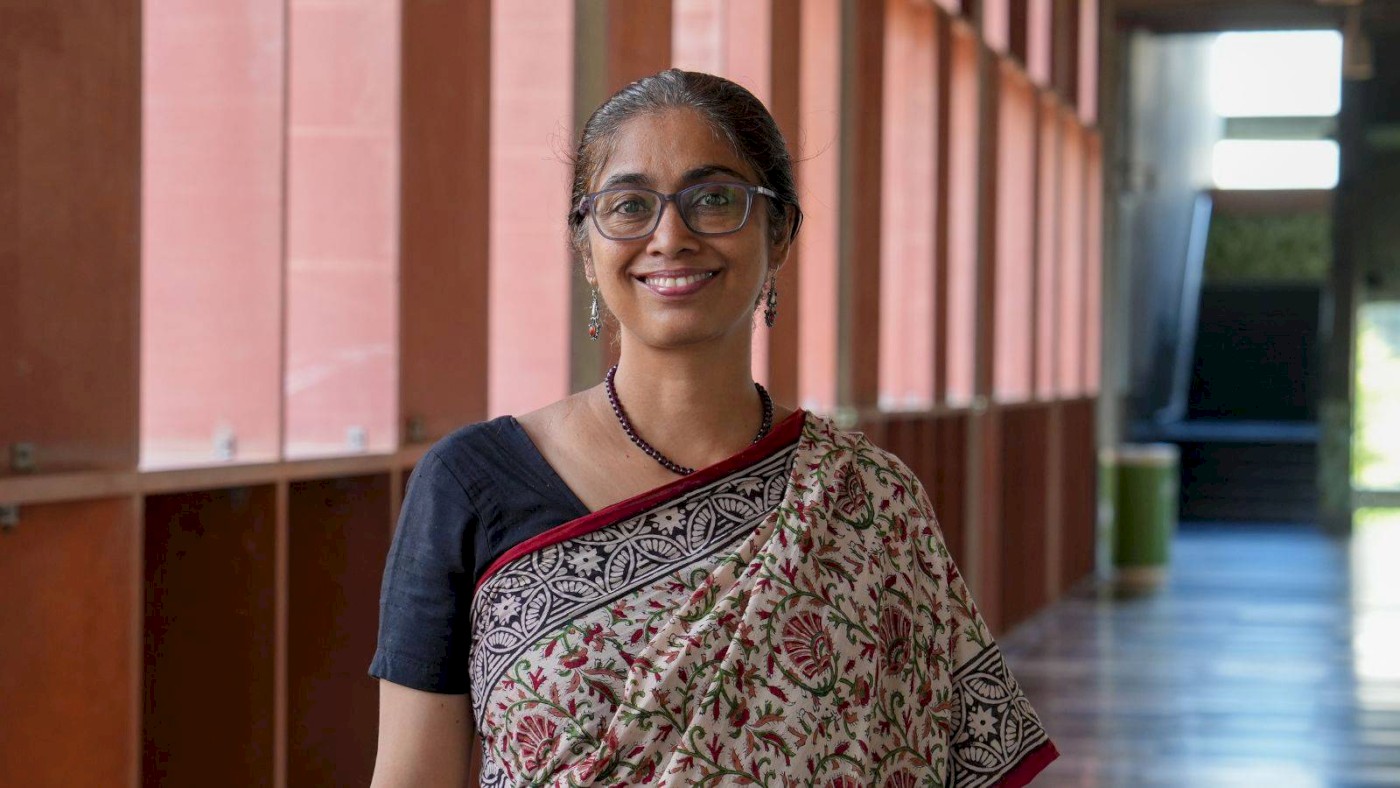
Senior citizens are no exception to music’s transformative power. Ahmedabad University’s School of Arts and Sciences Professor Aditi Deo’s chance attendance at a karaoke event in Ahmedabad revealed a world of Karaoke clubs centred on Hindi film songs. The members of these clubs are mostly senior citizens. Many of them join simply because they love singing, and in that space, music opens a whole new perspective for them. This realisation led Professor Deo to develop an ethnographic study that explores the impact of music on the lives of senior citizens who participate in Karaoke clubs. Through this study, she aims to understand the potential of interactive musical activities to enhance the quality of life in old age.
Why do senior citizens join karaoke clubs? Professor Deo highlights three main reasons. First, it gives them a renewed sense of purpose. Many club members have had a dormant desire to sing all through their adult lives, and they finally get a performance platform. They also get an appreciative audience. Second, it helps them connect with others who share their love for a particular kind of music. And third, it gives them a way to spend their time meaningfully.
Many senior citizens grapple with a lack of control in their lives. They find themselves coping with a fast-changing world or adapting to changes or facing an empty nest. “Karaoke clubs become a kind of anchor. They fill that gap. They provide a community and through regular events, a sense of purpose. If you want to perform a song, you practice it, and you connect with others to get better at it. Suddenly, time isn't empty, it's purposeful," says Professor Deo.
The impact of Karaoke clubs and music on the lives of senior citizens is difficult to quantify. But one clear sign that they make a positive difference is that people keep coming back. These clubs are formal, with regular schedules and a structure, usually a musical evening followed by dinner. During performances, if a lively song is being sung, club members join and start dancing together. For them, it’s not just about music—it’s also a social event. “The impact such events have is visible: for those few hours, there’s joy, connection, and purpose. And many members share that the feeling carries over into the next few days. Meeting regularly also helps to forge friendships that strengthen over time,” says Professor Deo.
Professor Deo explains how the idea of musical care gives us a framework to understand how the social and musical activities that club members engage in, individually and for each other, become a way of ensuring mutual wellbeing during a critical stage of life.
She elaborates why this matters: “Music, or any form of participatory performance, has long been seen as essential to how life can flourish. But how do we begin to formally recognise regular engagement with performance, or the participation in performance-centred activities, as something people value deeply and what sustains them? Can we also find ways to incorporate such understanding into policy?”
Professor Deo notes that many members in Karaoke clubs are at a stage in life where loss, whether of loved ones, professional roles, or domestic routines, becomes a tangible and often life-changing reality. In such moments, these musical spaces provide more than entertainment. They become rewarding ways of managing time, finding meaning, and building resilience in the face of grief and change. These findings are from Professor Deo’s ongoing research on senior citizens’ Karaoke clubs in Ahmedabad for which she received a grant from the Musical Care International Network.