1 October 2024
Reviving Jharkhand’s Culinary Heritage

Mahua, known for its sweet-smelling flowers, has traditional significance in the lives of many communities in Jharkhand. However, with growing industrialisation, companies have started using mahua primarily for alcohol production. This widespread commercialisation has overshadowed the medicinal and nutritional values of mahua, once integrated into these communities' social and cultural fabric. Mahua was once at the heart of community celebrations, symbolising unity and nourishment. Today, due to changing aspirations and the rise of packaged food, its culinary uses are fading into memory.
This example comes from the research of Jyoti Shukla, an alumna of the Master of Management Studies in Heritage Management programme at Ahmedabad University, who is studying the cultural heritage of Jharkhand, with a specific focus on food heritage and indigenous knowledge systems. A native of Jharkhand, Jyoti is attempting to understand the knowledge of tribal food cultures and the diverse native ingredients used in everyday food practices.
She highlights that mahua is a seasonal fruit traditionally preserved through techniques like sun-drying, storing, and roasting, pickling or converting into other products, enabling its consumption year-round. Referred to as an "energy ball" for its nutrient density, mahua plays an integral role in local diets. However, there has been a decline in the usage of mahua due to diminishing tribal food cultures.
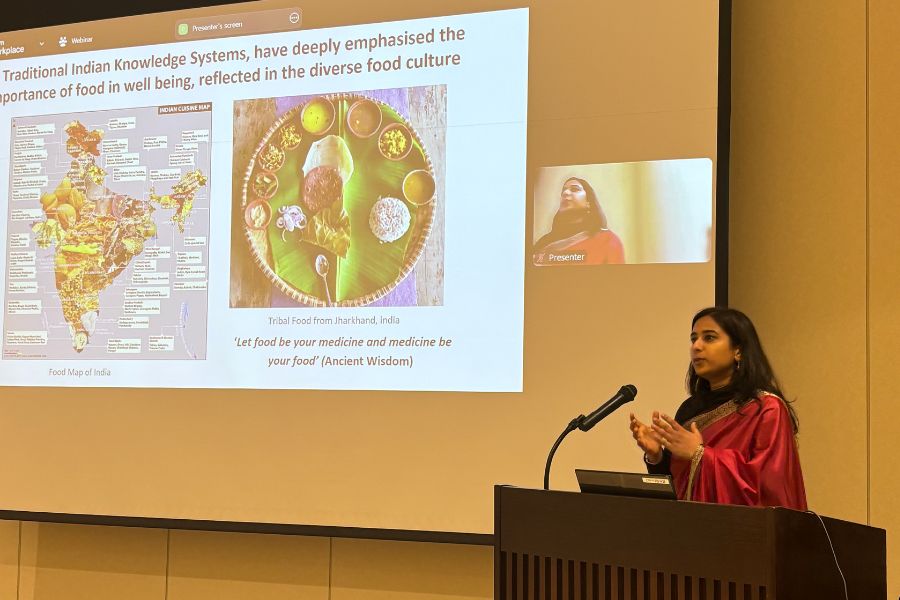
India, one of the world's oldest civilisations, has always emphasised the connection between health and food, encapsulated in the phrase, "Let food be your medicine, and medicine be your food." India's diverse food culture, tied to its ecology, seasons, and sustainability principles, reflects this ethos. Food is not only essential for survival but also a powerful expression of identity, culture, and connection to the land. Traditional food systems, rich in local ingredients, biodiversity, and cultural practices, are integral to India's intangible cultural heritage.
"Jharkhand has been subject to many stereotypes," Jyoti explains. "Despite being known as the 'land of forests,' it is often overlooked. It is also home to significant tribal population, representing 27 per cent of the state. Unfortunately, the word 'tribal' often conjures images of backward and inferior population. However, a deeper exploration reveals a wealth of knowledge embedded in their daily lives."
Jyoti's research focuses on food ingredients used by the tribals inhabiting these forests, which have become part of the region's heritage. She delves into the practices of rural communities, exploring forest foraging, harvesting edible greens, and understanding the intergenerational knowledge of these traditions. Many edible greens never reach the market, but their nutritional and cultural significance remains preserved within communities. Her work involves documenting these practices.
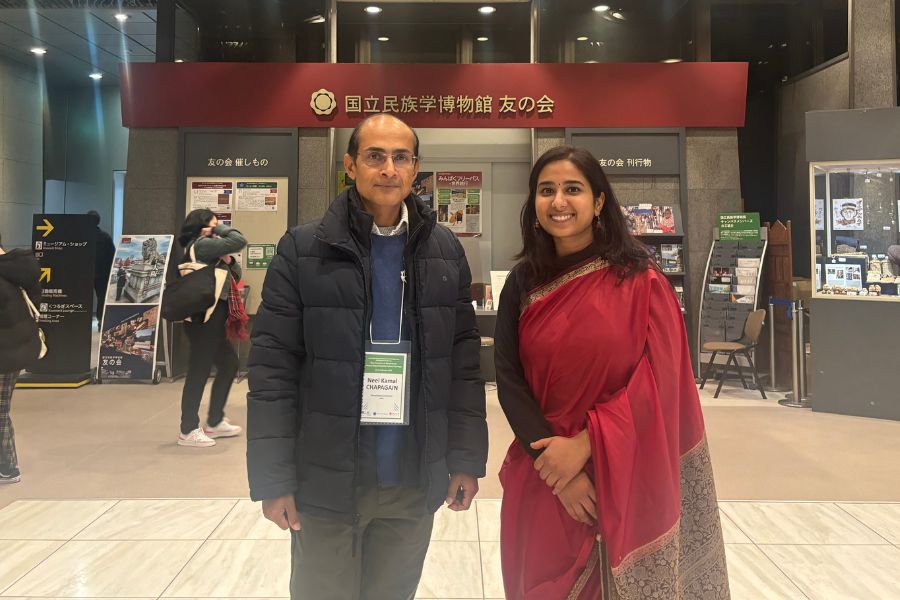
She is one of seven researchers from Asia selected for the prestigious International Early Career Research Programme by the International Research Centre for Intangible Cultural Heritage in the Asia-Pacific Region. She recently presented her research at an academic conference in Japan
About her research, Jyoti says, "The idea is not just to revive the memory of these ingredients and recognise their uses but also to acknowledge their relevance in today's time. Documenting native ingredients, and their culinary uses has opened a doorway not just to the past but also to a sustainable future. The goal is to understand the deep knowledge embedded in our food practices, that is part of our ancient heritage and has been the source of the well-being of our communities.”