• About Ahmedabad
  • Stepwell
  • Student Affairs
  • Alumni and Advancement
  • Collaborate With Us
  • Media
  • Academics
    • Schools & Centres
      • Amrut Mody School of Management
      • Bagchi School of Public Health
      • School of Arts and Sciences
      • School of Engineering and Applied Science
      • Undergraduate College
      • Graduate School
      • Ahmedabad Design Lab
      • Centre for Heritage Management
      • Centre for Learning Futures
      • Global Centre for Environment and Energy
      • International Centre for Space and Cosmology
      • Sahyog: Centre for Promoting Health
      • Stepwell Centre for Asian Futures
      • The Climate Institute
      • The Institute of Manufacturing and Economy
      • VentureStudio
    • Programmes
      • Undergraduate Programmes
      • Graduate Programmes
        • Masters Programmes
        • Doctoral Programmes
      • Continuing & Executive Education
    • Learning Initiatives
    • Libraries
    • Interdisciplinary Learning
    • Academic Calendar
  • Admission
    • Undergraduate Admission
    • Graduate Admission
      • Masters Admission
      • Doctoral Admission
    • Fees & Financial Aid
  • Faculty
    • Amrut Mody School of Management
    • Bagchi School of Public Health
    • School of Arts and Sciences
    • School of Engineering and Applied Science
    • Centre for Heritage Management
    • Centre for Learning Futures
    • Global Centre for Environment and Energy
    • International Centre for Space and Cosmology
    • Stepwell Centre for Asian Futures
    • The Institute of Manufacturing and Economy
    • VentureStudio
  • Research
  • About Ahmedabad
  • Stepwell
  • Office of the Dean of Students
  • Alumni and Advancement
  • Collaborate With Us
  • Media
  • Academics
    Schools & Centres Programmes Learning Initiatives Libraries Interdisciplinary Learning Academic Calendar
  • Admission
    Undergraduate Admission Graduate Admission Doctoral Admission Fees & Financial Aid
  • Faculty
  • Research

23 June 2023

New Collaborative Study by Ritesh Shukla Uses Fluorescent Dye for Blood Screening Signalling Significant Advancement in Forensic Science
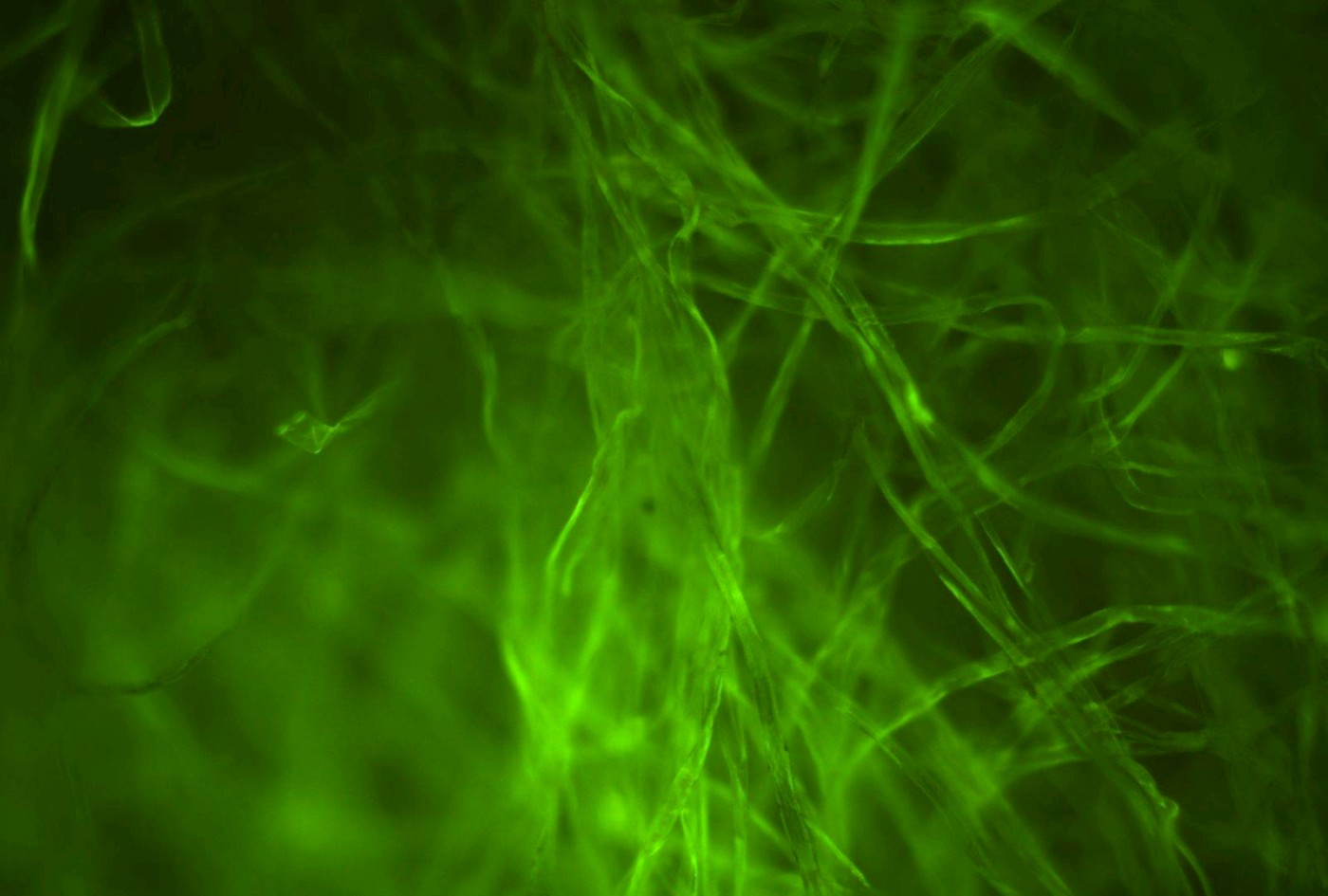


Detection and identification of blood are crucial to forensic investigation, and most reagents used for these tests are based on colorimetric changes owing to the nature of haemoglobin to catalyse the oxidation of chromogenic compounds. However, these reagents display toxic behaviour, such as causing DNA degradation. There is also a significant possibility of giving false-positive results with similar-coloured fluids as blood. New collaborative research at the Nanomaterials and Toxicology Laboratory led by Ritesh Shukla, Assistant Professor, School of Arts and Sciences, has introduced a state-of-the-art methodology for preliminary blood detection and screening using a fluorescent dye, 2,7 dichloro-fluorescein-di-acetate (DCFDA). This study was recently published in the Microchemical Journal.

The research focuses on exploring a methodology for preliminary blood detection (screening method) using a fluorescein-derived DCFDA dye, which can effectively identify fresh, aged, and dried blood stains on various surfaces such as glass, cloth, wood, and metal. This method is different from the conventional forensic blood screening method currently used. In conventional methods, H2O2 is used as a catalyst for forensic blood screening tests, whereas in the presented methodology, DCFDA dye can detect blood in various conditions for up to 20 days.

The dye is very sensitive and can accurately distinguish blood from other bodily fluids. Additionally, it doesn’t show any false positive results with similar-looking red and maroon-coloured stains. The DCFDA dye exhibits non-genotoxic effects with no adverse effects on DNA, thus minimising the chances of DNA degradation in the blood sample. Professor Shukla says, “Developing DCFDA as a non-genotoxic fluorescent dye for blood screening presents a significant advancement in forensic science. In the future, I see this blood detection method being used prior to DNA fingerprinting. This would be beneficial for forensic investigations as it has the potential to expedite the process and make it more efficient. Timely analysis is crucial as the ability to produce fluorescence diminishes beyond 20 days. However, even highly diluted blood samples exhibit positive detection, further highlighting the sensitivity of DCF-DA in identifying diluted blood concentrations.”

The paper is co-authored by Professor Shukla; Kamayani Vajpayee, Doctoral Candidate, Biological and Life Sciences, School of Arts and Sciences; Undergraduate dissertation students at the Nanomaterials and Toxicology Laboratory, Preet Desai, Prakshal B Parekh, Hrishita C Sitwala, and Kanishkaa P Suri; and Hirak Ranjan Dash, Assistant Professor, National Forensic Science University, Delhi Campus.

Image Legends

Pomegranate Juice
Pomegranate Juice
Pomegranate juice showing no reaction with DCFDA
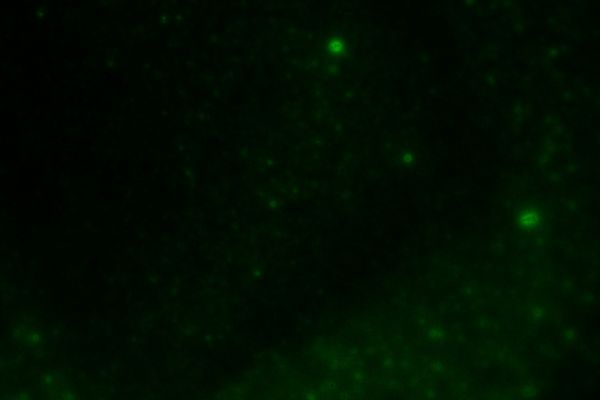
 
Beetroot Juice
Beetroot Juice
showing no reaction with DCFDA
 
Gingerplusdcfda0002
Gingerplusdcfda0002
showing no reaction with DCFDA
 
Salivaplusdcfda0003
Salivaplusdcfda0003
showing no reaction with DCFDA
 
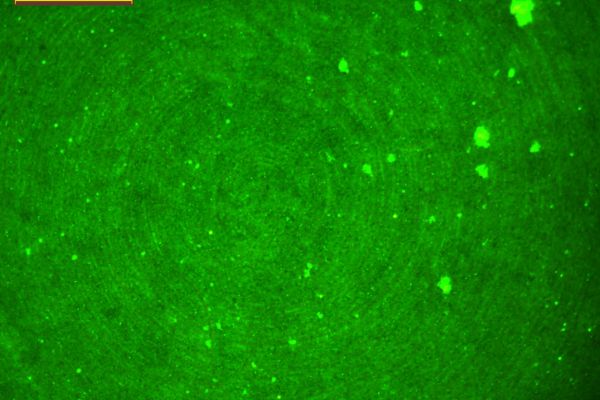
chickenblooddcfda
chickenblooddcfda
showing no reaction with DCFDA
 
Metal_bloodplusdcfda0002
Blood can be identified on the surface
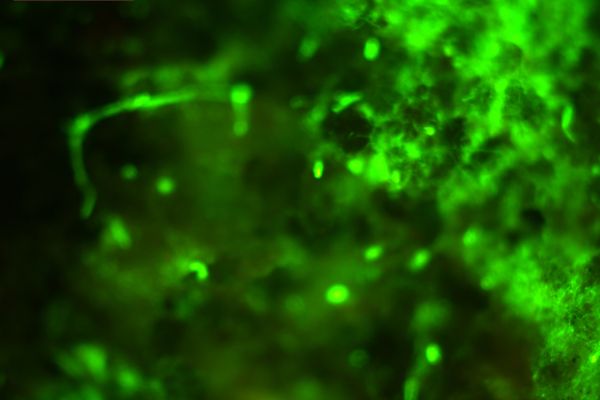
 
Wood_bloodplusdcfda0001
Blood can be identified on the surface
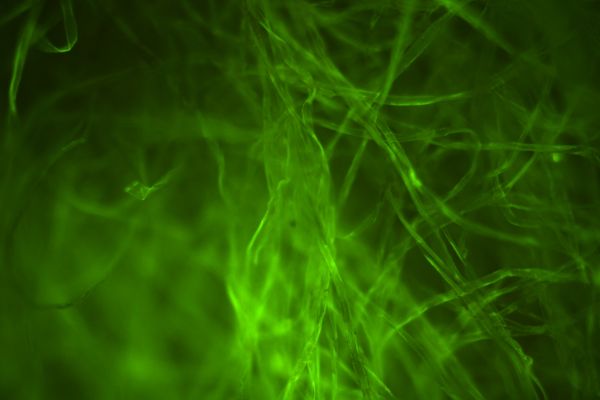
 
Textile
Textile
Blood can be identified on the surface

 
PureBlood
PureBlood
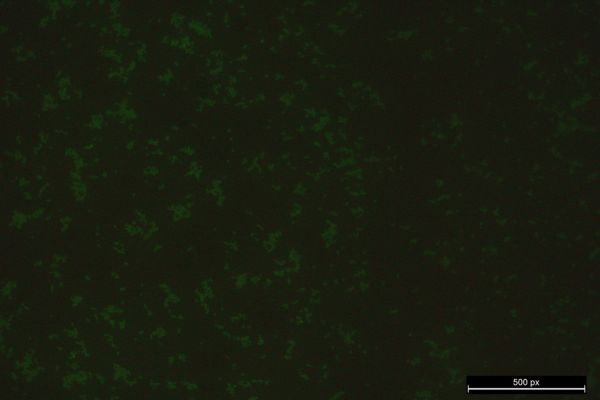
DCFDA dye positively screens pure blood

 
1 Lakh Diluted Blood
DCFDA dye positively screens very low levels of blood
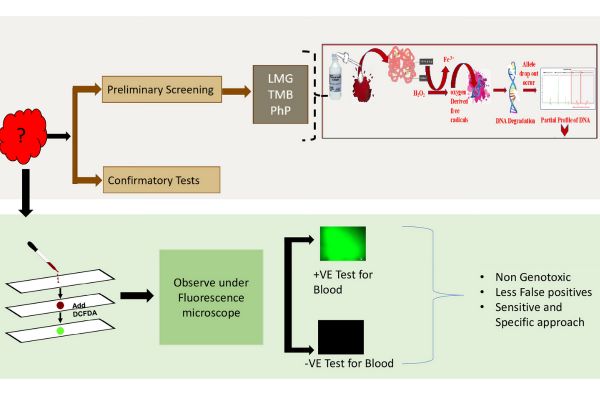
 
Graphical abstract
Graphical abstract
Overall research plan


Related News

Vaibhav Joshi Wins Best Paper Award at IEEE International Conference for Introducing Invertible Fuzzy-Based Transform for Watermarking

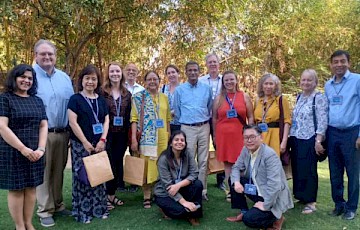
Ahmedabad's Interdisciplinary Excellence Inspires American US Fulbright Administrators

Ahmedabad's Interdisciplinary Excellence Inspires American US Fulbright Administrators

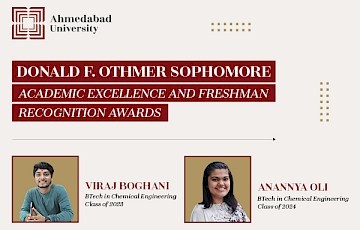
BTech Students Beat BITS Pilani, IIT Madras and Others to Win AIChE Awards

Ahmedabad University

Navrangpura, Ahmedabad 380009
Gujarat, India

info@ahduni.edu.in
+91.79.61911000/200/201

  • About Ahmedabad
  • Our Purpose
  • University Leadership
  • Board of Management
  • Board of Governors
  • Schools & Centres
  • Research
  • Programmes
  • Admission
  • Tenders and Vendors
  • Resources
  • Careers
  • Accreditations and Compliance
  • IQAC
  • Campus Visit
  • Contact
  • Privacy Policy

Auris

COPYRIGHT AHMEDABAD UNIVERSITY 2026

CONNECT WITH US

Download Brochure

Please enter information in the form below. The download will start automatically on submission of the form.

Download Brochure

Please enter information in the form below. The download will start automatically on submission of the form.