7 April 2026
Engineering Student Team’s Built Kart Secures Top-Three Finish at National Motorsports Championship
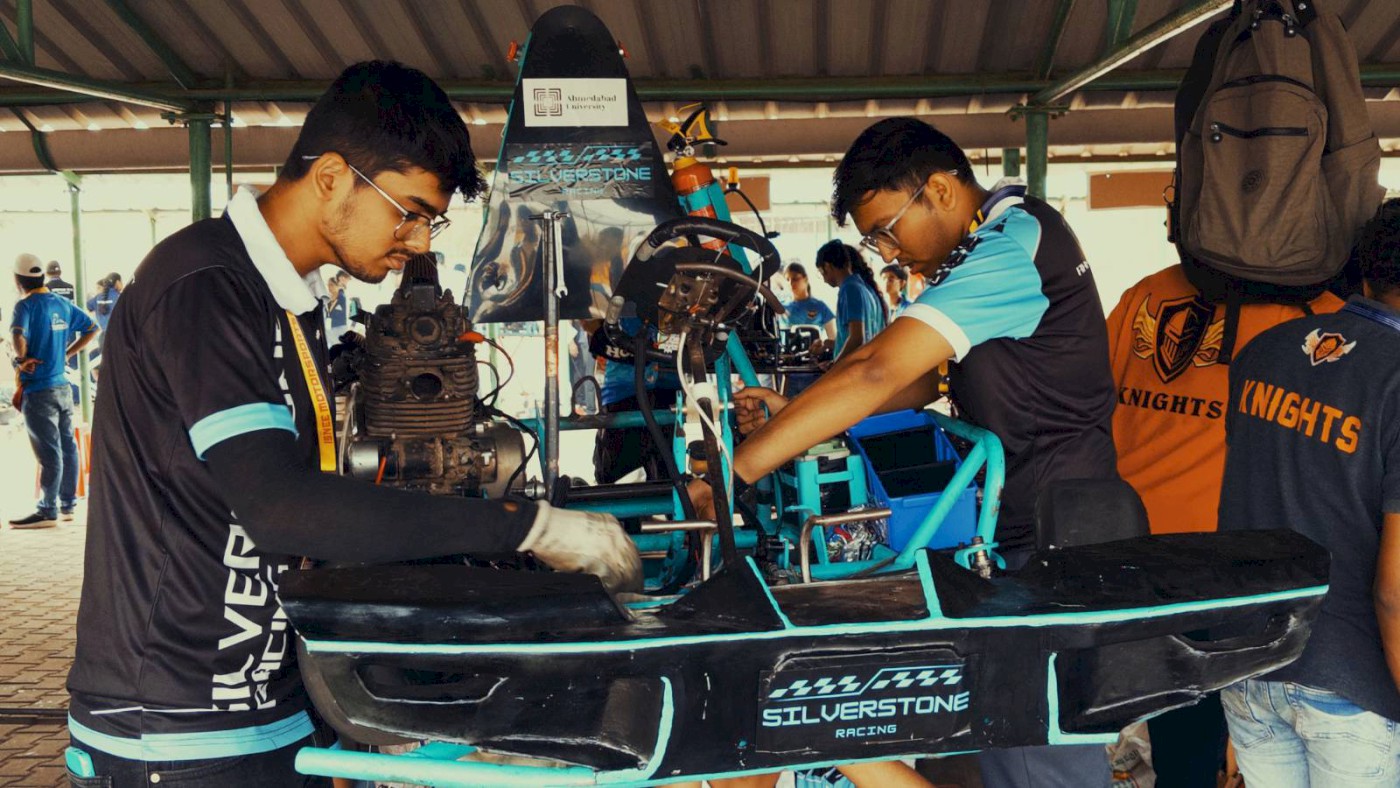
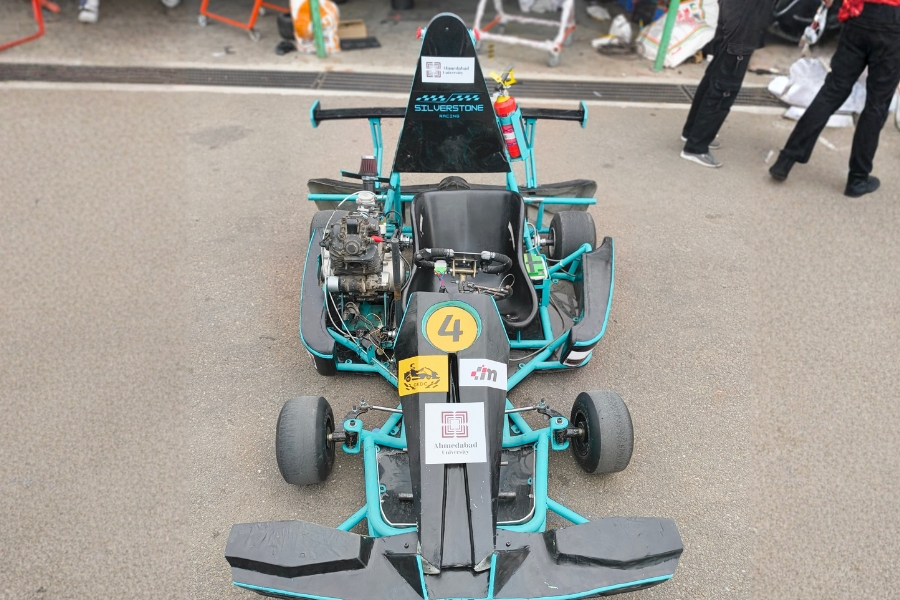
A student-built go-kart became Ahmedabad University’s first-ever entry to a national engineering competition, securing a top-three finish. Saumyakumar Jha, a Mechanical Engineering student, became the first at Ahmedabad University to build a team and a vehicle, and to take both to compete against over a hundred premium engineering colleges at one of India’s most serious student motorsport competitions.
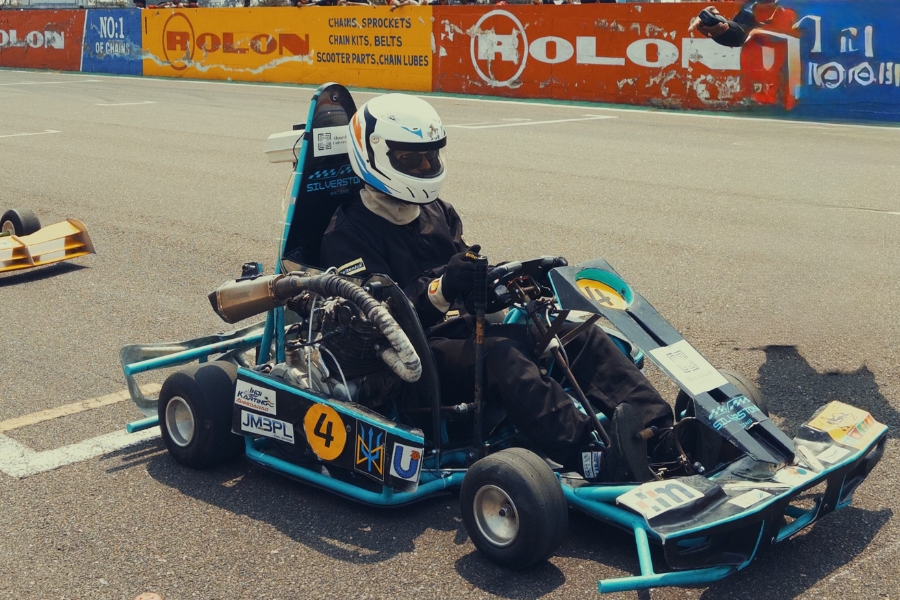
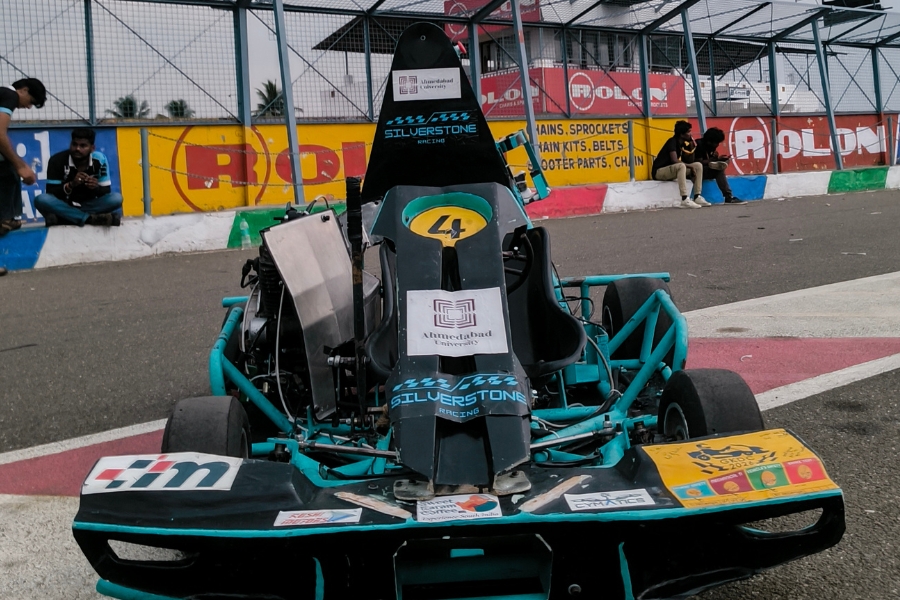
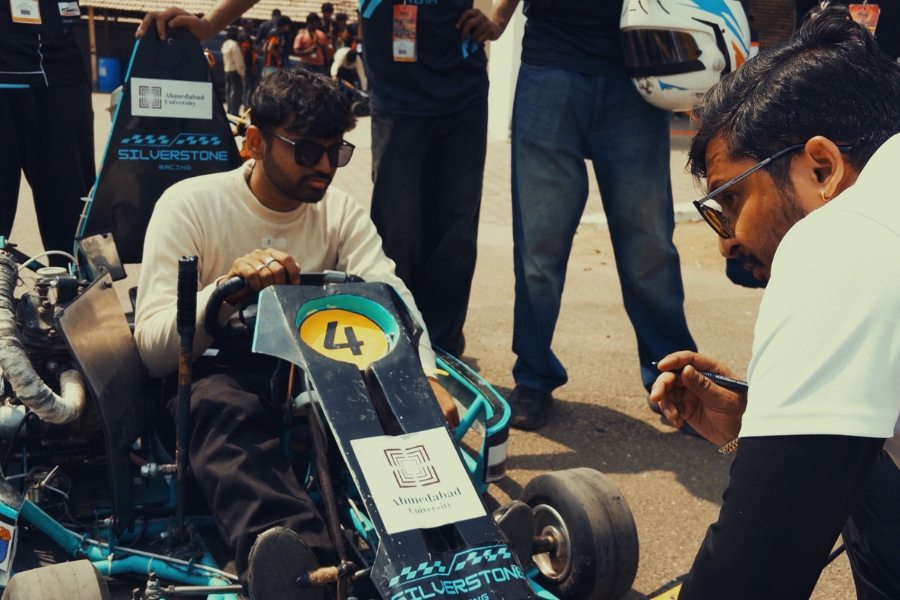
Silverstone Racing, founded and captained by Saumya, delivered an impressive performance at the Go Kart Design Challenge (GKDC) 2025 held at Kari Motor Speedway, Coimbatore. In their debut appearance, the team secured All India ranks of 2nd in the Business Plan and 3rd in both Design Evaluation and Cost Report in the static events. In the dynamic events, the team placed 2nd in skid pad, 3rd in autocross, and 4th in endurance, finishing 4th overall in endurance among 35 teams.
The idea had been taking shape since Saumya was in school, watching seniors build formula-style race cars for international competitions in Germany and the UK. When he arrived at the School of Engineering and Applied Science, he decided to start with a smaller go-kart. By his second year, he had founded the Society of Automotive Engineers (SAE) Club and formed Silverstone Racing under it, comprising 15 student members from Mechanical, Electrical, and Computer Science Engineering fields.
The team had one year to design, manufacture, test, and deliver a competition-ready vehicle from scratch. The composition was deliberate as a go-kart is a systems project. He assembled an interdisciplinary team, recognising that an impactful vehicle is a true convergence of diverse scientific and engineering fields. “A car needs a mechanical engineer, an electrical engineer, and a computer science engineer. Different departments, different people, that is the only way this works,” says Saumya.
Upon being asked what the most challenging part was, Saumya said, "The chassis took three attempts to get right. So do most things worth building. Chassis design alone went through six to seven major revisions. The challenge was torsional rigidity; the chassis had to resist twisting under load without compromising handling. The team welded and re-welded it three times before arriving at a design they were confident in. A prototype was then driven on campus, exposing issues that no CAD model had surfaced: weight distribution problems, concerns about mount integrity, and handling characteristics that only revealed themselves under real load. The final chassis was built from what the prototype taught them.
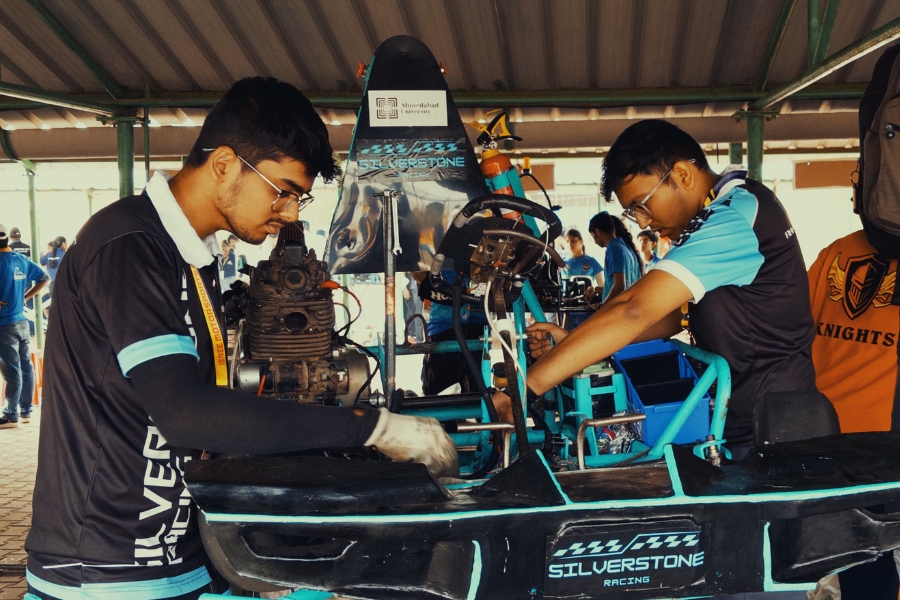
The endurance result came despite what could have ended the competition entirely. The night before dynamic events, the team discovered the engine’s piston and crankshaft had failed. With eight hours to spare, they sourced a replacement, rebuilt the kart through the night, and reported to the circuit on time. They finished fourth.
The project had strong faculty support from the outset. “Professor Sunil Kale, Dean of the School of Engineering and Applied Science, funded the build, required structured documentation at every stage, which included Gantt charts, CAD reports, a working prototype before manufacturing, and also arranged and sponsored welding training for team members at Tata IIS. Professor Shuja Ahmed served as faculty advisor, offering technical guidance on chassis design, engine mounting, and assembly. Their involvement gave the team the rigour and resources to operate like a professional engineering unit, not just a student club,” said Saumya.
For Saumya, the experience has sharpened a dual ambition. He aims to pursue postgraduate studies in advanced motorsport engineering and a racing career through Rotax and Formula 4. For Silverstone Racing, the next build cycle is already underway, with plans to add Business students to the team for the business and cost report events, and a longer-term goal of progressing from go-karts to formula car development.
Silverstone Racing’s journey exemplifies an education that extends beyond the classroom and into the real world. The project demanded more than technical proficiency. It required a flair for experimentation and the ability to navigate diverse disciplines. Success relied on students collaborating to solve complex problems that no single field could address in isolation. At Ahmedabad University, such experiences are integral to the academic environment, encouraging students to test ideas, build systems, and learn by doing.