
13 November 2026
Why Good Fixes Often Go Unused
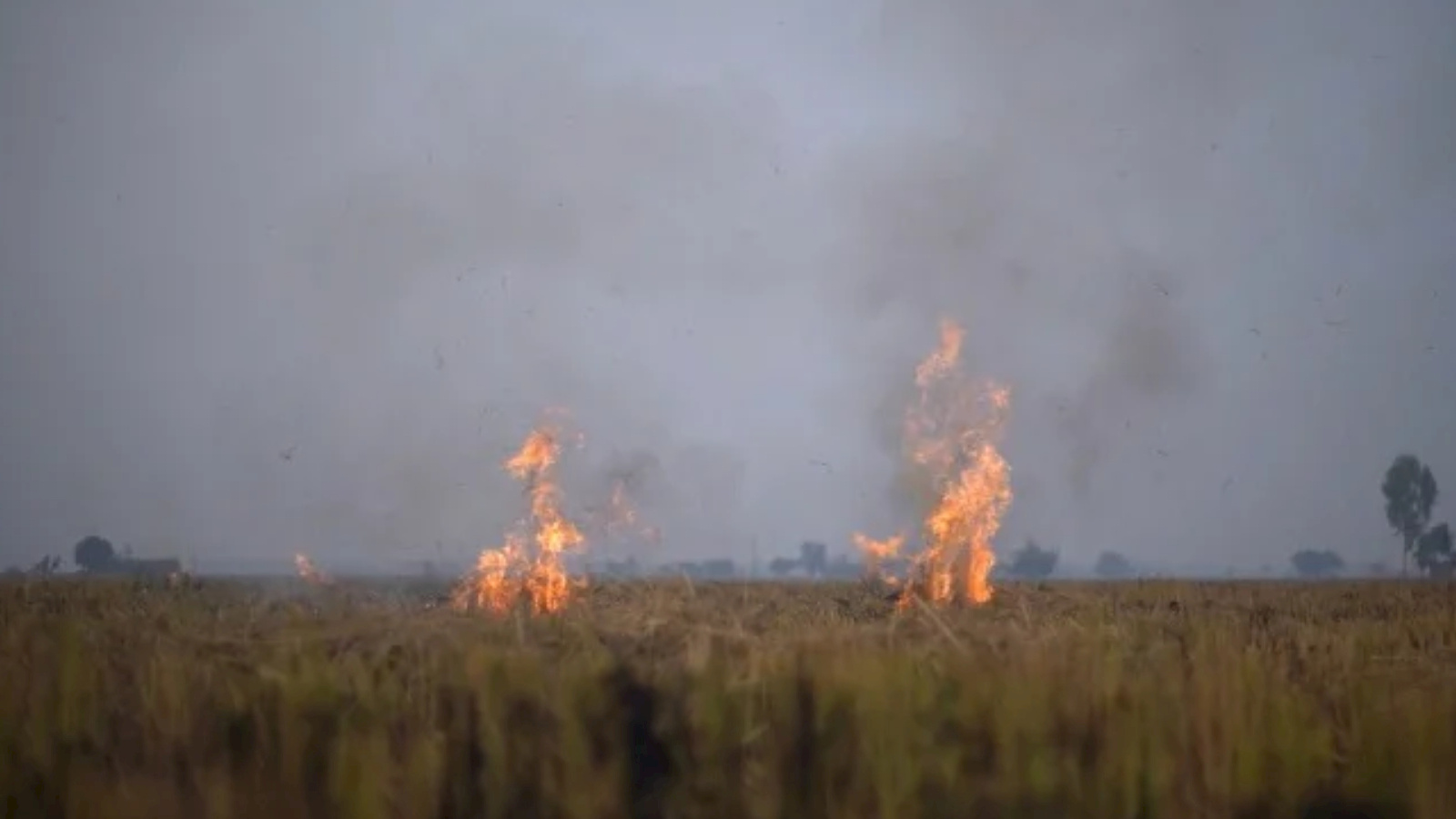
After each rice harvest, many farmers from North India burn leftover straw before sowing wheat, and the smoke makes the air hazardous. Machines that clear fields without fire exist, and the government subsidises them. Many sit idle. Farmers still light the match, and that puzzle drove Subhankar Saha, Assistant Professor at the Amrut Mody School of Management, Ahmedabad University, to research operations management.
Professor Saha sees these ‘good machines’ as just one link in the chain. Picture a shopkeeper being handed a QR code for digital payment. It means little until someone shows him how it saves trips to the bank and sits beside him for his first few payments. “The real challenge is implementation,” Professor Saha says, getting farmers to use the technology. A technology can solve a problem on paper, but its impact depends on whether people can and will use it in practice.
Working with the Confederation of Indian Industry, his team supplied that missing step. They linked company funders, machine makers, farm agencies and villages. Volunteers went door to door. Experienced farmers demonstrated the machines. Children and street plays carried the message, and villages shared machine banks.
The team compared 82 villages of Punjab that received the programme with 329 others in the same area, using NASA satellite fire records. Professor Saha trusts that source: “Satellite data is very hard to contaminate.” Farmers and organisations cannot influence it. Programme villages had about 26% fewer fires, which the team linked to lower fine-particle pollution.
Farmers gain benefits too. Wheat yields come out the same with or without burning, but farmers who skip the fire need less seed and fertiliser, so their profit rises. The paper won a 2026 Babbage International Policy Forum Industrial Innovation Policy Award.
The same question drives his hospital research: where does a sound system leak? Picture two US patients who are medically identical, one with government insurance and one with private insurance. Private insurers approve tests before paying. Government insurance does not. Packing for a flight works the same way: everyone packs the passport, but the “just in case” jacket only makes it into the bag when nobody weighs it. Doctors told the team the gap sits in minor tests. Heart pain always earns an ECG, but an unchecked patient may also get an extra blood test, because doctors want to be “doubly sure.” Checks for every insurance type, he suggests, could save public money.
His latest study looks at a less obvious question in hospital management: what happens when doctors divide their working week between multiple hospitals? Such arrangements allow hospitals to draw on medical expertise without employing every doctor full-time. As doctors must divide their time, medical teams must coordinate around their availability, and patient care must remain continuous even when the treating doctor is elsewhere.
Professor Saha's early findings suggest that the relationship between this arrangement and hospital productivity is not linear. As the share of doctors working across hospitals increases, productivity initially falls but eventually rises again, forming a U-shaped curve. The challenge, then, is to understand how hospitals can balance access to medical expertise with the coordination required to use it effectively. What drives this pattern is still being investigated. “We don’t have concrete, robust results for policymakers yet,” he says.
Professor Saha does not claim the farm and hospital findings carry over to each other. What links them is a way of looking: any service is a series of steps, and fixing the steps can matter as much as inventing the next tool. When a good fix goes unused, look at the process before you blame the tools or the people.