
1 October 2026
Rethinking the Ecosystems Around Women Entrepreneurs
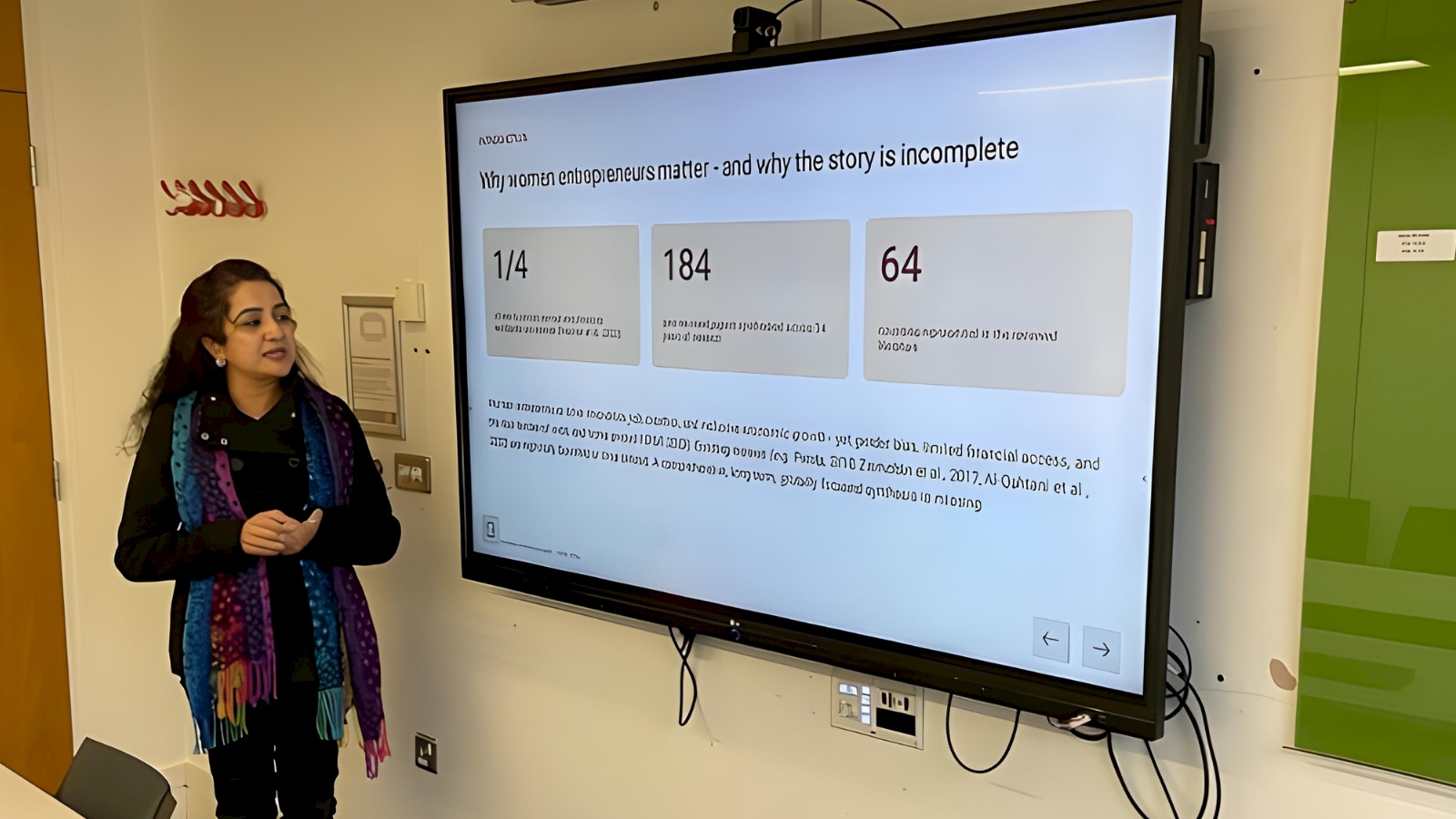
Women’s entrepreneurship has changed considerably over the past four decades. Women are entering and building businesses across developed, developing and underdeveloped economies, contributing to economic growth, job creation and innovation. Yet the challenges they face have not simply disappeared with this progress.
Professors Bijal Mehta and Hetal Jhaveri of the Amrut Mody School of Management, along with co-authors Dhruvi Naik from IIM Ahmedabad, Abrar Ali Saiyed from University of Glasgow and Muneza Kagzi from T. A. Pai Management Institute (TAPMI), examine this evolution and what it reveals about the environments in which women entrepreneurs operate.
Identifying gaps in existing research, in the first study, From Barriers to Breakthroughs: Tracing the Evolution of Women Entrepreneurs’ Challenges and Coping Mechanisms (1990–2023), the researchers analyse 184 studies published over four decades to trace how women’s entrepreneurial experiences have changed across economies and different contexts. Their review maps barriers spanning personal and family circumstances, societal and structural conditions, financial constraints, and government-related factors, as well as the coping mechanisms women entrepreneurs have developed in response.
Their second study, Women’s Entrepreneurship at the Edge: Reframing Entrepreneurial Ecosystems as Gendered Architectures of Power, takes this inquiry further: if these challenges persist across contexts and over time, what is happening within the entrepreneurial ecosystems themselves?
Drawing on the same body of 184 peer-reviewed articles, the researchers identify seven dimensions that push women entrepreneurs towards the edges of entrepreneurial ecosystems. The framework brings together gendered institutional logics, power hierarchies and resource allocation, shifting the focus from what women lack to how entrepreneurial ecosystems themselves are structured.
Together the studies offer a systemic way to understand women’s entrepreneurship. They suggest that addressing persistent barriers requires looking beyond individual coping strategies to the institutions, relationships, resources and power structures that shape entrepreneurial participation. These papers presented at the British Academy of Management conference (BAM 2026), have implications for future research, policy and ecosystem interventions.