21 April 2026
Professor Receives ANRF Grant to Study the Body’s Trade-Offs Under Prolonged Heat Stress
As climate change drives temperatures higher each year, prolonged heat exposure is becoming the norm. The human body maintains a stable internal temperature of around 37°C through constant physiological adjustments, but this resilience comes at a cost. Over time, sustained heat places increasing strain on the body, prompting urgent questions about its long-term impact.
“When the body is exposed to heat for long durations, it prioritises cooling mechanisms like sweating and redirects blood flow towards the skin,” explains Professor Manish Grover of the School of Arts and Sciences at Ahmedabad University. “But this means other organs may receive less support than they need.” This trade-off raises a critical question: how does the body systemically regulate its response to prolonged heat, and what happens as the first line of protective responses begins to decline over time?
Patients admitted with heat stress do not always present symptoms confined to the skin or temperature regulation. Instead, many experience gut dysfunction, nausea, and digestive distress. Others show signs of cognitive decline, cardio-respiratory complications, or, in vulnerable cases, adverse pregnancy outcomes. These effects point to something more complex than surface-level heat exposure.
Supported by the Prime Minister Early Career Research Grant from the Anusandhan National Research Foundation, Professor Grover’s research, Defining the systemic regulation of an organism’s response to prolonged heat stress, seeks to understand how an organism manages prolonged heat stress and why its adaptive mechanisms begin to fail. “There is a shift in how funding is being allocated, towards larger, interdisciplinary projects that address real societal challenges. In this evolving landscape, grants like this are especially valuable, providing the scale of support needed to build a strong research programme.”
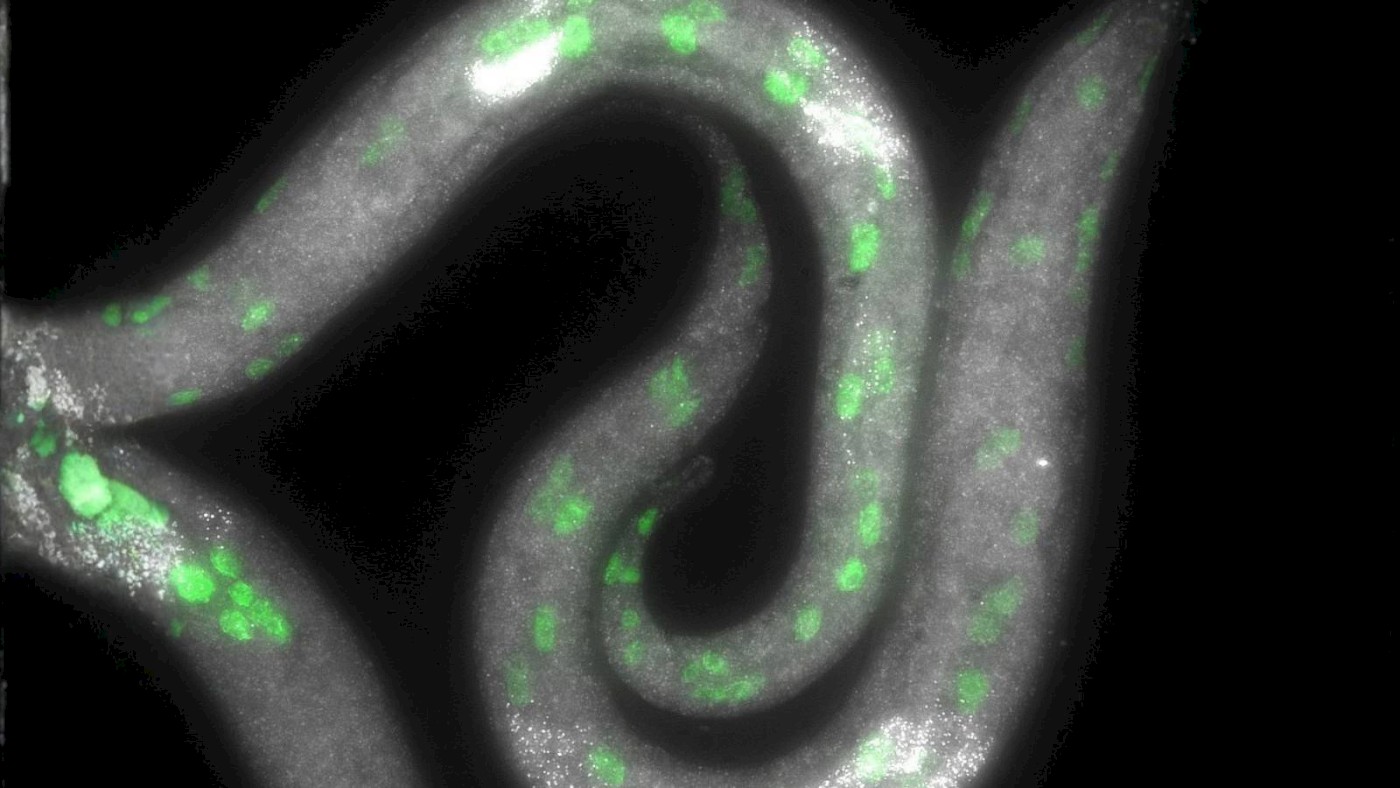
To investigate this, he works with a microscopic worm called Caenorhabditis elegans, widely used in biological research. Despite its simplicity, the organism shares fundamental biological processes with humans, revealing conserved principles relevant to human biology. Over the decades, it has become a powerful model for studying complex biological systems. What makes the worm particularly useful is not just its simplicity, but the parallels it reveals.
In controlled experiments, short bursts of heat exposure led to longer lifespans and improved health in the worms. This aligns with what scientists already know, that brief stress can trigger adaptive responses that strengthen the organism. However, when the exposure was extended, lifespan was reduced and multiple systems began to fail.
Through a series of planned behavioural and physiological tests, Professor Grover’s research will examine how different functions change under prolonged heat stress. These experiments will assess neural responses involved in sensing and reacting to the environment, movement as a readout of neuromuscular function, feeding behaviour, reproductive capacity, and other physiological functions.
Among the systems affected, the gut has emerged as an especially important focus. Professor Grover’s work has already revealed gene expression signatures in worms under prolonged heat stress that are typically associated with gut injury caused by pathogens. This is particularly striking because patients suffering from heat stroke often show gut-related complications, suggesting parallels with aspects of human heat-related pathology. Despite lacking blood circulation or sweating mechanisms, the worm exhibits stress-associated changes that may help illuminate broader physiological responses to prolonged heat.
The research is built on the idea that the body’s response to heat is not governed by a single mechanism, but by a coordinated system. This transition, from adaptation to dysfunction, forms the crux of the research, seeking to answer why some organs fail earlier than others, and whether this trajectory can be altered.
Situated within a research environment that actively encourages such inquiry, this work reflects Ahmedabad University’s growing emphasis on creating impactful and meaningful knowledge. “The biggest strength at Ahmedabad University is the freedom to pursue what you genuinely want to work on, with emphasis placed on your passion, motivation, and ability to deliver rather than just the topic itself. Ahmedabad University provides a strong starting point through institutional support, including startup funding, while fostering an environment where both basic and applied research are equally valued,” said Professor Grover.
As climate conditions continue to shift, understanding how organisms regulate and sustain their response to prolonged heat is becoming essential, not only to better understand the limits of physiological adaptation, but also to identify factors that influence vulnerability under prolonged heat.