25 June 2026
Mathematical Models to Aid Public Health Decisions

How can mathematical models protect millions?
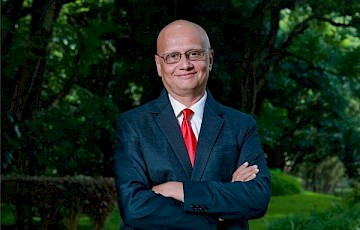
For Professor Indrajit Ghosh of the Bagchi School of Public Health, a theoretical mathematician by training, mathematics has become more than an academic discipline. It is a tool for addressing some of society’s most pressing public health challenges. Infectious disease modelling showed him that theoretical work could have a tangible impact on people’s lives.
“What motivated me,” Professor Ghosh says, “was the possibility that mathematical ideas could eventually influence interventions and make a real difference.”
That philosophy defines his work today. Positioned at the intersection of mathematics, epidemiology, and public policy, Professor Ghosh uses mathematical modelling to convert data into evidence-based insights. He combines differential equations with real-world epidemiological data to understand how diseases move through populations. Once calibrated with observed data, these models become powerful decision-making tools. This helps anticipate disease outbreaks, evaluate interventions, and make informed public health decisions.
One of his major research projects focuses on dengue, a disease whose transmission is becoming increasingly influenced by climate change. His research examines how environmental factors such as temperature and humidity affect mosquito survival across different stages of their life cycle. By integrating these climatic variables into the models, alongside epidemiological data, he identifies the most effective timing for vector-control interventions.
The preliminary findings suggest that mosquito-control measures, including fogging and insecticide spraying, should begin as early as June and continue through September. According to their projections, implementing this intervention consistently in the Ahmedabad Municipal Corporation region could reduce dengue cases by nearly 83 per cent by 2028. This is one of many examples of how this approach translates data into evidence-based public health action.
The same mathematical framework applies to measles, with a focus on improving vaccination strategies. Maternal immunity typically begins to decline around six months after birth, while the first routine measles vaccine is administered at nine months. This creates a vulnerable window during which infants remain susceptible to infection and, potentially, severe complications. Through this modelling approach, Professor Ghosh and his collaborators are exploring whether supplementary immunisation campaigns beginning at six months, rather than nine, could reduce infections and improve long-term disease outcomes.
The concept of ‘age-stratification’ remains central to his study. Instead of assuming that everyone in a population interacts similarly, his age-structured models recognise that children, working adults, and older populations have distinct contact patterns and varying levels of disease risk. Incorporating these differences allows researchers to recommend optimal age groups for interventions.
Professor Ghosh also sees a broader mission in his work. “Historically, much of the infectious disease modelling for low- and middle-income countries has been undertaken by researchers based in Europe and America. However, countries such as India increasingly require in-house expertise capable of analysing sensitive health data that cannot easily be shared internationally,” he says. His research, therefore, focuses on advancing modelling techniques while strengthening India’s capacity to generate evidence that directly informs public health policy.
This philosophy drives two major research initiatives. Supported by the ANRF ARG Mathematical Research Impact Centric Support (MATRICS) grant, Professor Ghosh is developing age-stratified models to understand mosquito-borne disease transmission under changing climatic conditions and evaluate effective control strategies. His measles research, supported through the National Disease Modelling Consortium at IIT Bombay and the Measles Analytics Hub at Imperial College London, both funded by the Gates Foundation, applies the same mathematical principles to optimise vaccination strategies and strengthen disease elimination efforts.
The impact of Professor Ghosh’s work extends beyond India. He is collaborating with the World Health Organization (WHO) Indonesia, the Indonesian Ministry of Health, and Dr Bimandra Adiputra Djaafara of the NUS Saw Swee Hock School of Public Health to support Indonesia’s goal of eliminating measles by 2030. By using these models to evaluate the potential impact of different vaccination and intervention strategies, his research provides policymakers with scientific evidence to make informed decisions and accelerate progress towards measles elimination.
For Professor Ghosh, mathematics has become an instrument for informing policy, preventing disease, and ultimately, improving lives. Yet he notes that equations alone cannot eliminate disease. Public awareness campaigns, community education, and preventive behaviour remain equally important, making public health a shared responsibility between researchers, governments, and citizens.