
• About Ahmedabad
  • Stepwell
  • Student Affairs
  • Alumni and Advancement
  • Collaborate With Us
  • Media
  • Academics
    • Schools & Centres
      • Amrut Mody School of Management
      • Bagchi School of Public Health
      • School of Arts and Sciences
      • School of Engineering and Applied Science
      • Undergraduate College
      • Graduate School
      • Ahmedabad Design Lab
      • Centre for Heritage Management
      • Centre for Learning Futures
      • Global Centre for Environment and Energy
      • International Centre for Space and Cosmology
      • Sahyog: Centre for Promoting Health
      • Stepwell Centre for Asian Futures
      • The Climate Institute
      • The Institute of Manufacturing and Economy
      • VentureStudio
    • Programmes
      • Undergraduate Programmes
      • Graduate Programmes
        • Masters Programmes
        • Doctoral Programmes
      • Continuing & Executive Education
    • Learning Initiatives
    • Libraries
    • Interdisciplinary Learning
    • Academic Calendar
  • Admission
    • Undergraduate Admission
    • Graduate Admission
      • Masters Admission
      • Doctoral Admission
    • Fees & Financial Aid
  • Faculty
    • Amrut Mody School of Management
    • Bagchi School of Public Health
    • School of Arts and Sciences
    • School of Engineering and Applied Science
    • Centre for Heritage Management
    • Centre for Learning Futures
    • Global Centre for Environment and Energy
    • International Centre for Space and Cosmology
    • Stepwell Centre for Asian Futures
    • The Institute of Manufacturing and Economy
    • VentureStudio
  • Research
  • About Ahmedabad
  • Stepwell
  • Office of the Dean of Students
  • Alumni and Advancement
  • Collaborate With Us
  • Media
  • Academics
    Schools & Centres Programmes Learning Initiatives Libraries Interdisciplinary Learning Academic Calendar
  • Admission
    Undergraduate Admission Graduate Admission Doctoral Admission Fees & Financial Aid
  • Faculty
  • Research

24 June 2024

Junk-DNA Could be Useful in Assessing Risk of Insect Extinction
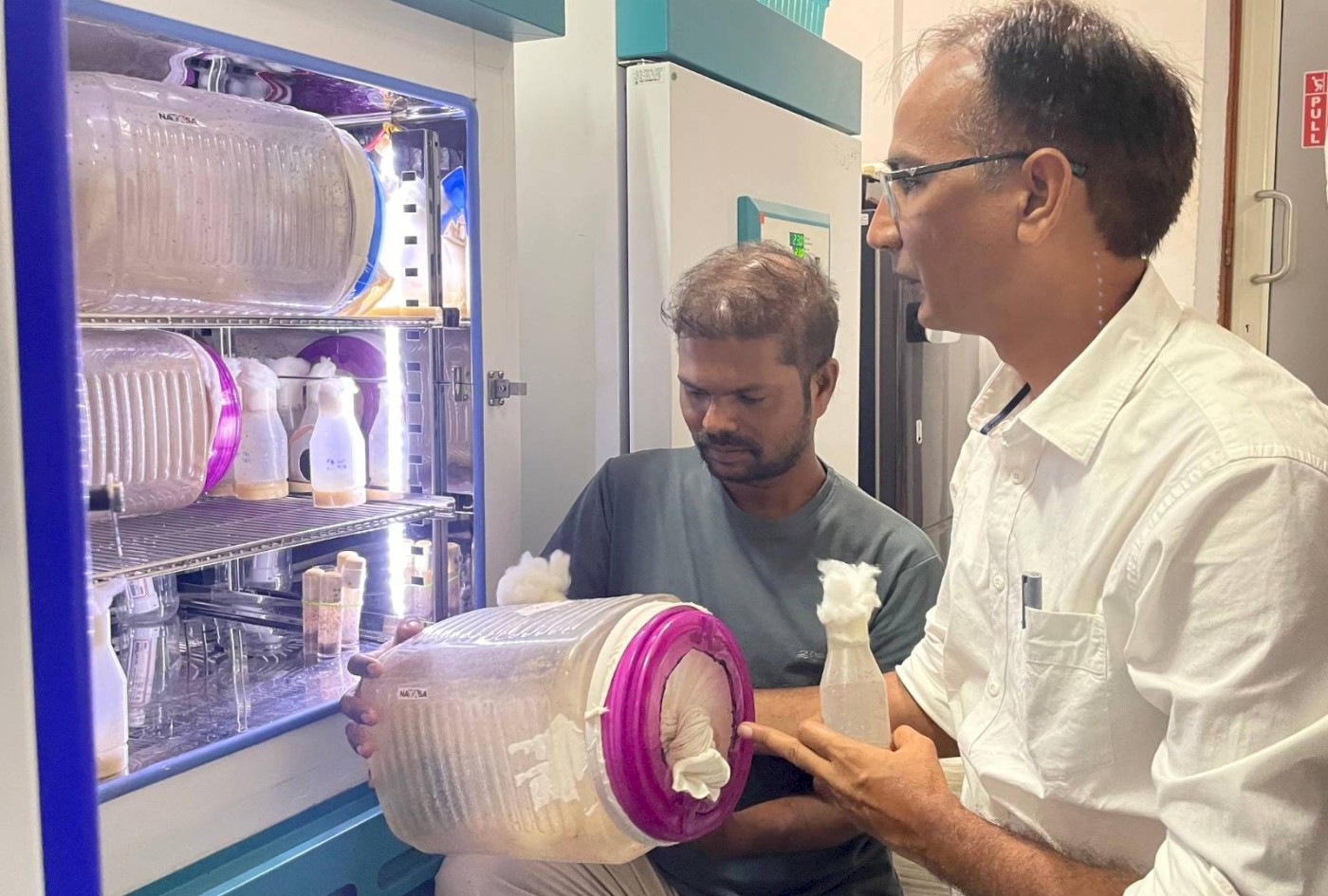
Subhash Rajpurohit Junk DNA

In the context of the impact of climate change on global biodiversity, are insects thriving or declining in response to rapid temperature fluctuations? Professor Subhash Rajpurohit from the School of Arts and Sciences at Ahmedabad University tries to analyse this question in his research study, ‘No Single Rescue Recipe: Genome Complexities Modulate Insect Response to Climate Change,’ which has been published in the journal Current Opinion in Insect Science.  

Conducted jointly with Harshad Mayekar, post-doctoral fellow at the Experimental Ecology and Evolution (EEE) laboratory at Ahmedabad University, the study underscores the role of ‘Junk’ DNA content in insect genomes that could be vital in understanding if the insect populations are declining/or adapting to climate change.

Insects that are unable to regulate their internal temperatures succumb to rising temperatures despite the insect clade being the most speciose of all living organisms combined. However, historical records suggest that rather than becoming extinct, insects have always diversified into different species. This makes Junk DNA assessment a promising tool for understanding insects’ response to climate change.

Accumulation of Junk DNA can provide the raw material for ensuring an adaptive response to stressful conditions. However, it could carry deleterious mutations, negatively impacting the survival/fitness of insects. Deleterious mutations from Junk DNA are retained in smaller populations, leading to the formation of an enlarged genome size. This could become a potential indicator of the fact that insects could either adapt to environmental stressors or become extinct due to the accumulation of harmful mutations.

Despite it being a promising tool, the implementation of Junk DNA can be challenging because it is difficult to track declining insect populations in the wild. The authors suggest that insects from relatively stable habitats could be targeted for genomic assessment. This is because populations from stable habitats could be more vulnerable than others as they rarely experience drastic climate fluctuations and could hence exhibit stable genome sizes.

Additionally, while genome size could be a parameter for assessing insect extinction, it needs to be considered alongside other factors due to the multi-dimensional effects of climate change, which needs to be investigated at both the evolutionary and ecological scales. The authors of the study suggest that with less than 1 per cent of the genomes being sequenced so far and the consequent lack of clarity on insect diversity, it is difficult to estimate the exact insect population that is adapting to or declining due to climate change. However, the approach suggested in the study promises to foster a better understanding of insect diversity and insects’ responses to environmental changes.

Related News

Fighting the Good Fight: Talking Climate Change with Dr Minal Pathak

Anil Patel, IASTA Young Scientist Award 2025

IASTA Young Scientist Award 2025 for Work on Atmospheric Aerosol Chemistry and Health

Nadir Godrej Calls Upon Ahmedabad University’s Class of 2023 to use Interdisciplinary Skill along with an Unrelenting Will

Ahmedabad University

Navrangpura, Ahmedabad 380009
Gujarat, India

info@ahduni.edu.in
+91.79.61911000/200/201

  • About Ahmedabad
  • Our Purpose
  • University Leadership
  • Board of Management
  • Board of Governors
  • Schools & Centres
  • Research
  • Programmes
  • Admission
  • Tenders and Vendors
  • Resources
  • Careers
  • Accreditations and Compliance
  • IQAC
  • Campus Visit
  • Contact
  • Privacy Policy

Auris

COPYRIGHT AHMEDABAD UNIVERSITY 2026

CONNECT WITH US

Download Brochure

Please enter information in the form below. The download will start automatically on submission of the form.

Download Brochure

Please enter information in the form below. The download will start automatically on submission of the form.