31 October 2025
Italian Fashion Days at Ahmedabad University
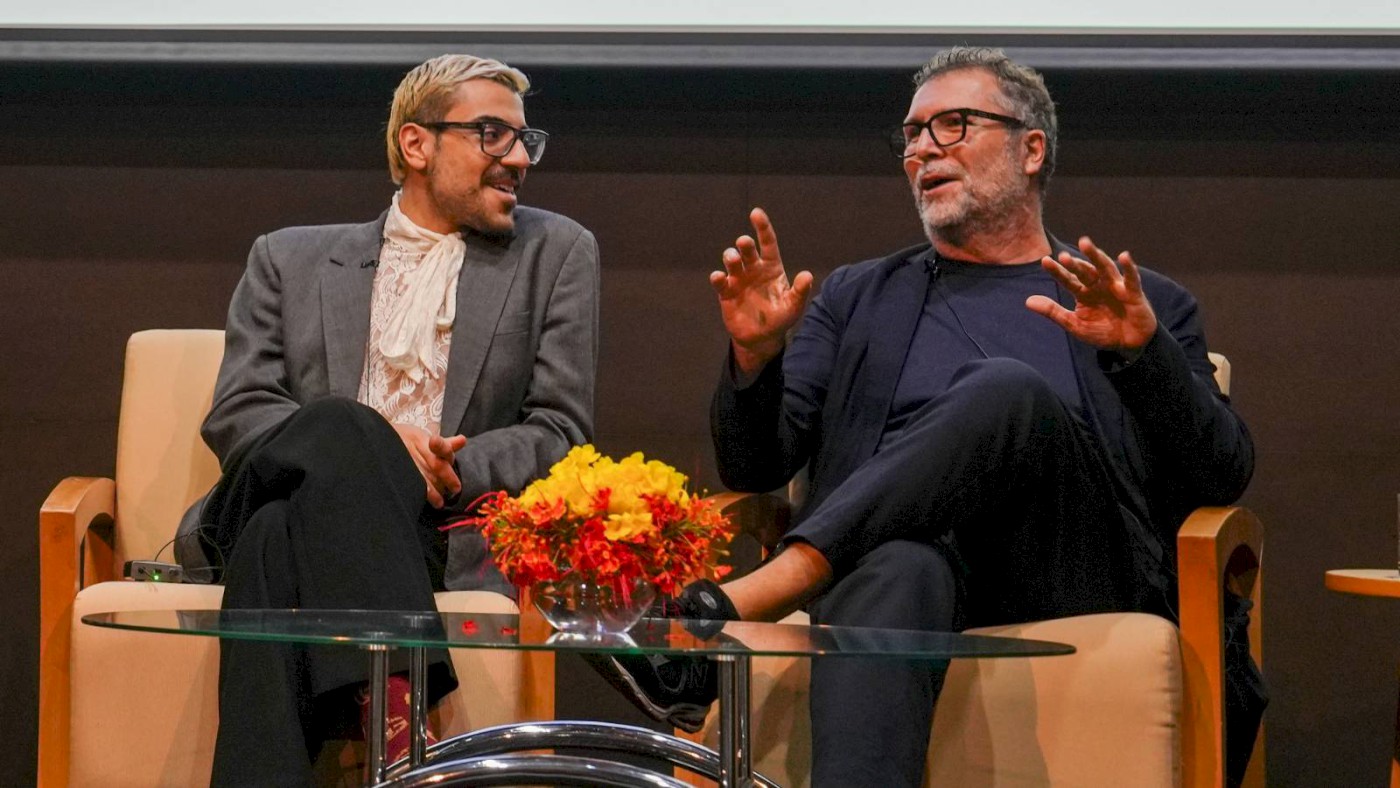
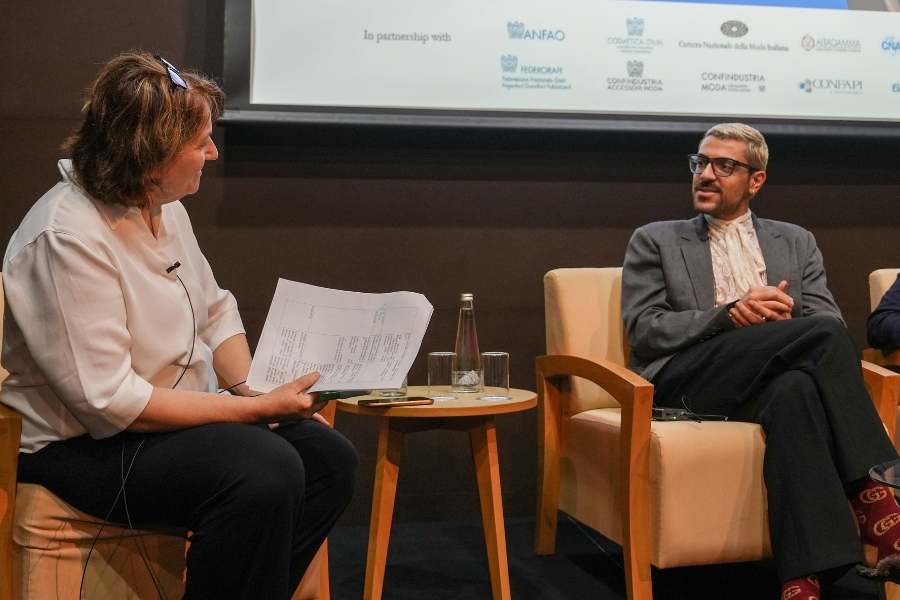
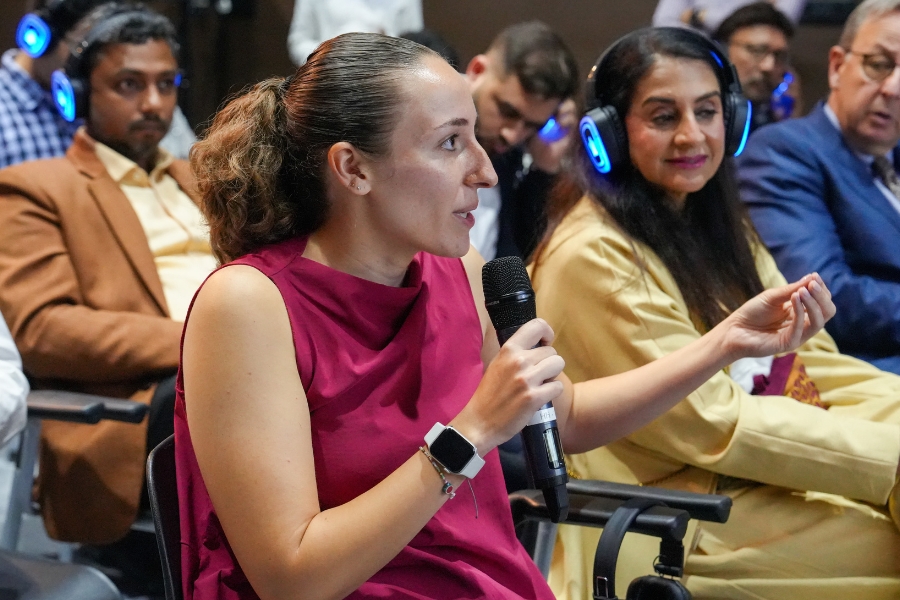
Italian Fashion Days, held at Ahmedabad University, brought together business leaders from the Italian fashion world with Indian industry and academicians to explore how Italian fashion, Indian textile heritage and India’s manufacturing capability can combine to create a world-facing textile industry that competes at the highest level while keeping sustainability at the core of production.
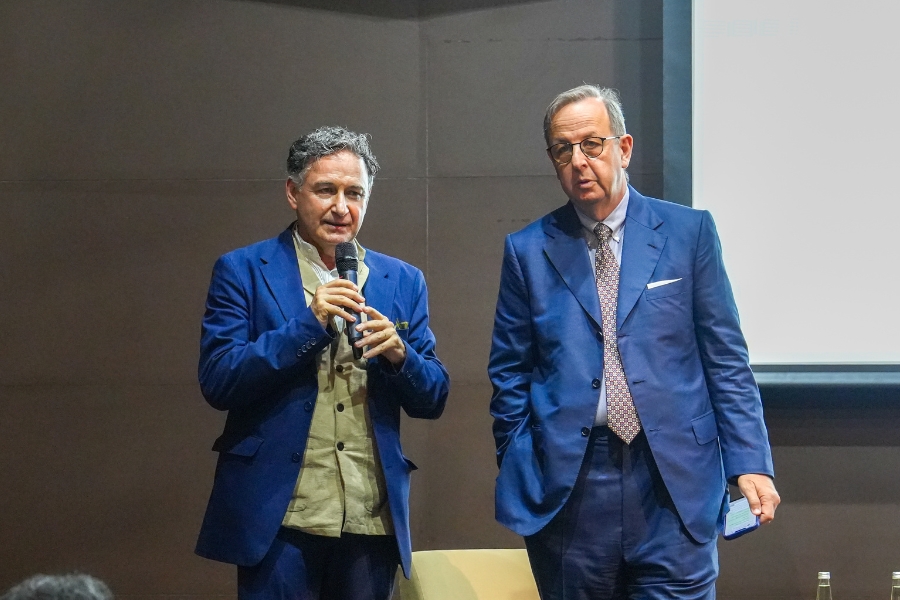
The Ambassador of Italy to India, His Excellency Mr Antonio Bartoli, highlighted that the strengths of Italy and India are not sequential but complementary. Italy’s identity in luxury fashion comes from design thinking, artisanal precision and brand positioning. India’s strengths lie in textile depth, living craftsmanship and one of the world’s most mature textile manufacturing ecosystems. The question is how the synergies between the two countries can be strengthened to create long term value.
A video from the late Giorgio Armani’s final collection offered a vivid reference point. The embroidery that appeared on the Milan runway had been produced in India for the Italian brand JATO. It demonstrated an operating model in which design, hand skill and manufacturing across both countries result in a final product that meets the highest global standards.
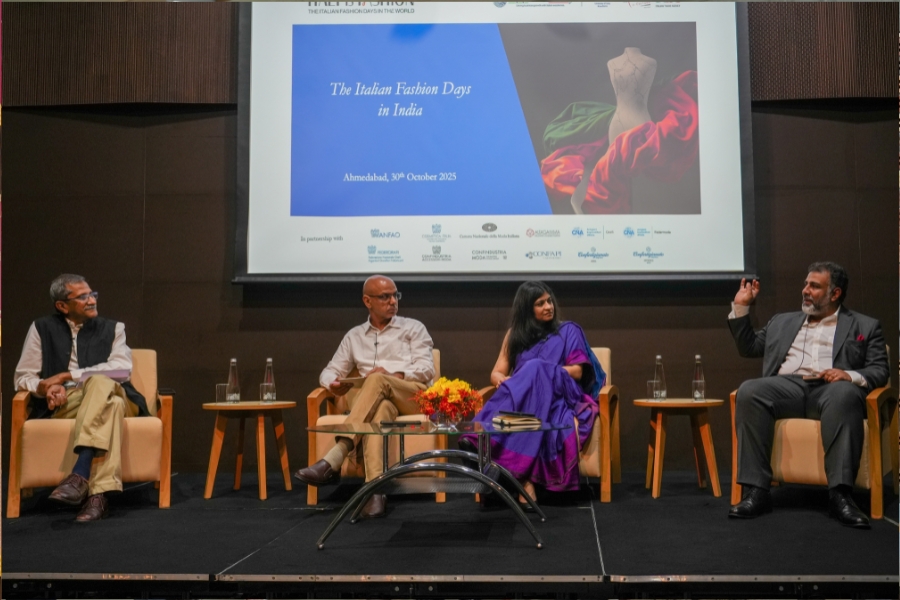
Innovation, sustainability and business viability are often treated as competing priorities in the global textile industry, yet the conversation at Italian Fashion Days demonstrated that they can reinforce each other. Circular production systems, climate aware supply chains and the continuing relevance of Indian textiles can work together to create technical, cultural and commercial value rather than operate in tension. This idea shaped the panel moderated by Professor Pankaj Chandra, Vice Chancellor of Ahmedabad University, where Punit Lalbhai, Vice Chairman of Arvind Limited and a member of the Board of Governors at Ahmedabad University, joined Professor Mahendra Singh Rao and Professor Minal Pathak to discuss how India’s textile manufacturing ecosystem, when aligned with its craft traditions, has the capacity to deliver both scale and conscience for the global market.
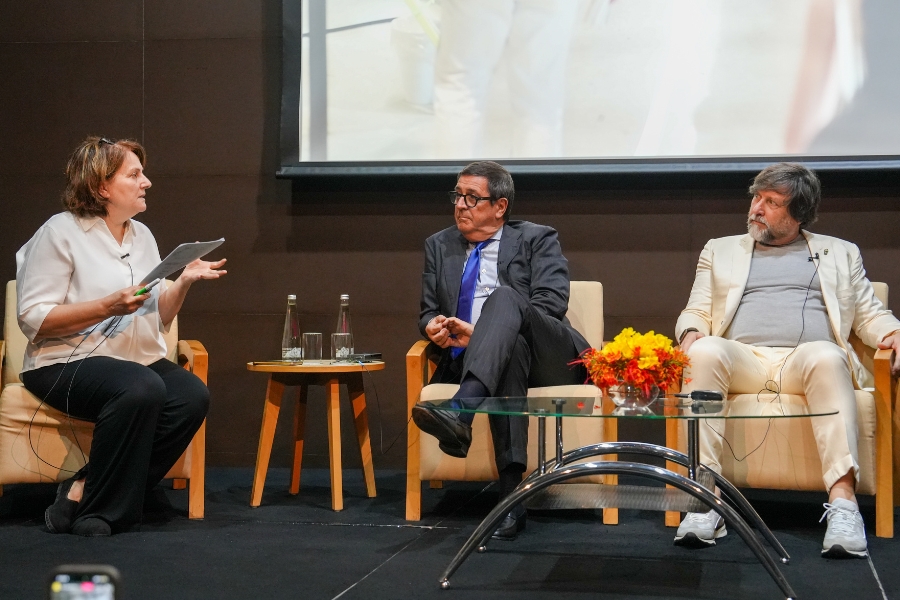
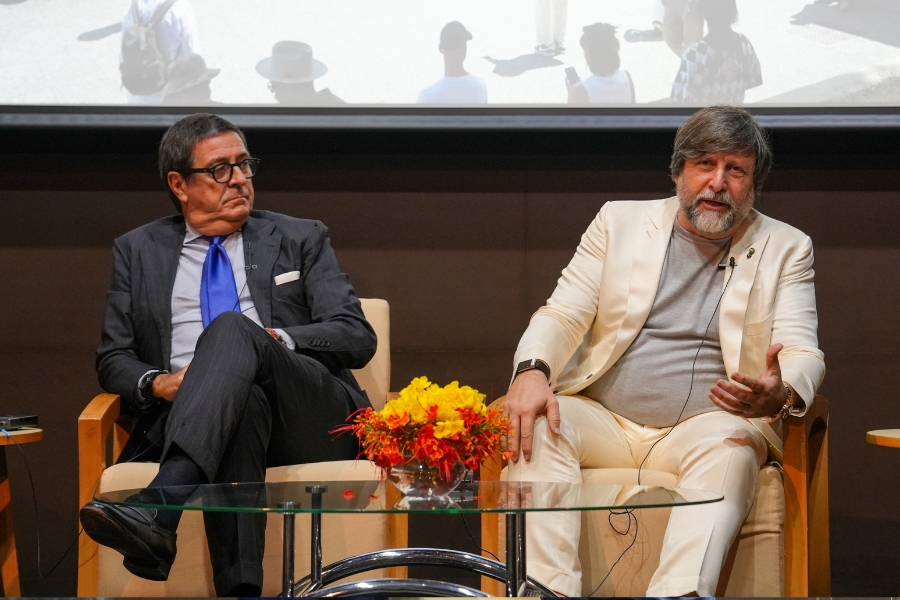
The panel of industry leaders from Italy considered what it would take to scale this model. Antonio De Matteis, CEO of Kiton and President of Pitti Immagine, and Claudio Marenzi, President of Herno and Montura, discussed the changing expectations of global luxury. Their view was that growth can no longer rely on rapid production cycles or opacity in sourcing. The future belongs to companies that insist on quality, traceability and responsibility across the full supply chain. In that sense, Italy and India are aligned. Italy brings the vocabulary of design and brand culture. India brings the combination of heritage skill and large scale production that can meet rigorous standards.
Jacopo Tonelli, CEO of JATO 1991, added the perspective of someone who has worked across both ecosystems for three decades. He described JATO India as a collaboration built on equivalence rather than outsourcing. Indian artisanship is not valuable because it is inexpensive but because it is technically advanced and culturally rooted. Fashion cannot be considered beautiful if the conditions of its making are not ethical and respectful. Creativity, in his view, is not only the beginning of a garment but also the discipline that holds the whole process together.