9 October 2025
Innovating Classical Knowledge Streams for Classrooms
We are enchanted with the Ramayana and the Mahabharata, with countless authors experimenting with these texts, deriving insights, offering interpretations, and reimagining their narratives. These epics, composed thousands of years ago, remain astonishingly relevant even today. We discuss them passionately, debating the characters' choices, drawing moral lessons, and even using them to justify contemporary behaviours. They've become embedded in our moral fabric, shaping our sense of right and wrong.
But did you know that the Lakshman Rekha, a climactic plot device in the Ramayana, does not exist in the Valmiki Ramayana? Over the last two millennia, there have been innumerable “retellings” of the story of the Ramayana (such as Tulsidas’ Ramcharitmanas or Hemachandra’s Jaina Ramayan). One might expect the Lakshman Rekha to have been part of the core story, but this is surprisingly not found in the Valmiki Ramayana.
The Lakshman Rekha has become an everyday metaphor, especially used to reinforce societal boundaries. That powerful boundary, which many believe was drawn to protect Sita and has since been used to define acceptable behaviour, is a later addition. This leaves one wondering how much of what we think is 'authentic' might be layered with centuries of reinterpretation?
Much like mythology, philosophy too has been shaped by selective narratives. For instance, philosophy is often synonymous with the Western tradition in the global imagination, from Socrates and Aristotle to Descartes and Kant. But did you know that each philosophical tradition often poses different questions? For example, Western, Islamic and Indian traditions have much to say on the topic of God (although there is much difference between them as to what constitutes “God”), in contrast to the Chinese tradition which pays little attention to this topic. Similarly, Western and Islamic traditions are deeply concerned with the topic of Free Will, whereas the Indian and Chinese traditions do not consider this to be an important philosophical problem. This reveals how each philosophical tradition examines different answers and poses distinct questions, offering a broader and more comparative understanding of what philosophy truly is.
When one grows up in India, one is surrounded by Sanskrit. One learns verses, hears phrases, and repeats them often. You cannot grow up here without coming across them. Take Atithi Devo Bhava, for example. What does it mean? Most people will tell you, "Guests are like God," or "Guests are equal to God." But here's the thing—it doesn't actually mean that. A surprising amount of information we know, especially about cultural or religious phrases, doesn't hold up under closer examination. And that's where the real learning begins, questioning what we've always assumed.
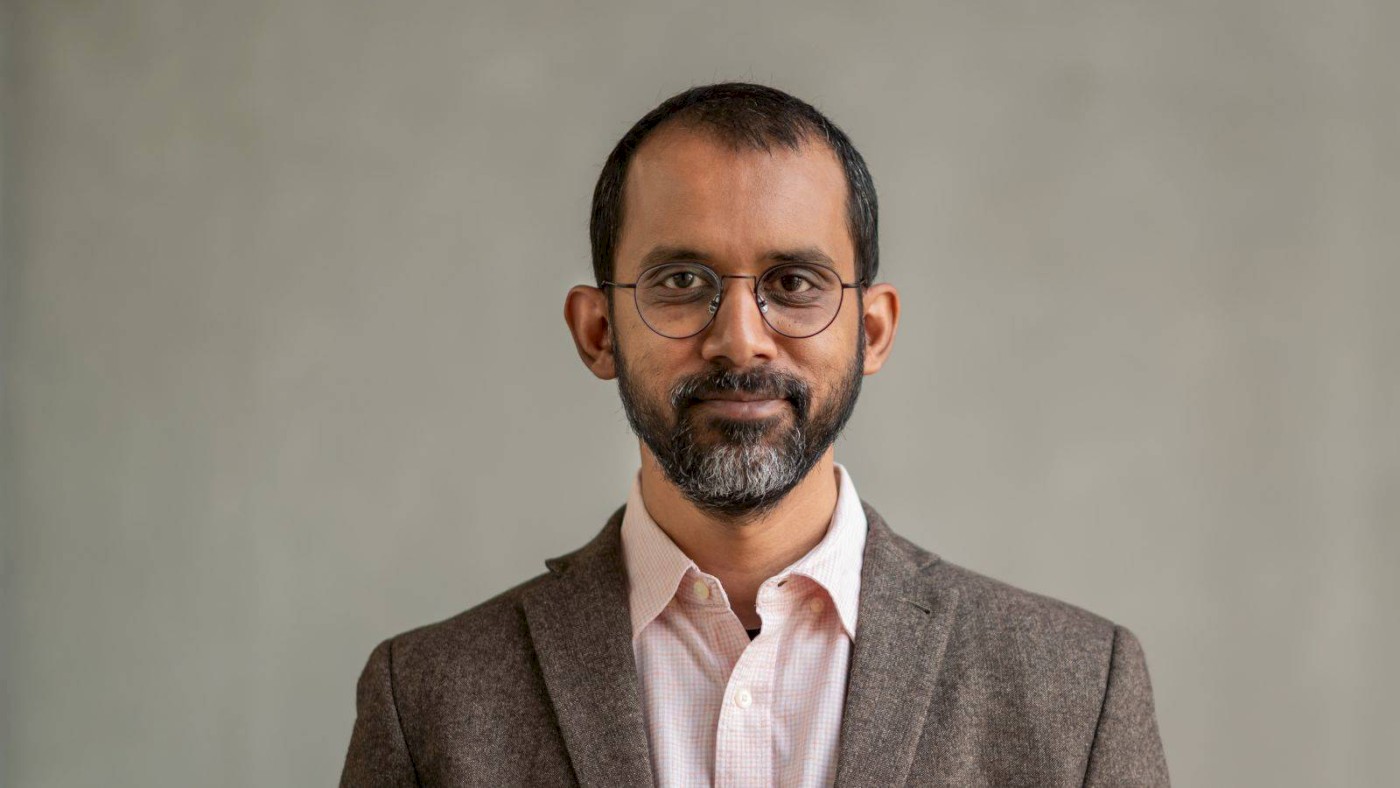
These explorations form the pulse of Professor Shishir Saxena’s classroom at Ahmedabad University’s School of Arts and Sciences, where he teaches Philosophy and Sanskrit. For him, these subjects are not relics of the past but living disciplines that offer deep insights into today’s world.
Professor Saxena laments how Sanskrit studies, in particular, have suffered. “We’ve done an enormous disservice to the study of these venerable traditions,” he says. “Few students today consider pursuing Sanskrit seriously. And that’s because we’ve failed to create meaningful pathways.” He believes that the urgent need of the hour is innovation. “We are sitting on an intellectually rich and sophisticated tradition, philosophically rigorous and still deeply relevant. But unless we innovate, we risk remaining entirely oblivious to how this rich legacy shapes us even today or misunderstanding it through the eyes of charlatans.”
His commitment to reinvigorating these fields has earned recognition both within and beyond the University. Professor Saxena, who previously received the Chairman’s Award for Experiments to Advance Active Learning, recently, was shortlisted as “Most Innovative Teacher of the Year” at the Times Higher Education Awards Asia 2025, where Ahmedabad University was also honoured with the highest institutional recognition, “Leadership and Management Team of the Year.”
How does one innovate in fields often considered archaic? For Professor Saxena, the answer lies in course design. In his popular course Is Philosophy Dead? Great Ideas Across Space and Time, he challenges Eurocentric norms by introducing students to global philosophical traditions, including the Western, Islamic, Indian, Chinese, Japanese, and African, helping students move beyond narrow frameworks and appreciate the full spectrum of human thought.
In his introductory Sanskrit course, "Learning Sanskrit through Sanskrit Literature: Elementary," Professor Saxena blends rigorous grammar learning with immersive exposure to original Sanskrit texts from day one. Students don't memorise tables. Instead, every single evaluation in his many Sanskrit courses is open-book and/or open-device. Moreover, they study real verses to understand grammar in action and challenge popular misinterpretations. Students read original texts comparing scenes even with televised versions to uncover narrative distortions like the surprising absence of the "Lakshmana Rekha."
He challenges students to view Sanskrit not as a “dead” religious language but as a language of the intelligentsia over the past multiple millennia, with texts on medicine, dance, mathematics, and even mental health.
His classes often result in unexpected trajectories. Professor Saxena encourages students to integrate Sanskrit and Philosophy, guiding them toward undergraduate theses based on untranslated philosophical texts in original Sanskrit. For instance, one of his students has gone on to the University of Cambridge to continue further his study of Sanskrit philosophical texts. He also illustrates how interdisciplinary tracks reveal career pathways beyond traditional academia. For instance, he cites a student who combined her Major in Computer Science with a Minor in Sanskrit Studies and is going this year to a German university for an MS in Computational Linguistics. Another example is a student who, after studying several courses on Indian philosophy, completed her undergraduate dissertation on the aesthetics of Indian dance and has subsequently joined the National University of Singapore to study Art and Entrepreneurship.
These stories illustrate how these subjects can shape diverse worldviews and open global opportunities. Through a dynamic approach to teaching Sanskrit and Philosophy, Professor Shishir Saxena is not only reviving interest in ancient Indian knowledge systems but also reimagining their place in the modern world. By bridging tradition with innovation, he’s showing students that these disciplines are not archaic relics, but vibrant, evolving fields that can inform contemporary debates, inspire interdisciplinary research, and open unconventional career paths.