
• About Ahmedabad
  • Stepwell
  • Student Affairs
  • Alumni and Advancement
  • Collaborate With Us
  • Media
  • Academics
    • Schools & Centres
      • Amrut Mody School of Management
      • Bagchi School of Public Health
      • School of Arts and Sciences
      • School of Engineering and Applied Science
      • Undergraduate College
      • Graduate School
      • Ahmedabad Design Lab
      • Centre for Heritage Management
      • Centre for Learning Futures
      • Global Centre for Environment and Energy
      • International Centre for Space and Cosmology
      • Sahyog: Centre for Promoting Health
      • Stepwell Centre for Asian Futures
      • The Climate Institute
      • The Institute of Manufacturing and Economy
      • VentureStudio
    • Programmes
      • Undergraduate Programmes
      • Graduate Programmes
        • Masters Programmes
        • Doctoral Programmes
      • Continuing & Executive Education
    • Learning Initiatives
    • Libraries
    • Interdisciplinary Learning
    • Academic Calendar
  • Admission
    • Undergraduate Admission
    • Graduate Admission
      • Masters Admission
      • Doctoral Admission
    • Fees & Financial Aid
  • Faculty
    • Amrut Mody School of Management
    • Bagchi School of Public Health
    • School of Arts and Sciences
    • School of Engineering and Applied Science
    • Centre for Heritage Management
    • Centre for Learning Futures
    • Global Centre for Environment and Energy
    • International Centre for Space and Cosmology
    • Stepwell Centre for Asian Futures
    • The Institute of Manufacturing and Economy
    • VentureStudio
  • Research
  • About Ahmedabad
  • Stepwell
  • Office of the Dean of Students
  • Alumni and Advancement
  • Collaborate With Us
  • Media
  • Academics
    Schools & Centres Programmes Learning Initiatives Libraries Interdisciplinary Learning Academic Calendar
  • Admission
    Undergraduate Admission Graduate Admission Doctoral Admission Fees & Financial Aid
  • Faculty
  • Research

17 November 2025

How Gujarat's Pastoralists Navigate Urban Landscapes?
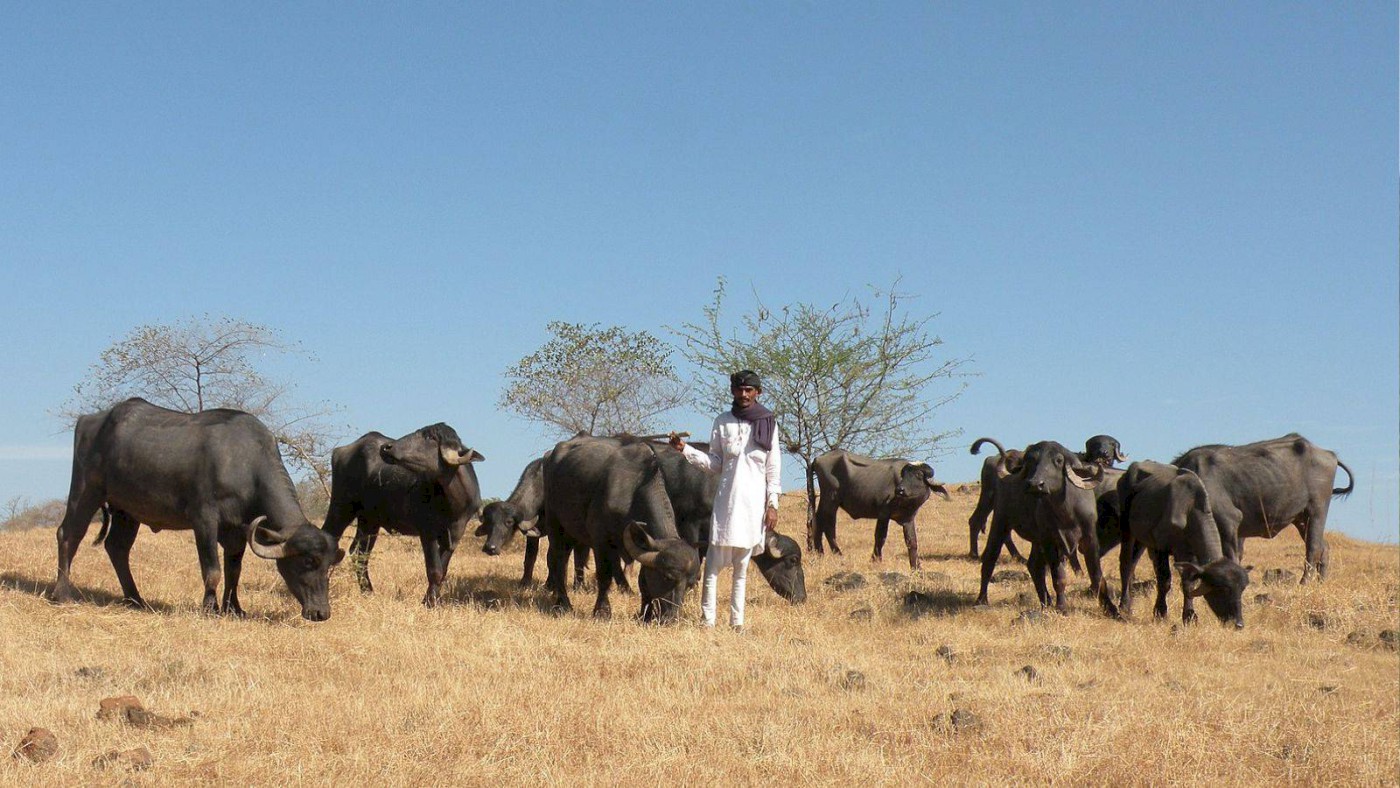
How Gujarat's Pastoralists Navigate Neoliberal Urban Landscapes?

How do socially marginalised youth draw upon and rework traditional identity markers (including caste and community networks) to cope with urban precarity and stake a claim in the changing economic landscape of post-liberalisation India?

These questions are investigated by examining the ways in which Gujarat's Rabari pastoralist youth navigate urbanisation and economic transition after being forced to move away from their traditional occupation of livestock herding in recent times. Rabaris are also called maldharis, a broader generic term that refers to pastoralists which literally means keepers (dhari) of livestock (mal), located in the western regions of Rajasthan and Gujarat. In the face of rapid urbanisation and the depletion of grazing pastures for livestock, rabari youth have been compelled to give up their traditional livelihoods and take up new occupations in cities. Professor Mona Mehta, through her research, examines how young people reinterpret traditional livelihoods, values, and rework community networks to navigate the challenges of precarious urban landscapes of neoliberal India.

Through her two interconnected research papers, From Pastures to Cities: Skills and Youth Social Mobility in Urban Gujarat and Herding Aspirations: Pastoralist Youth, Rockstar Shamans and the 'New Pastoralist Ethic' in Urbanising Gujarat, India, she studies both the occupational, cultural and socio-political dimensions of urban transformation. While the first paper focuses on the Rabari approaches to new forms of skills and work in the emerging economy, the second explores how traditional identity markers and popular culture are used to enable both economic participation in dominant growth narratives and political assertion within neoliberal urban contexts.  

Professor Mehta's research examines how Rabari youth use community-based skill networks to cope with economic precarity and limited education, while simultaneously developing a "new pastoralist ethic" to embrace opportunities thrown up by urbanisation. The studies reveal how community networks shape aspirations, skill acquisition, and novel ideas of entrepreneurship. This research draws on ethnographic fieldwork conducted among rabari youth in Ahmedabad, Gandhinagar, and Gandhidham (Kutch) between 2020-2025. Its methodology includes personal interviews, participant observation at community events, and analysis of popular culture and social media content.

Professor Mehta recently presented her work at the British Association for South Asian Studies (BASAS) Annual Conference 2025 and at the South Asia Institute of the School of Oriental and African Studies (SOAS), University of London. Her research traces the complex processes that shape the cultural politics of urbanisation and youth aspirations in contemporary South Asia.
Related News

NavGujarat Samay (Ahmedabad Samay)

Prachika Saxena Wins ‘Topmost HR Leader Gujarat, 2024’ Award

Prachika Saxena, Director, HR, Ahmedabad University, Wins ‘Topmost HR Leader Gujarat, 2024’ Award

16th Asiatic Lion Census

Ahmedabad University Researcher Contributes to 16th Asiatic Lion Census

Ahmedabad University

Navrangpura, Ahmedabad 380009
Gujarat, India

info@ahduni.edu.in
+91.79.61911000/200/201

  • About Ahmedabad
  • Our Purpose
  • University Leadership
  • Board of Management
  • Board of Governors
  • Schools & Centres
  • Research
  • Programmes
  • Admission
  • Tenders and Vendors
  • Resources
  • Careers
  • Accreditations and Compliance
  • IQAC
  • Campus Visit
  • Contact
  • Privacy Policy

Auris

COPYRIGHT AHMEDABAD UNIVERSITY 2026

CONNECT WITH US

Download Brochure

Please enter information in the form below. The download will start automatically on submission of the form.

Download Brochure

Please enter information in the form below. The download will start automatically on submission of the form.