
4 May 2026
How Ahmedabad’s Autorickshaw Drivers Are Rewriting Gig Economy Narratives
Resistance often conjures images of strikes, marches, or court battles. However, it does not always take the form of protest. Sometimes, it is subtle and strategic, as observed among Ahmedabad’s autorickshaw drivers. These are not passive workers trapped by technology, but individuals constantly learning how to work around it.
Conversations around the gig economy often focus on platform giants, algorithmic management, and worker precarity. Yet this narrative frequently overlooks older transport economies that have had to absorb digital disruption while carrying decades of local history. A research presentation by Ahmedabad University doctoral student Satya Oza brings one such overlooked story into focus: the changing world of Ahmedabad’s autorickshaw drivers.
Across India, app-based aggregators have transformed urban mobility. But beneath the convenience lie several issues, including workers facing falling incomes, uncertain earnings, and dependence on opaque digital systems. The common assumption is that workers simply endure these conditions. Ahmedabad’s autorickshaw drivers, however, navigate this reality differently.
Ahmedabad’s autorickshaw network has served as a vital layer of intermediate public transport for more than six decades. Yet in recent years, it has faced simultaneous pressures, including a rise in the number of drivers, tighter regulation from state authorities, changing urban geographies, and the arrival of app-based aggregators competing for both riders and control.
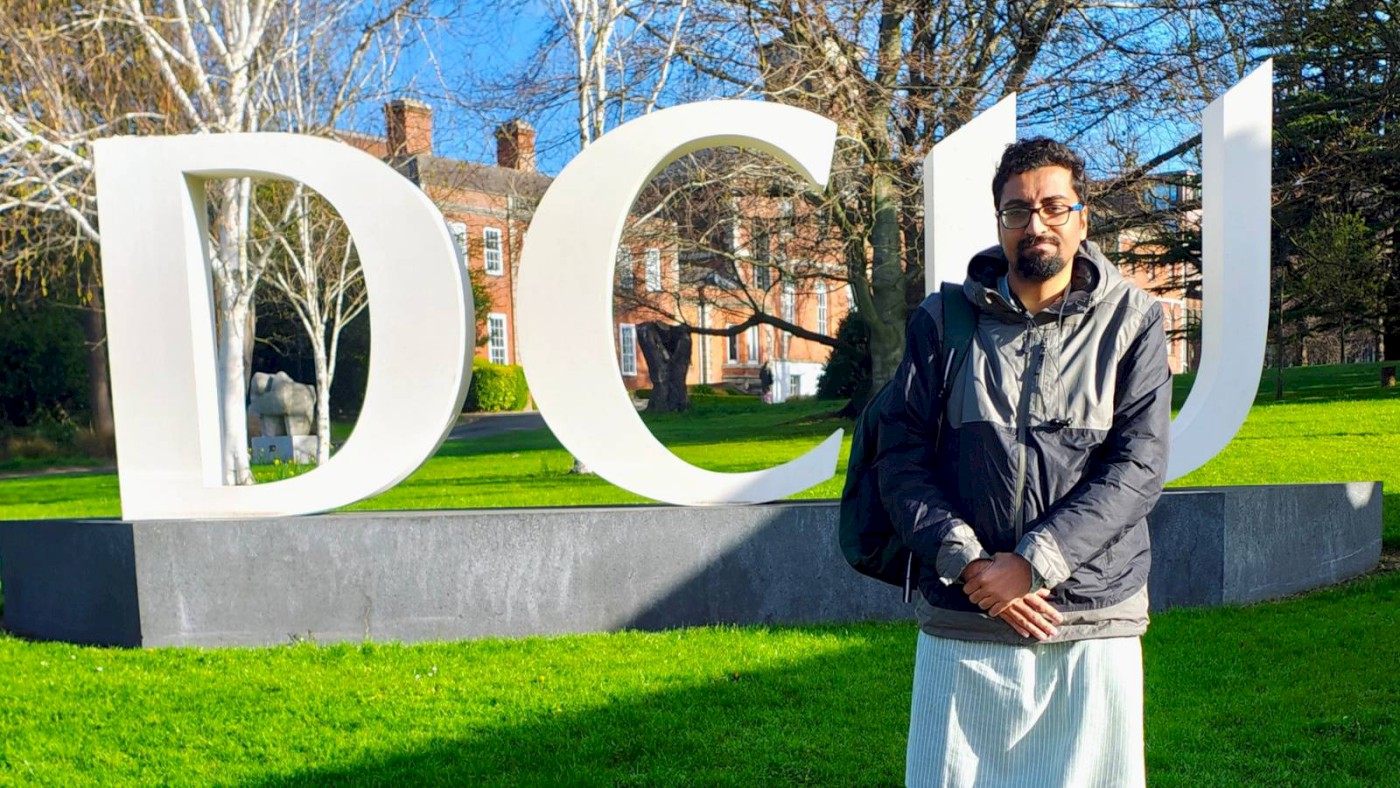
Presented at the 9th Annual South Asia Conference at Dublin City University, hosted by the Ireland India Institute, the paper Driving through a Bumpy Road: Disaggregated Agency and the Politics of Resistance among Ahmedabad’s Gig Autorickshaw Drivers examines how workers in one of the city’s oldest transport systems are responding to the rise of digital platforms.
Using ethnographic fieldwork, including participant observation and interviews conducted over long rides and in drivers’ everyday workspaces, Satya’s study draws on Cindi Katz’s concept of “disaggregated agency”: the idea that workers respond through resistance, reworking, and resilience. In Ahmedabad, that agency takes many forms.
Some drivers use multiple ride-hailing apps at once, switching platforms tactically. Others use app features to negotiate better fares. Some unions call for strikes or boycotts, while others pursue petitions, legal routes, or direct engagement with government departments. Informal driver networks based on neighbourhood ties, community connections, or stand-level solidarity often solve problems faster than formal institutions. Even waiting for the right route, the right passenger, or the right pickup zone becomes a strategy. These practices reframe workers not as victims of platforms, but as active decision-makers constantly adapting to survive. It offers a far more human and realistic picture of labour in the gig economy.
The research also reveals that Ahmedabad’s autorickshaw politics is deeply fragmented. The city has at least eleven unions, many with different political loyalties and competing leadership structures. This fragmentation shapes the success or failure of new mobility ventures. Local start-ups have struggled when associated with one union faction and opposed by others. In other words, technology alone does not determine outcomes. Local politics does.
These findings gained international visibility through Satya’s presentation which was supported through the Rasila Kadia Excellence in Research Award from Ahmedabad University. The University enables doctoral students to pursue impactful research through financial assistance, conference participation support, international lab visits, and research contingency grants. To advance meaningful research and engage with the global academic community, explore the doctoral programmes at Ahmedabad University.