
18 June 2026
How a Himalayan Fruit Fly Adapts to Extreme Cold
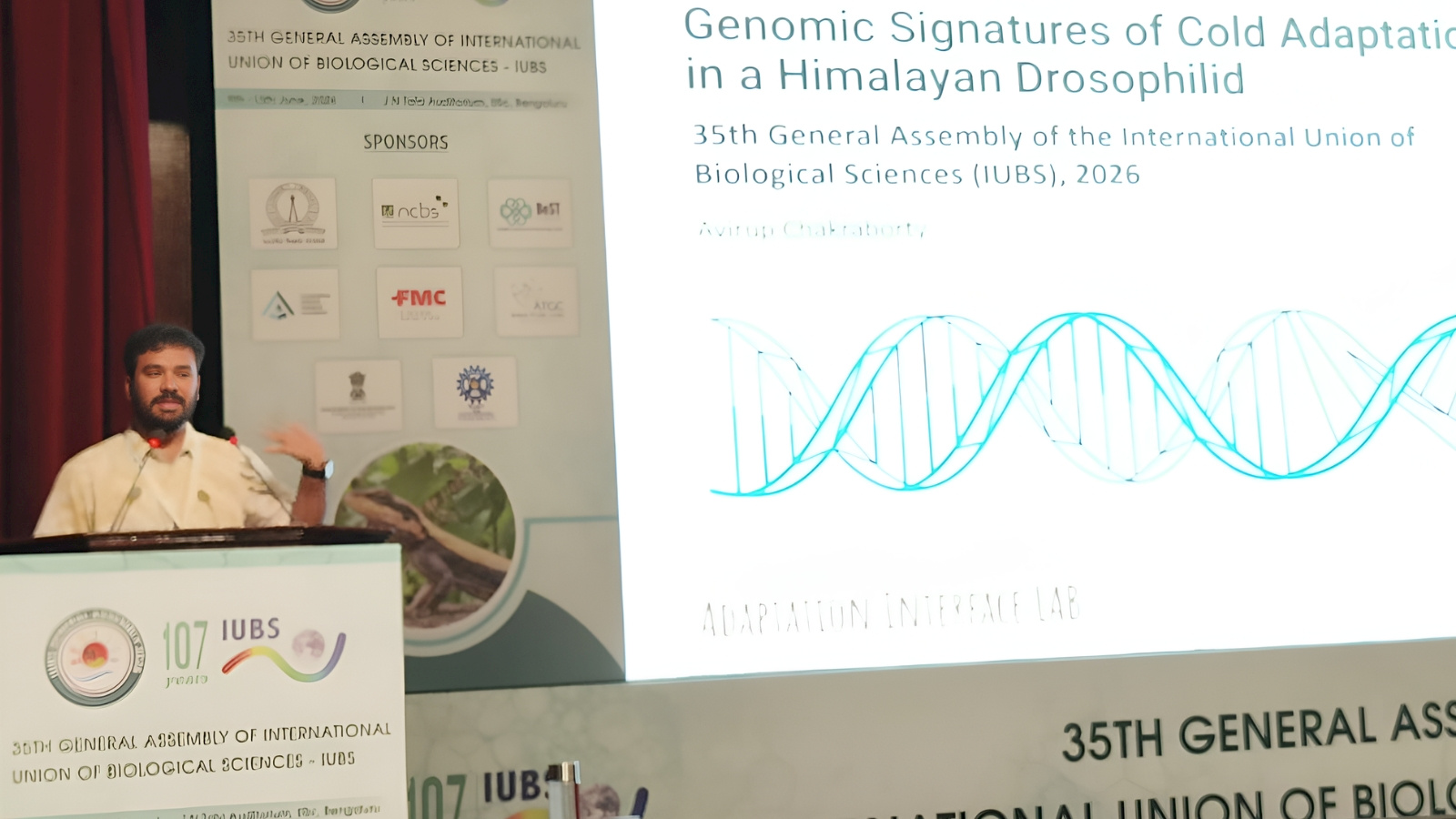
Can a genome reveal how a species adapts to extreme environments? Research on a tiny fruit fly found at some of the highest altitudes in the Himalayas offers an insight.
The fly’s genome carries distinct genetic signatures associated with its ability to survive and thrive in the region’s cold and harsh conditions. The study identified three key mechanisms underlying this adaptation: metabolic cryoprotection, protein homeostasis, and transcriptional reprogramming.
Avirup Chakraborty, a doctoral student at Ahmedabad University, presented these findings at the 35th General Assembly of the International Union of Biological Sciences (IUBS), held at the Indian Institute of Science, Bengaluru.
Avirup conducts his research under the guidance of Professor Subhash Rajpurohit at the Adaptation Interface Lab, Ahmedabad University, where the research explores how organisms adapt to challenging environmental conditions.