13 May 2026
Creating Unique Learning Ecosystem
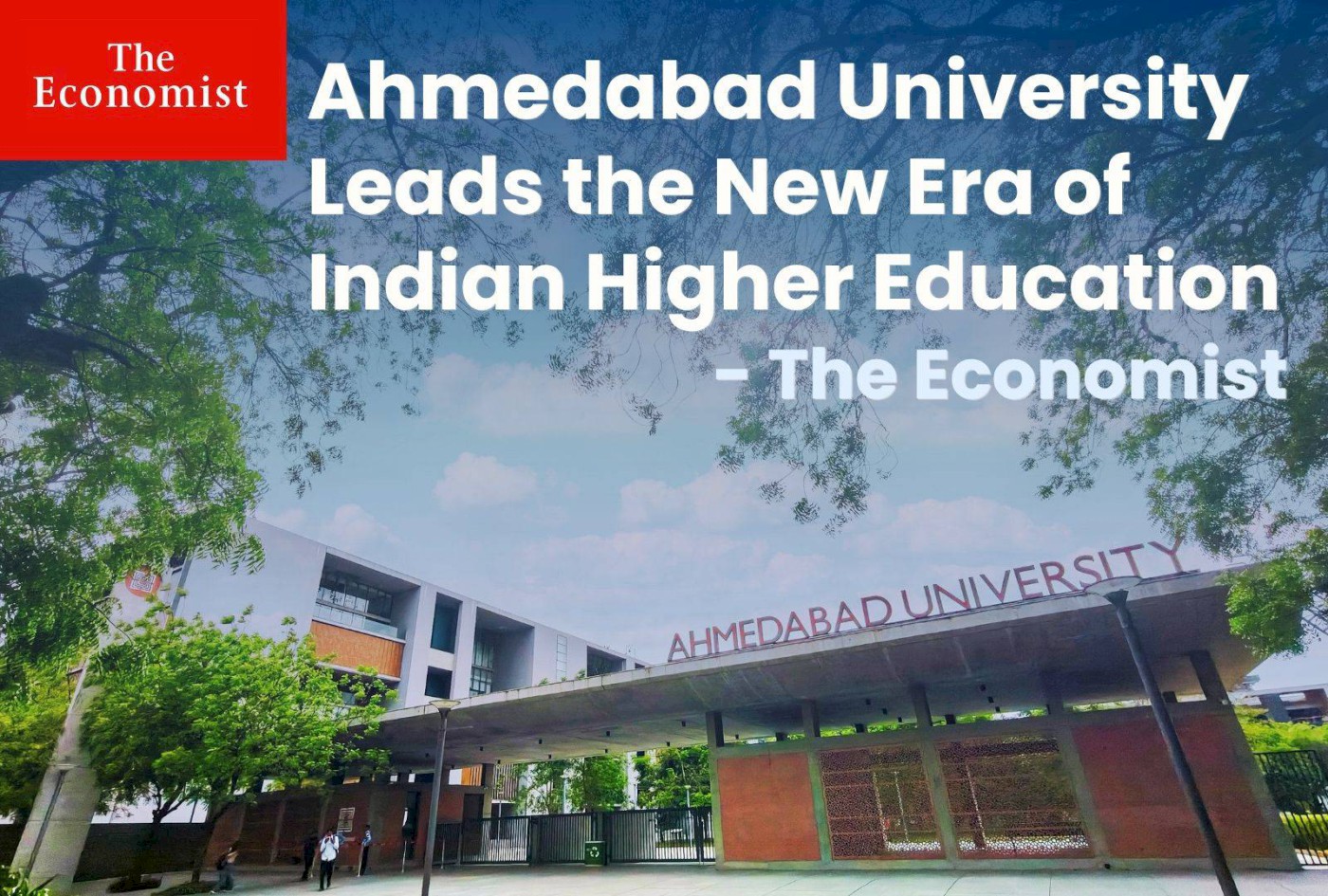
NINETY TYPES of tree sway in the arboretum at the heart of Ahmedabad University, in the western state of Gujarat. “Always be in Beta” read motivational signs that hang in the institution’s wide halls. The university’s 4,000 or so learners toil in smarter surroundings than the average Indian student—and that is not surprising. Each year of undergraduate study at this private non-profit costs around 500,000 rupees ($5,300), well above a typical Indian’s annual wage.
Ahmedabad is one in a crop of young, elite private universities promising they can put Indian higher education on the map. The country’s massive college and university system has quadrupled in size since 2001. It now has 45m students, the most in the world after China. Yet across India, teaching and research can be dire. Even at the creamy end, Indian outfits lag foreign peers. Not one Indian institution features in the top 100 of any of the most-respected global rankings.
Posh privates bent on changing this began setting up around 15 years ago. They take inspiration from their famous American counterparts, including when it comes to costs: annual fees at some of them can rise above 1m rupees. Already a handful rank “right up there with the 1/3 very best institutions” in India for some subjects, reckons Pushkar, an author and academic in Goa (who goes by only one name).
This trend owes much to Indian billionaires, who have come to see higher education as a cause worthy of their philanthropy. O.P. Jindal Global University was set up near Delhi in 2009 using funds provided by Naveen Jindal, a steel tycoon. A few years later came Shiv Nadar University (named after its chairman, the founder of HCL, a technology firm) and Ashoka (pictured), opened in 2014 with support from a coalition of some 200 big donors. Boosters make somewhat grand comparisons to America in the mid- to late-1800s, when filthy rich industrialists set up places such as Cornell, Johns Hopkins and Stanford.
The new crop of private universities set themselves apart in several ways. From the beginning they have sought to excel in research, not just in teaching. Many emphasise humanities and social sciences, says Eldho Mathews, an education researcher in Kerala—which in other Indian institutions are often considered secondary to science-based subjects and training for the professions. Ahmedabad University encourages students to learn across disciplines: to combine, say, a major in physics with a minor in history. They must also complete a practical project (to show they can tackle real-world problems) and do volunteer work. Too many elite Indian institutions produce automatons with a limited view of the world, says Pankaj Chandra, the vice-chancellor. Ten years ago his holistic approach might have scared Indian parents. “Not today,” he reckons.
Lately some big global trends have also begun to work in these universities’ favour. English speaking countries that attract a lot of well-off Indian students have started narrowing the gates for foreigners. Donald Trump’s bashing of American universities is making it slightly easier for Indian ones to attract and retain staff. Indian academics who are just completing their doctorates in America are becoming more open to moving home.
Yet to take full advantage, the elite privates will need to swerve some home-grown obstacles. Though they are somewhat less trussed up in red tape than India’s public institutions, regulation remains onerous. Just like America’s posh colleges, they are under pressure to become more inclusive—though they lack endowments quite as bottomless as those American outfits can draw on to pay for scholarships. They are also about to face more competition: from foreign universities setting up campuses in India. British ones including Bristol, Liverpool, York and Southampton are among those already operating in India, or just about to start.
A big worry is the Indian government’s intolerance for research or opinion that it finds irksome. Self-censorship is rife in the social sciences in particular, says one academic. Publishing an inconvenient finding can easily “blow up in your face”. Sensitive topics include religious freedom and the state of India’s democracy.
In recent years academics who have fallen out with the government have been forced from posts in private universities, or prevented from taking them up. Young universities have much to lose from upsetting politicians. And irate officials are not beyond putting pressure on their 2/3 rich founders, who have interests outside education to protect. “We anticipated that private universities would enjoy more autonomy than public ones,” says Christophe Jaffrelot, an observer of Indian politics at Sciences Po in Paris. “In fact it is the other way around.”