3 November 2026
Can Gujarat’s Clean Energy Transition be Both Ambitious and Equitable?
Despite Gujarat’s ambitious drive to scale up renewable energy, its climate and energy policies do not always adequately account for community participation, equitable benefit distribution, and the distinct vulnerabilities of communities affected by climate change. The research highlights that incorporating justice principles into policy frameworks does not automatically translate into equitable outcomes on the ground.
Using policy content analysis and semi-structured interviews, the study evaluates Gujarat’s existing clean energy and climate governance policies through the lenses of climate justice and energy justice. It aims to develop a framework to mainstream these considerations into Gujarat’s Viksit Gujarat 2047 vision, contributing to more inclusive and equitable climate governance.
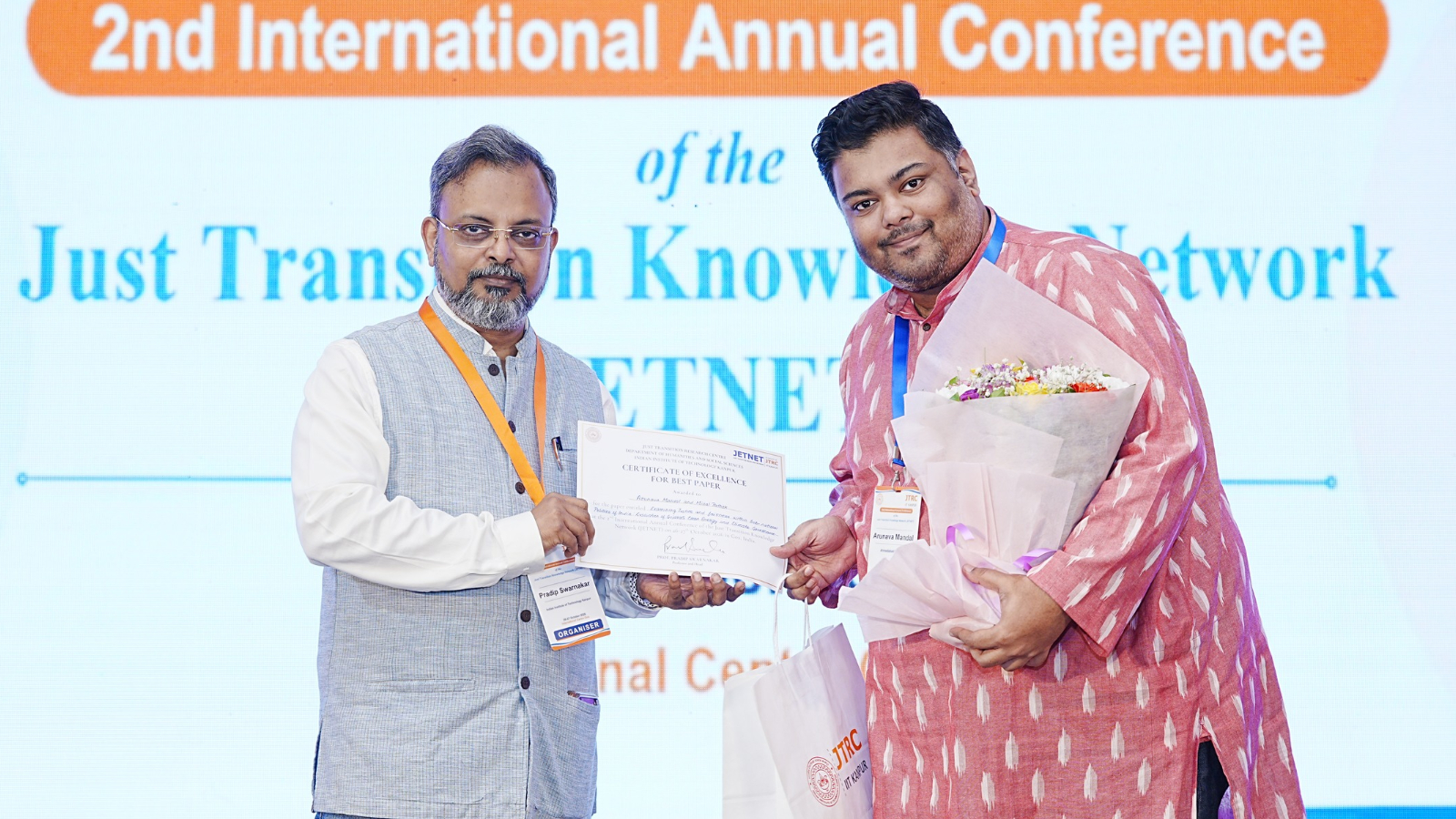
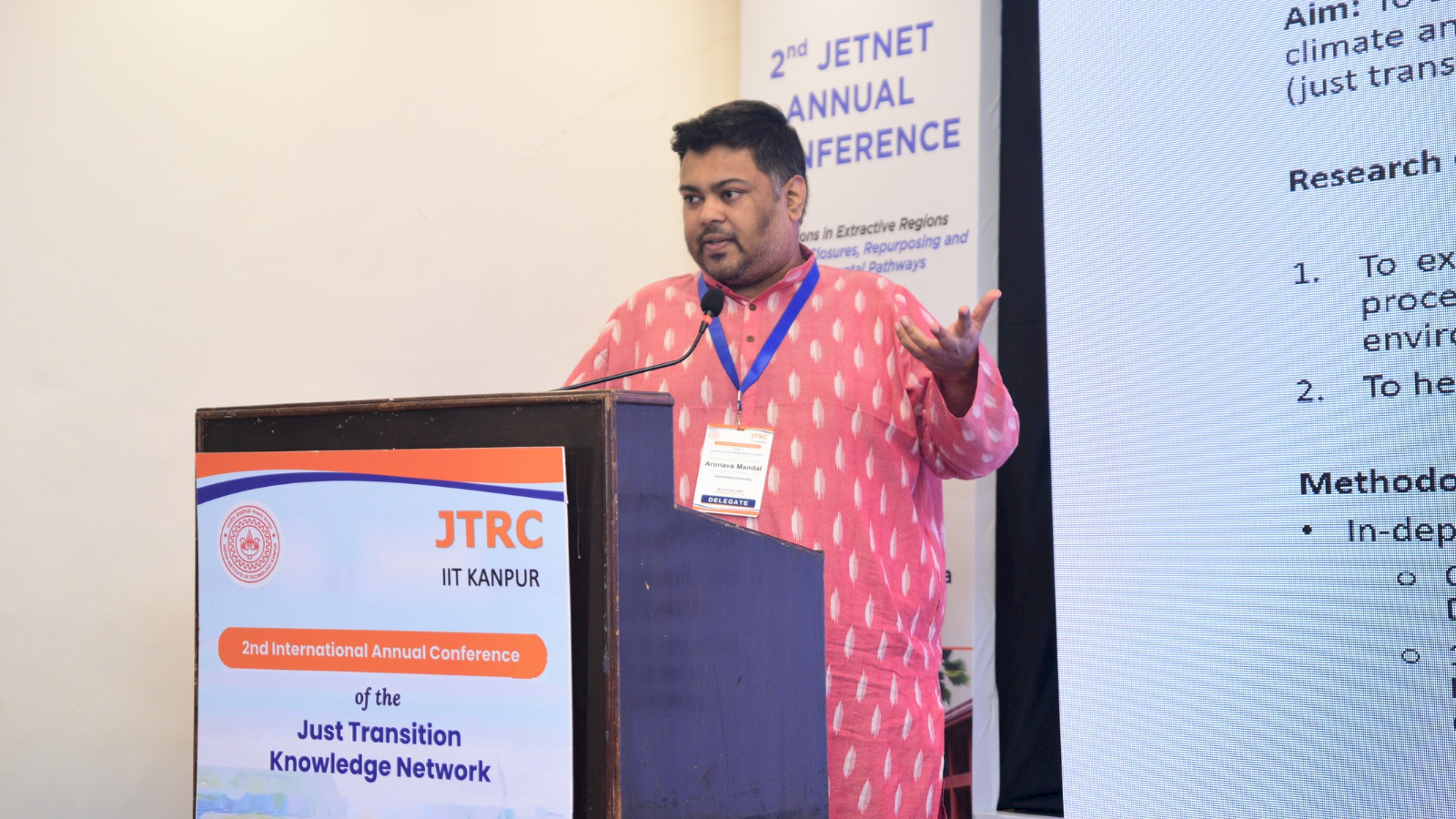
A research paper by Arunava Mandal, a doctoral student and Professor Minal Pathak, at the Amrut Mody School of Management, Ahmedabad University, examined this question and received the Best Paper Award at the 2nd Just Transition Knowledge Network (JETNET) Annual Conference 2026, organised by the Just Transition Research Centre, IIT Kanpur.
The study finds that while Gujarat has made significant strides in expanding renewable energy, its policies do not always account for how climate change and the shift to clean energy affect different communities. Those most vulnerable to climate change, such as farmers, fishing communities and forest-dependent populations, may not necessarily be the ones who benefit from these policies. It also highlights that setting ambitious targets or including provisions for social equity in policies is not enough; their actual implementation must ensure that communities are involved in decision-making, their vulnerabilities are recognised, and the benefits of the transition are shared fairly.
The paper, titled “Examining Justice and Fairness Within Sub-National Policies of India: Evaluation of Gujarat’s Clean Energy and Climate Governance Policies Using Climate Justice and Energy Justice Lenses,” was presented in the session on Tools for Transition Governance: Policy Instruments, Evaluation, AI and Participatory Modelling at JETNET 2026, held on 26–27 October at the International Centre Goa. The conference brought together over 200 delegates, with 163 research papers shortlisted for presentation.