15 October 2026
Beyond the Classroom: MSQF Students Visit the India International Bullion Exchange
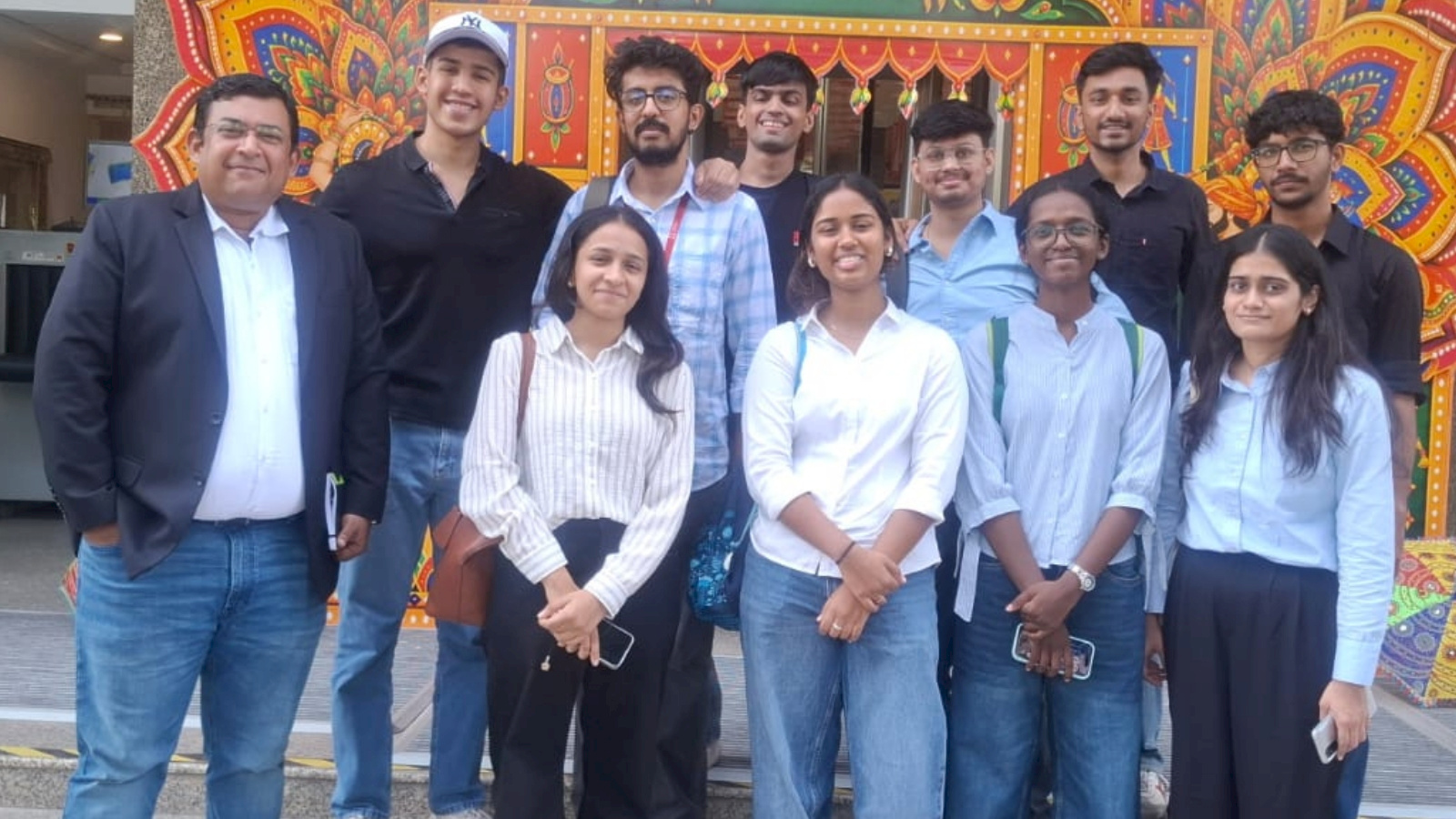
How do financial markets work beyond models, instruments and analytical techniques? For students of the Master of Science in Quantitative Finance (MSQF) programme at Ahmedabad University, a recent industry visit to GIFT City offered a closer look at the institutional side of finance through an interaction with the India International Bullion Exchange (IIBX).
The visit gave students an opportunity to understand how a specialised exchange operates within the International Financial Services Centre (IFSC) framework, and the processes that support its functioning.
Learning from Industry Experience
Mr Sagar Surendra Khandelwal, Head – Trading Operations at IIBX, interacted with the students and shared insights into the exchange’s inception, its functioning within the IFSC framework, its operational processes and the experiences behind its journey.
Drawing on his experience, he discussed the practical considerations involved in operating a specialised financial exchange. The session offered students a broader perspective on the development of financial market infrastructure and the work that takes place behind the scenes of a functioning exchange.
From Academic Concepts to Industry Perspectives
For students of quantitative finance, understanding financial markets extends beyond the models, instruments and analytical methods studied in the classroom. It also involves examining the institutions, operational processes and regulatory frameworks that underpin market activity.
At Ahmedabad University, industry engagement complements academic learning by creating opportunities for students to connect theory with practice, ask questions and develop perspectives that prepare them for an evolving financial landscape. For the MSQF cohort, the interaction highlighted the value of experiential learning in developing a more comprehensive understanding of finance.