
15 March 2025
Advanced Machine Learning Models to Enhance Software Reliability
In 2025, the global software market is projected to generate USD 742.58 billion in revenue (Statista, 2024), reflecting the sector’s central role in powering digital transformation across industries. Yet with this rapid growth comes a persistent challenge - software bugs. While bugs are inevitable, how development teams prioritise and resolve them can significantly impact product quality, user experience, and delivery timelines. Despite advances in agile and DevOps practices, bug prioritisation remains largely manual and intuition-driven, often leading to inefficiencies, misjudgments, and rising technical debt. As software systems grow more complex and mission-critical, there is a pressing need to rethink bug management with smarter, data-driven approaches.
Bug tracking systems generate numerous reports, making manual prioritisation (P1-P5) inefficient and subjective. Misclassifications or delays in addressing high-priority issues can lead to software failures, security vulnerabilities, and customer dissatisfaction. This necessitates intelligent software maintenance. The solution lies in an automated bug prioritisation model capable of accurately categorising reports based on their urgency and impact.
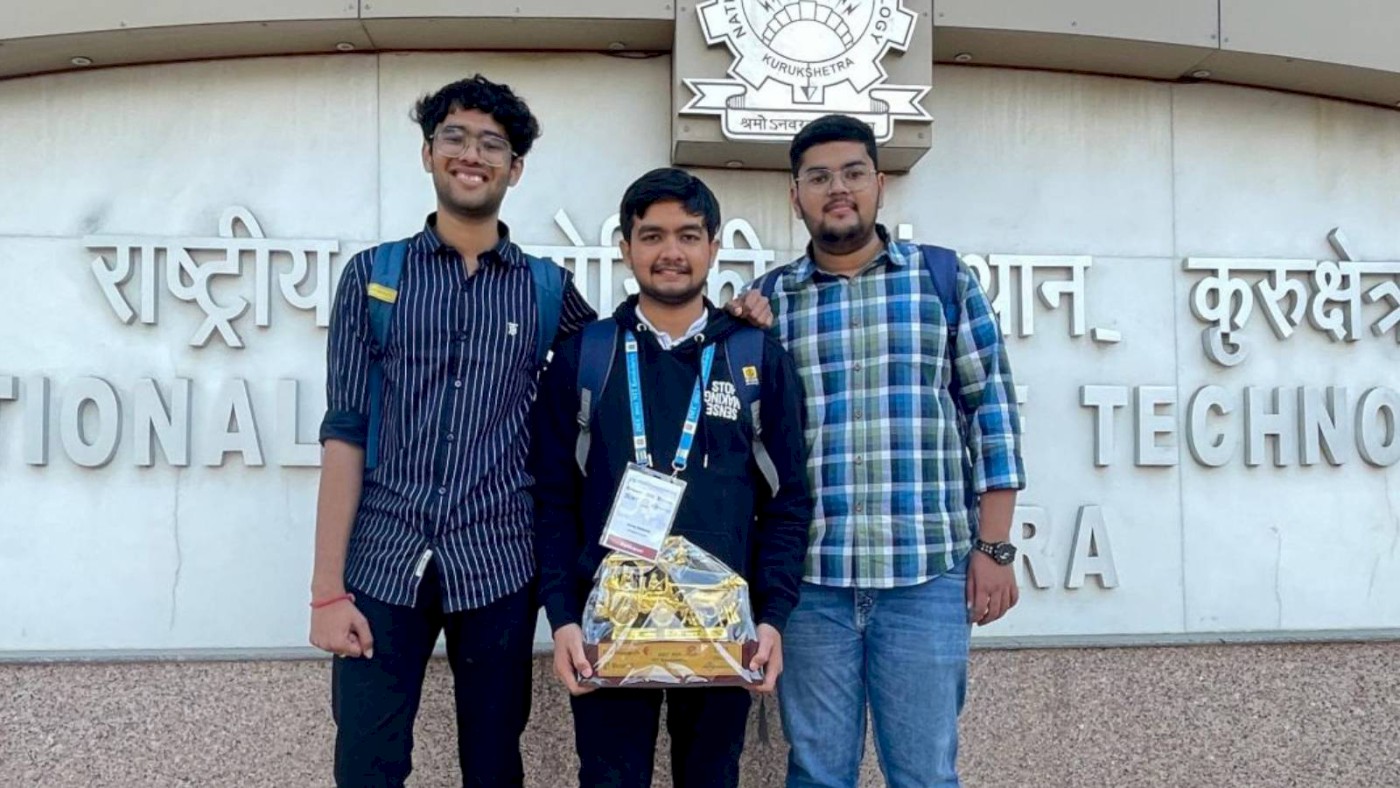
Recognising this gap, a group of BTech students from Ahmedabad University—Meet Rathi, Harsh Panchal, and Aryan Sukhadia—developed a smarter model for enhanced software bug prioritisation. They developed advanced predictive algorithms by applying sophisticated machine learning (ML) and deep learning (DL) techniques. The new model leverages structured bug reports and contextualised prompts, outperforming traditional methods by capturing nuanced bug report details. These algorithms analyse key features inherent in bug reports, such as detailed descriptions, specific error messages, and historical data, to accurately assess each identified bug's urgency and potential impact.
Their solution goes beyond an academic exercise. Built for integration, the model is designed to plug directly into existing issue-tracking systems. Thus, the model stands as a scalable solution for real-world development teams. Automating bug prioritisation doesn't just save time—it reduces human error, mitigates risk, and empowers teams to focus their energy where it truly matters.
The team leveraged the natural language understanding capabilities of LLaMA 2, a state-of-the-art transformer model, fine-tuned specifically for bug report classification. By training their model on structured bug reports enriched with contextual prompts, they created a system that not only reads the words but understands the story behind them.
Their pipeline integrates sophisticated text preprocessing to remove noise while preserving intent; prompt engineering to guide the model's attention to relevant features like error messages, descriptions, and component details; LoRA-based fine-tuning, which makes the process computationally efficient while maintaining high accuracy; and evaluation using macro F1-scores, ensuring consistent performance across all levels of priority, from the most urgent (P1) to the least (P5).
The suggested model outperforms conventional machine learning algorithms, especially when handling the subtle distinctions between bug severity levels. The innovative model helped secure our students second place in the ISEC Software Defect Challenge 2025. For the future, the students plan to make the model more interpretable with explainable AI tools; leverage historical resolution data and developer feedback for even deeper insights; and deploy and evaluate the model in real-world bug-tracking systems for continuous validation and refinement.