
Faculty
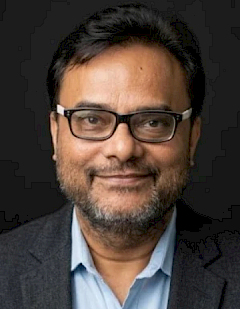
Sushanta Kumar Banerjee
Associate Professor of Practice, Bagchi School of Public Health
PhD (International Institute for Population Sciences, Mumbai)
sushantakumar.banerjee@ahduni.edu.in

Research Interests: Epidemiology, Demography and Population Dynamics, Health Economics, Health Systems and Private Sector Engagement, Sexual and Reproductive Health, Family Planning and Safe Abortion, Maternal and Newborn Health, Mental Health and Wellbeing, Climate Change and Health, Programme Monitoring and Evaluation, Implementation Research
Profile
Sushanta Kumar Banerjee is an Associate Professor of Practice at the Bagchi School of Public Health, Ahmedabad University. He is a public health researcher and demographer with 29 years of experience in epidemiology, health economics, population dynamics and health systems research.
He began his career at the International Institute for Population Sciences (IIPS), Mumbai, as Research Officer for the second National Family Health Survey (NFHS-2), and went on to work with Futures Group International (USAID), Taylor Nelson Sofres (TNS) and Population Services International (PSI), where he was Technical Director. For 20 years, he led the Research and Evaluation unit of Ipas Development Foundation as Chief Technical Officer, overseeing externally funded studies on sexual and reproductive health, family planning, safe abortion, maternal health, and private-sector engagement.
His work has informed national policy, including the community-based emergency contraception pilot that contributed to over-the-counter availability of emergency contraceptives in India, and the inclusion of abortion modules in India's Demographic and Health Survey. He is lead facilitator for postpartum family planning under the FP2030 Asia-Pacific South–South Learning Group, engaging officials from 26 countries.
Professor Banerjee holds a PhD in Population Studies (Demography) and an MPS in Health Economics (University Gold Medal) from IIPS, as well as an MA in Economics (Econometrics) from Kalyani University. He is a Fellow of the Strategic Nonprofit Management programme of Harvard Business School (through Ashoka University) and of the PRB--Mahidol University Research to Policy Actions programme.
Research
Professor Banerjee's research uses large-scale surveys, randomised controlled trials, quasi-experimental and mixed-methods evaluations, and statistical modelling to generate evidence for policy and programmes. His work spans sexual and reproductive health, family planning and safe abortion, maternal health, private-sector quality of care, health economics, demography, and monitoring and evaluation, with growing interests in mental health and climate change and health. He led India's first randomised controlled trial on self-managed abortion, mapped over 43,000 private RMNCH facilities, and developed real-time family planning dashboards with the Ministry of Health and Family Welfare. Between 2006 and 2026, he led or contributed to 58 externally funded projects in more than 15 Indian states, supported by the Gates Foundation, WHO, the Packard Foundation, SIDA, Grand Challenges Canada and others. These are listed below in chronological order.
Externally funded research projects (2006--2026)
- Increasing Access to Safe Abortion Services in Uttarakhand: Identifying MTP Training Centres
Facility assessment: identifying potential MTP training centres on five parameters: caseload, staff availability, infrastructure, training exposure, and motivation. Location: Uttarakhand, India. Role: Lead Investigator, Design, execution, analysis, report writing. Funder: Susan Thompson Buffett Foundation. Period: 2006-2007. Output: Published: 2007. - Post-Training Follow-Up Survey: Bihar and Jharkhand (Increasing Access to Safe Abortion Services)
Two-phase mixed-mode follow-up survey (telephone + face-to-face). Location: Bihar & Jharkhand, India (Public Sector). Role: Lead Investigator. Funder: David and Lucile Packard Foundation. Period: 2006. Output: Published: 2007. - Evaluation of a network of medical abortion providers in two districts of Maharashtra, India
Cross-sectional assessment. Location: Maharashtra, India (Private Sector). Role: Lead Investigator / First Author/Study Design. Funder: David and Lucile Packard Foundation. Period: 2007. Output: Published: Global Public Health, 2011; 6(3):283–292. - Exploring the pathways of unsafe abortion in Madhya Pradesh, India: Cross-sectional, mixed methods. Location: Madhya Pradesh, India. Role: Lead Investigator / First Author/Study Design. Funder: Madhya Pradesh Government (MoHFW). Period: 2007. Output: Published: Global Public Health, 2012; 7(8):882–896.
- Pathways and consequences of unsafe abortion: Comparison among women with complications after induced and spontaneous abortions in Madhya Pradesh, India: Comparative cross-sectional. Location: Madhya Pradesh, India. Role: Lead Investigator / First Author/Study Design. Funder: Madhya Pradesh Government. Period: 2007. Output: Published: International Journal of Gynecology & Obstetrics, 2012; 118(S2): S113–S120.
- Results of a Government and NGO Partnership for Provision of CAC in Uttarakhand, India: Pre/post-intervention longitudinal facility survey. Location: Uttarakhand, India (Public Sector). Role: Lead Investigator / First Author. Funder: Susan Thompson Buffett Foundation. Period: 2007--2009. Output: Published: Ipas India report, New Delhi 2009.
- Expanding Community-Based Access to Medical Abortion in Jharkhand: Pre-intervention baseline survey in Silli and Khunti blocks of Ranchi and Khunti districts: Mixed methods: multi-stage stratified random household survey. Location: Silli & Khunti blocks, Ranchi & Khunti districts, Jharkhand, India. Role: Co-Principal Investigator (PI: Dr Bela Ganatra-WHO). Funder: SIDA (Swedish International Development Cooperation Agency). Output: Published: Ganatra B & Banerjee SK (2010), Ipas India report, New Delhi.
- Effectiveness of a Behaviour Change Communication Intervention to Improve Knowledge and Perceptions about CAC in Bihar and Jharkhand, India: Quasi-experimental (baseline 2008; follow-up 2010). Location: Bihar & Jharkhand, India. Role: Lead Investigator / First Author. Funder: David and Lucile Packard Foundation. Period: 2008 – 2010. Output: Published: International Perspectives on SRH, 2013; 39(3):142–151.
- Expanding the Provider Base: Improving Access, Saving Lives: Secondary Data Analysis. Location: Asia & Oceania Region (regional review). Role: Co-Author (with Dr Jaydeep Tank, FOGSI). Funder: Asia & Oceania Federation of Obstetrics & Gynecology (AOFOG). Period: 2008 – 2009. Output: Published: Banerjee SK & Tank J (2009). In: Hathtootuwa R & Tank J (eds.), Prevention of Unsafe Abortion in Asia Oceania Region, AOFOG. pp. 93–104.
- Woman-centered research on access to safe abortion services and implications for behavioural change communication interventions: A cross-sectional study of women in Bihar and Jharkhand:
Cross-sectional, two-stage stratified random sample (n=1,411). Location: Bihar & Jharkhand, India. Role: Lead Investigator / First Author/Study Design. Funder: David and Lucile Packard Foundation. Period: 2010. Output: Published: BMC Public Health, 2012; 12:175. - Sharing Messages about Safe Abortion Services: Evaluating the BCC Intervention in Bihar and Jharkhand, India: Comparative evaluation (High-Intensity Model vs Low-Intensity Model vs control). Location: Bihar & Jharkhand, India. Role: Lead Investigator / First Author. Funder: David and Lucile Packard Foundation. Period: 2010. Output: Published in 2012.
- Improving Comprehensive Abortion Care Services in Meghalaya through State Government and Ipas Partnership: A Facility Baseline Assessment: Facility baseline assessment across public health facilities. Location: Meghalaya, India (Public Sector). Role: Co-Investigator. Funder: Susan Thompson Buffett Foundation. Period: 2010. Output: Published in 2011.
- Improving Comprehensive Abortion Care Services in Chhattisgarh through State Government and Ipas Partnership: A Facility Baseline Assessment: Facility-based baseline survey (236 public health facilities). Location: All 18 districts of Chhattisgarh, India. Role: Co-Investigator Funder: Susan Thompson Buffett Foundation. Output: Published in 2011, Ipas India report, New Delhi.
- Understanding the role of ultrasound (USG) in improving maternal care in India: Secondary data analysis (NFHS-3, n=41,376). Location: India (national). Role: Co-Investigator (with Professor Sanjay Mohanti, IIPS). Funder: David and Lucile Packard Foundation. Period: 2011. Output: Published: Ipas India report, 2011.
- Evaluation of a multi-pronged intervention to improve access to safe abortion care in two districts in Jharkhand: Quasi-experimental (baseline n=1,253; endline n=1,290). Location: Jharkhand, India. Role: Lead Investigator / First Author/ Methodology. Funder: David and Lucile Packard Foundation. Period: 2011 – 2013. Output: Published: BMC Health Services Research, 2014.
- Associations between abortion services and acceptance of postabortion contraception in six Indian states: Service Statistics analysis (n=292,508 across 2,456 facilities). Location: Bihar, Jharkhand, MP, Rajasthan, UP, Uttarakhand. Role: PI/Study Design/Analysis/First Author. Funder: Susan Thompson Buffett Foundation. Period: 2011 – 2014. Output: Published: Studies in Family Planning, 2015; 46(4):387–403.
- Situation Analysis of MTP Services in Bihar: Situation analysis - micro-level assessment of state's service availability, bottlenecks, and implementation gaps. Location: Bihar, India. Role: Lead Investigator, Ipas India. Funder: David and Lucile Packard Foundation. Period: 2011. Output: Published: Ipas India report, 2011.
- Situation Analysis of MTP Services in Jharkhand: Situation analysis-micro-level assessment of state's MTP service availability, gaps & operational bottlenecks. Location: Jharkhand, India. Role: Lead Investigator, Ipas India. Funder: David and Lucile Packard Foundation. Period: 2011. Output: Published: Ipas India report, 2011.
- Disappearing Medical Abortion Drugs: Facts and Reasons: Advocacy Research, Maharashtra: Multi-city cross-sectional retail audit / chemist survey. Location: 8 cities in Maharashtra: Mumbai, Pune, Nagpur, Dhule, Beed, Aurangabad, Nashik, Parbhani, India. Role: Lead Investigator, Ipas India. Funder: David and Lucile Packard Foundation. Period: 2012. Output: Published: Ipas India advocacy research brief, 2013.
- Expanding availability of safe abortion services through private sector accreditation: Case study of the Yukti Yojana program in Bihar, India: Programme case study, mixed methods. Location: Bihar, India. Role: Lead Investigator / First Author. Funder: David and Lucile Packard Foundation. Period: 2013 – 2015. Output: Published: Reproductive Health, 2015; 12:104.
- How prepared are young, rural women in India to address their sexual and reproductive health needs? Cross-sectional assessment of youth in Jharkhand: Cross-sectional youth survey. Location: Jharkhand, India. Role: Lead Investigator / First Author. Funder: OAK Foundation. Period: 2013 – 2014. Output: Published: Reproductive Health, 2015; 12:97.
- Abortion Stigma in Public Health Facilities: Results from a State in Eastern India: Qualitative study: 17 IDIs with providers, 18 IDIs with women clients, and direct observation across 17 public health facilities (12 PHCs, 1 referral hospital, 4 district hospitals). Location: One state in Eastern India. Role: Co-Investigator (with Shellenberg K, Agnimitra N, Gandhi M). Funder: David and Lucile Packard Foundation. Output: Published: Shellenberg K, Agnimitra N, Banerjee SK & Gandhi M (2014), Ipas Research Brief, November 2014.
- Exploration of the socio-economic profile of women and costs of receiving abortion services at public health facilities of Madhya Pradesh, India: Facility-based cross-sectional (Public Sector). Location: Madhya Pradesh, India. Role: Lead Investigator / First Author/ Methodology. Funder: DFID (UK AID); Partnership with MoHFW (GoI). Period: 2016. Output: Published: BMC Health Services Research, 2017; 17:223.
- KAP towards SRH issues among selected tribal population (Gond and Korku) of Madhya Pradesh: Cross-sectional KAP study. Location: Madhya Pradesh, India. Role: Co-Investigator with Dr Deepa Navin. Funder: DFID (UK AID); Partnership with MoHFW (GoMP). Period: 2015. Output: Internal Document Used for developing the BCC Strategy.
- Evaluating relative effectiveness of high-intensity and low-intensity models of BCC interventions for abortion care-seeking in Bihar and Jharkhand, India: Cross-sectional, comparative. Location: Bihar & Jharkhand, India. Role: Lead Investigator / First Author/Study Design. Funder: David and Lucile Packard Foundation. Period: 2014 – 2016. Output: Published: BMJ Open, 2017; 7:e012198.
- Post-Abortion Family Planning Strategy in India: Strategy / policy research: Mixed Method. Location: Uttar Pradesh, India (with national application). Role: Lead Investigator / First Author. Funder: Urban Health Initiative (UHI): Bill & Melinda Gates Foundation. Period: 2014. Output: Published: UHI / BMGF strategy brief, 2014.
- Reducing Maternal Mortality in Madhya Pradesh by Improved Access to Comprehensive Abortion Care Services: Experience of the Last Five Years: Programme review: five-year retrospective data on CAC. Location: Madhya Pradesh, India. Role: Co-Investigator with Government of Madhya Pradesh. Funder: Susan Thompson Buffett Foundation. Period: 2014. Output: Published: In: Seven Years of NRHM in Madhya Pradesh, National Rural Health Mission (NRHM), Government of India, 2014.
- Is Self-Use of Medical Abortion a Viable Option? A Systematic Review of Global Evidence with a Special Focus on India: Systematic review of global evidence on self-use of medical abortion. Location: Global review with focus on India. Role: Lead Investigator / First Author. Funder: David and Lucile Packard Foundation. Period: 2017 – 2018. Output: Published: Banerjee SK, Kalayanwala S, Manning V, Andersen KL, Raj R & Das A (2018).
- Pharmacy Provision of Medical Abortion: Knowledge, Skill, Practices, and Attitude of Drug Sellers in Assam, India: Cross-sectional descriptive study with two-method design: pharmacy interview & Mystery Client Survey (MCS). Location: Four districts of Assam, India: Kamrup, Dibrugarh, Barpeta, Cachar. Role: Lead Investigator / Presenter. Funder: David and Lucile Packard Foundation. Period: 2018. Output: Presented December 2018; report.
- Types, Severity and Pathways of Postabortion Complications: Round 2 Facility-Based Study in Madhya Pradesh: Cross-sectional + prospective replication study (Round 2 of original 2009 design). Location: Madhya Pradesh, India (10 study facilities). Role: Lead Investigator (continuing PI from Round 1, 2009). Funder: David and Lucile Packard Foundation. Period: 2019. Output: Internal Working Paper; Presented to donors (BMGF & Packard).
- Improving Care Seeking Behaviour of Young Women for Sexual and Reproductive Health in Assam and Madhya Pradesh: The Midline Community Assessment: Community-based midline assessment (paired with baseline and endline; SRH care-seeking behaviour among young women). Location: Assam & Madhya Pradesh, India. Role: Lead Investigator, Study Design, Analysis, Report Writing.. Funder: Grand Challenges Canada (GCC). Period: 2020. Output: Midline report: Working paper.
- Empowering self-users of medical abortion to improve uptake and continuation of using modern contraception (PMAC): Human Centric Design (HCD). Location: India (Uttar Pradesh). Role: Co-Investigator with PSI (Population Services International). Funder: Gates Foundation. Period: 2020. Output: HCD insights used for developing intervention solutions.
- Development of a solution package to improve women’s experiences & outcomes of Abortion Self-care: Human Centric Design (HCD) approach to explore intervention solutions in Bihar, India: Human Centric Design (HCD). Location: India (Bihar). Role: Lead Investigator, Study Design, Analysis, Report Writing.. Funder: David and Lucile Packard Foundation. Period: 2020-21. Output: HCD insights used for developing intervention solutions.
- Strengthening Comprehensive Abortion Care (CAC) in 10 States during COVID-19: Results of Facility Assessment Survey and Way Forward: Multi-state facility assessment survey across 10 Indian states examining CAC service continuity during COVID-19. Location: 10 Indian states (WB, OD, BH, JH, AS, KR, UP, MP, CH, RJ). Role: Lead Investigator, Design, Dissemination. Funder: World Health Organization (WHO); commissioned by Ministry of Health & Family Welfare, Government of India. Period: 2020. Output: Published: Report submitted to MoHFW and WHO, 2020.
- An explorative evaluation of the Antara Programme under the national family planning programme of government of India: Cross-sectional with multiple stakeholders (facility, providers, users, non-users, ANMs, ASHAs). Location: Five States of India (Bihar, Rajasthan, Madhya Pradesh, West Bengal, Karnataka). Role: Lead Investigator/Analysis plan / Report Writing. Funder: Gates Foundation (commissioned by MoHFW, Government of India). Period: 2020. Output: Report shared with MoHFW for internal use.
- Evaluation of a Youth-Focused Intervention: An Exploratory Qualitative Study in West Bengal: Exploratory qualitative evaluation of a youth-focused SRH intervention. Location: West Bengal, India. Role: Lead Investigator. Funder: OAK Foundation. Period: 2021. Output: Report –Working paper.
- Community Mobilization for Improved Access to SRH Services and Information among Young Women in Selected Tribal Blocks of Jharkhand, India: Community mobilisation intervention study targeting young women's access to SRH services and information. Location: Two tribal blocks, Jharkhand, India. Role: Lead Investigator, Study Design, Analysis, Report Writing. Funder: OAK Foundation. Period: 2021. Output: Report: Working Paper.
- Generating Evidence for Rebuilding SRH Services for Women and Girls: A Cross-Sectional Study to Assess the Impact of COVID-19 on Women and Girls: Cross-sectional study on COVID-19 impact on access to sexual and reproductive health services for women and girls. Location: Selected states of India. Role: Co-Investigator/ Technical Advisor to the R&E team. Funder: Global Affairs Canada (GAC). Period: 2021. Output: Report: Working Paper.
- Study on Gender Equity as an Extension of the Impact of COVID-19 in Selected States of India: Multi-state assessment of gender equity dimensions of the COVID-19 impact (3 states). Location: Three selected states, India. Role: Co-Investigator/ Technical Advisor to the R&E team. Funder: David and Lucile Packard Foundation. 2021. Output: Report: Working Paper.
- Improving Knowledge and Care Seeking Behaviour of Young Women for Sexual and Reproductive Health in Assam and Madhya Pradesh: Endline Community Assessment: Community-based endline assessment (paired with baseline; SRH knowledge, attitudes, and care-seeking among young women). Location: Assam & Madhya Pradesh, India. Role: Technical lead to the Research & Evaluation Team. Funder: Grand Challenges Canada (GCC). Period: 2021 (BL2018–EL2019). Output: Endline report.
- Trends of Centchroman Uptake & Continuity: An Exploratory Study at Public Health Facilities in Assam & West Bengal: Exploratory facility-based study on uptake and continuity of Centchroman (non-hormonal weekly oral contraceptive). Location: Public health facilities in Assam & West Bengal, India. Role: Lead Investigator, Design, Analysis, Report Writing. Funder: Bill & Melinda Gates Foundation (in partnership with Government of India, MoHFW). Period: 2021. Output: Internal report.
- Evidence from a Randomized Control Trial: Accelerating Contraceptive Uptake through Post-pregnancy-care Models in India: Randomized Control Trial (RCT) to assess the intervention impact. Location: India (Uttar Pradesh). Role: Co-PI with Population Council. Led study design and analysis. Funder: Gates Foundation. Period: 2021-2023. Output: Published: Technical Brief in 2023.
- Market Research for DMPA-SC: A Three-Stakeholder Mixed-Methods Study on Acceptability among Women, Healthcare Providers, and Pharma Retailers in India: Large-scale mixed-methods market research: Quant: 17,959 women interviews (13,020 urban + 4,939 rural), 484 HCP interviews, 1,113 retailer interviews; Qual: 90 FGDs with women, 28 IDIs with HCPs, online community research. Coverage: 19 states, 104 towns, 298 villages. Location: 19 states across India (104 towns and 298 villages). Role: Technical Advisor assigned by the Gates Foundation. Funder: Bill & Melinda Gates Foundation. Period: 2021-2023. Output: Presented and shared with BMGF, April 2023; underlying study informing the 2023 DMPA-SC self-administration policy brief.
- Insights and Recommendations for Facilitating DMPA-SC Self-Administration in India: Implementation research / policy study on facilitating self-administration of DMPA-SC (subcutaneous injectable contraceptive). Location: India & Global Review. Role: Co-Investigator (with S. Parveen, P. Sikund). Funder: Bill & Melinda Gates Foundation. Period: Published November 2023. Output: Published: Parveen S, Sikund P, Banerjee SK et al. (2023), Policy brief, Ipas Development Foundation.
- Abortion Self-Care: Circles of Trust: Qualitative study exploring trusted information networks and decision-making in abortion self-care. Location: India. Role: Lead Investigator, Study Design, Analysis, Report Writing. Funder: SIDA (Swedish International Development Cooperation Agency) and David and Lucile Packard Foundation. Period: 2023. Output: Published: 2023.
- Abortion Self-Care Journey: Insights to Improve Experiences: Innovative qualitative study using daily diary methodology to capture lived experience of abortion self-care. Location: Two selected states of India. Role: Lead Investigator, Study Design, Analysis, Report Writing. Funder: Amplify Change. Period: 2022-2023. Output: Published: 2023.
- Assessing the Universe of Private Sector RMNCH Facilities in Four Selected States of India: Multi-state private sector RMNCH facility landscaping. Location: Four selected states, India (MP, BH, UP, OD). Role: Principal Investigator. Funder: Gates Foundation. Period: 2023.
- A Dipstick Study among 12,000 Private Health Facilities to Generate Insights on the Provision of Anemia and Family Planning: Large-scale telephonic dipstick survey of private sector facility provision of anemia and family planning services (n≈12,000 facilities). Location: India (4 states-UP, MP, BH, OD). Role: Principal Investigator. Funder: Gates Foundation. Period: 2024. Output: Report: Working Paper.
- Gap Filling Phase-1: Quantitative Study on Service Availability, Infrastructure, and Quality of Care at Private Health Facilities of Four Selected States of India: Multi-state quantitative facility survey on service availability, infrastructure, and quality of care in private sector health facilities. Location: Four selected states, India (UP, MP, BH, OD ). Role: Lead Investigator, Study Design, Analysis, Report Writing. Funder: Gates Foundation. Period: 2024. Output: Working Paper (Not Yet submitted for publication).
- Understanding Role of Intervention Strategies and Factors Influencing Chemist Behaviour in Post Pregnancy Contraception Promotion: Cross-sectional, Mixed Method with Chemists and Mystery Client. Location: Two states (UP & Bihar), India. Role: Co-Investigator/ Guiding Research & Evaluation Team. Funder: Gates Foundation. Period: 2024. Output: Published- Strategy Paper.
- Gap Filling Phase-2: Qualitative Study on the Quality of RMNCH Care, Facilitators and Barriers to Ensure Quality of Care at Private Health Facilities: Multi-state qualitative study on facilitators and barriers to quality of RMNCH care in private sector health facilities. Location: Four selected states, India (UP, MP, BH, OD). Role: Lead Investigator, Study Design, Analysis, Report Writing. Funder: Gates Foundation. Period: 2025. Output: Working Paper (Not Yet submitted for publication).
- Quality of Care (QoC) Indicator Feasibility: Assessment of Trackable Quality Indicators in Private Health Facilities: Indicator feasibility assessment: identification, validation, and operational testing of trackable quality of care indicators for private sector health facilities. Location: India (UP, MP, BH, OD). Role: Lead Investigator, Study Design, Analysis, Report Writing. Funder: Gates Foundation. Period: 2025. Output: Working Document.
- Qualitative Assessment of Ayushman Bharat – Pradhan Mantri Jan Arogya Yojana (AB PM-JAY) Scheme Implementation and Empanelment Experience: Qualitative assessment of AB PM-JAY (national health insurance scheme) implementation and private health facility empanelment experience. Location: India (UP, MP, Bihar, & Odisha). Role: Principal Investigator. Funder: Gates Foundation. Period: 2025. Output: Working Paper (Not Yet submitted for publication).
- Voices on choice: Exploring Opinions and Attitudes on Abortion in India-Insights from a large-scale survey: Online Cross-sectional survey. Location: All India. Role: Co-Investigator/ Guiding Research & Evaluation Team. Funder: David and Lucile Packard Foundation. Period: 2024. Output: Published-in 2024.
- The transformative terrain: An in-depth analysis of trends in self-managed abortion in India using NFHS-5 national data: Secondary data analysis (NFHS-5). Location: India (national). Role: Lead Investigator/Analysis plan / Manuscript. Funder: Ipas, USA. Period: 2025. Output: Published: Global Public Health, 2025.
- Understanding facilitators and barriers to scaling up post-abortion (PAFP) and postpartum family planning (PPFP) services in Madhya Pradesh: Bottleneck Analysis of WHO (BNA); Mixed Method. Location: India (MP). Role: Co-Investigator/ Guiding Research & Evaluation Team. Funder: WHO, Geneva. Period: 2025. Output: Internal Document-not for publication.
- Prevention and Management of Unintended Pregnancy among Postpartum Women: Multi-country evidence synthesis & implementation research. Location: India & Ghana. Role: Principal Investigator. Funder: World Health Organization. Period: 2025 – 2027. Output: Ongoing.
- The cost of childbirth in India: Out-of-pocket expenditure on vaginal versus caesarean deliveries across public and private sectors: Secondary Data analysis from NFHS-4 & NFHS-5. Location: India. Role: Principal Investigator. Funder: Ipas, USA. Period: 2026. Output: Ongoing.
Publications
- Banerjee, S. K., & Gandhi, M. (2026). Abortion Access in South Asia: Counting Cost and Impact Beyond Maternal Morbidity and Mortality [Comment]. The Lancet Regional Health – Southeast Asia. September 2026.
- Banerjee, S. K. (2026). India Has Solved Enrolment: The Distance from Desk to Career Is the Hard Part. Clear Cut, September 2026, 34–41.
- Banerjee, S. K. (2026). Migration: The Force Quietly Reshaping India. Clear Cut, July 2026, 34–41.
- Banerjee, S. K., Abdul, R., & Banerjee, S. (2026). From Bullock Carts to Broadband: Three Decades of India's Consumer Revolution: Evidence from the National Family Health Surveys (1992–2021). Clear Cut, May 2026.
- Banerjee, S. K. (2026). War Economy and the Changing Paradigm of Development. Clear Cut, April 2026.
- Banerjee, S. K., Gulati, S., & Pearson, E. (2025). The Transformative Terrain: An In-Depth Analysis of Trends in Self-Managed Abortion in India Using NFHS-5 National Data. Global Public Health. https://doi.org/10.1080/17441692.2025.2467796
- Parveen, S., & Banerjee, S. K. (2025). Self-Managed Abortion Care: Global Evidence, Policy Insights, and Lessons for Southeast Asia. In State of Self-Care Report 2025.
- Mathias, G., Banerjee, S. K., & Shukla, R. G. (2025). Empowering Users of Medical Abortion to Improve Uptake of Modern Contraceptive Methods. In State of Self-Care Report 2025.
- Banerjee, S. K., & Banerjee, S. (2025). Ubiquitous Yes Avoided: The Paradox of Mathematics in Everyday Life. Ganit Charcha, December 2025.
- Parveen, S., Sikund, P., Banerjee, S. K., et al. (2023). Insights and Recommendations for Facilitating DMPA-SC Self-Administration in India: Policy Brief.
- Banerjee, S. K., Andersen, K., Pearson, E., & Warvadekar, J. (2017). Evaluating the Relative Effectiveness of High-Intensity and Low-Intensity Models of Behaviour Change Communication Interventions for Abortion Care-Seeking in Bihar and Jharkhand, India. BMJ Open, 7, e012198. https://doi.org/10.1136/bmjopen-2016-012198
- Banerjee, S. K., Kumar, R., Warvadekar, J., Manning, V., & Andersen, K. L. (2017). An Exploration of the Socio-Economic Profile of Women and Costs of Receiving Abortion Services at Public Health Facilities of Madhya Pradesh, India. BMC Health Services Research, 17, 223. https://doi.org/10.1186/s12913-017-2159-6
- Banerjee, S. K., Gulati, S., Andersen, K. L., Acre, V., Warvadekar, J., & Navin, D. (2015). Associations Between Abortion Services and Acceptance of Postabortion Contraception in Six Indian States. Studies in Family Planning, 46(4), 387–403. https://doi.org/10.1111/j.1728-4465.2015.00040.x
- Banerjee, S. K., Andersen, K. L., Warvadekar, J., Aich, P., Rawat, A., & Upadhyay, B. (2015). How Prepared Are Young, Rural Women in India to Address Their Sexual and Reproductive Health Needs? A Cross-Sectional Assessment of Youth in Jharkhand. Reproductive Health, 12, 97. https://doi.org/10.1186/s12978-015-0086-8
- Banerjee, S. K., Andersen, K. L., Navin, D., & Mathias, G. (2015). Expanding Availability of Safe Abortion Services Through Private Sector Accreditation: A Case Study of the Yukti Yojana Program in Bihar, India. Reproductive Health, 12, 104. https://doi.org/10.1186/s12978-015-0096-6
- Banerjee, S. K., Andersen, K. L., Baird, T. L., Ganatra, B., Batra, S., & Warvadekar, J. (2014). Evaluation of a Multi-Pronged Intervention to Improve Access to Safe Abortion Care in Two Districts in Jharkhand. BMC Health Services Research, 14, 227. https://doi.org/10.1186/1472-6963-14-227
- Banerjee, S. K., Andersen, K. L., Warvadekar, J., & Pearson, E. (2013). Effectiveness of a Behavior Change Communication Intervention to Improve Knowledge and Perceptions About Abortion in Bihar and Jharkhand, India. International Perspectives on Sexual and Reproductive Health, 39(3), 142–151. https://doi.org/10.1363/3914213
- Banerjee, S. K., Gulati, S., Andersen, K. L., Sinha, K., & Warvadekar, J. (2012). Woman-Centered Research on Access to Safe Abortion Services and Implications for Behavioral Change Communication Interventions. BMC Public Health, 12, 175. https://doi.org/10.1186/1471-2458-12-175
- Banerjee, S. K., & Manning, V. (2012). Post-Abortion Family Planning: Strategy Brief for UHI/BMGF.
- Banerjee, S. K., & Andersen, K. L. (2012). Exploring the Pathways of Unsafe Abortion in Madhya Pradesh, India. Global Public Health, 7(8), 882–896. https://doi.org/10.1080/17441692.2012.665249
- Banerjee, S. K., Andersen, K. L., Warvadekar, J., & Baird, T. L. (2012). Pathways and Consequences of Unsafe Abortion: A Comparison Among Women with Complications After Induced and Spontaneous Abortions. International Journal of Gynecology & Obstetrics, 118(Suppl 2), S113–S120. https://doi.org/10.1016/S0020-7292(12)60010-0
- Banerjee, S. K., & Mohanty, S. K. (2012). Understanding the Role of Ultrasound (USG) in Improving Maternal Care in India. New Delhi: Ipas.
- Banerjee, S. K., Andersen, K., Tank, J., Parihar, M., Shah, M., & Thanwala, U. (2011). Evaluation of a Network of Medical Abortion Providers in Two Districts of Maharashtra, India. Global Public Health, 6(3), 283–292. https://doi.org/10.1080/17441692.2010.489050
- Banerjee, S. K., & Tank, J. (2009). Expanding the Provider Base: Improving Access, Saving Lives. In Prevention of Unsafe Abortion in the Asia Oceania Region.
- Banerjee, S. K., & Roy, T. K. (2002). Parental Consanguinity and Offspring Mortality. Asia-Pacific Population Journal, 17(1), 1–22.
- Banerjee, S. K., Jaychandran, V., & Roy, T. K. (2002). Has Emigration Influenced Kerala's Living Standards? Economic and Political Weekly, 37(18), 1755–1765.
- Banerjee, S. K. (2001). Longer Life, Poorer Health? Need for Better Health Planning Tools. Encounter. July–August 2001.
- Roy, T. K., Jaychandran, V., & Banerjee, S. K. (1999). Economic Condition and Fertility: Is There a Relationship? Economic and Political Weekly, 34(42–43).
- Banerjee, S. K., & Roy, T. K. (1997). Newborn Care for the Indian Mother. The Newborn, November 1997, 3.
- Banerjee, S. K. (1996). Modernization and Ageing in the Near Future. Ageing and Society, 6(1–2).