
Social Sciences
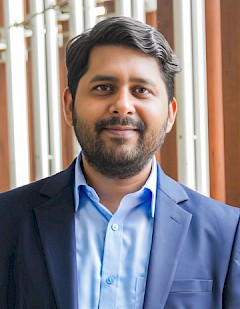
Prakhar Srivastava
Assistant Professor, School of Arts and Sciences
PhD (Jamia Millia Islamia)
+91.79.61911144
Research Interests: Social Connection, Belonging, Loneliness, Intergroup Relations, Cross-group Friendship, Social Cohesion, Global South Psychology, Open Science
Profile
Professor Prakhar Srivastava is a social psychologist working in the area of human connection and belonging. He studies how people across cultures, particularly in the Global South, understand and experience human connection, and how these insights can inform better interventions, measurement tools, and public policy.
Professor Srivastava’s doctoral research at Jamia Millia Islamia examined Hindu–Muslim cross-group friendship and its broader ripple effects: how a single friendship between members of different communities can shift attitudes towards multiple other groups and foster multicultural thinking. He is also a founding member of the Social Connection Research Lab at Jamia Millia Islamia, one of the first labs in India dedicated to the scientific study of human connection.
As a Senior Researcher and Open Science Officer at the Annecy Behavioral Science Lab in France, Professor Srivastava led India's contribution to the Global Index of Social Connection, a Templeton World Charity Foundation-funded project that studies how people across eight countries understand and experience connection. He also served as Open Science Officer for the European Union-funded Lonely-EU Project, working on the research infrastructure that supports the development of interventions and policies to address loneliness and social isolation across Europe.
Research
Professor Srivastava’s research focuses on human connection and belonging. He is interested in how people across cultures, particularly in the Global South, understand, experience, and conceptualise connection, belonging, and loneliness, and how that understanding can inform better measurement, interventions, and policy.
His doctoral research developed and tested a transfer model of intergroup contact in the Indian context, demonstrating that Hindu–Muslim cross-group friendship generates ripple effects that extend beyond the two individuals involved, improving attitudes towards multiple other groups and fostering multicultural thinking.
Alongside his doctoral work, he has contributed to a multi-country qualitative investigation across eight countries, mapping how people conceptualise loneliness, helping develop culturally valid measurement tools. His broader research utilises qualitative, quantitative, and bibliometric methods to analyse social connectedness.
He has built research infrastructure for large international projects, including as a founding member of the Social Connection Research Lab at Jamia Millia Islamia. He has also developed data management plans, research management philosophies, and policy briefs for the European Union-funded Lonely-EU Project.
Publications
Peer-Reviewed Publications
- Srivastava, P., & Bano, S. (2025). Mapping the landscape of cross-group friendship research: a bibliometric review. Current Psychology. https://doi.org/10.1007/s12144-025-07466-y
- Deka, T., Bano, S., & Srivastava, P. (2025). Understanding social connectedness: a phenomenological study on individuals with depression in India. Current Psychology. https://doi.org/10.1007/s12144-025-08187-y
- Bano, S., Srivastava, P., Mubasheer, S. E. M., Nishat, A., & Ahmad, I. (2024). Mapping the past, present and future of belongingness research: a bibliometric and thematic analysis. Journal of Belonging and Human Connection. https://doi.org/10.1163/27722856-bja10002
- Srivastava, P., Bano, S., & Abidi, S. (2024). Post-pandemic learning: insights from Indian college students. Voices of Teachers and Teacher Educators, 13(2), 129–143.
- Srivastava, P., Mubasheer, S. E., & Bano, S. (2023). Addiction and social connectedness: a bibliometric analysis. Indian Journal of Health and Well-being, 14(4), 436–442.
Reports, Policy, and Research Governance
- IJzerman, H. R., Vezzoni, C., & Srivastava, P. (2026). Europe's loneliness measurement challenge: building evidence-based infrastructure. Lonely-EU Policy Brief 2026/01 (European Union funded).
- India Country Report, Global Index of Social Connection. Annecy Behavioral Science Lab (Templeton World Charity Foundation funded). [Srivastava, P. — India Country Lead]
- Multi-country Country Reports, Global Index of Social Connection. Contributed to cross-country synthesis across Brazil, Zimbabwe, Turkey, Philippines, Morocco, United States, and China (Templeton World Charity Foundation funded). [Srivastava, P. — Contributing Author]
- LonelyEU Research Management Philosophy. Lonely-EU Project (European Union funded). [Srivastava, P. — Open Science Officer]
- LonelyEU Data Management Plan. Lonely-EU Project (European Union funded). [Srivastava, P. — Open Science Officer]
Public Scholarship
- IJzerman, H. R., & Srivastava, P. (2025). Loneliness is a global problem. Psychology Today.
- IJzerman, H. R., Mosalakanti, S., & Srivastava, P. (2025). How India defines belonging. Psychology Today.
- IJzerman, H. R., & Srivastava, P. (2025). Belonging in Camden: community, place, and social connection. Annecy Behavioral Science Lab.
Teachings
PSY161: Personality and Individual Differences (Monsoon 2026)