
Faculty
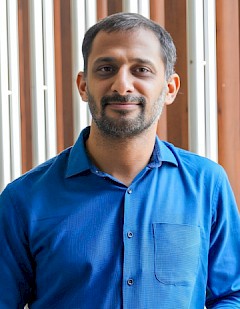
Piyush Uniyal
Assistant Professor, School of Engineering and Applied Science
PhD (IIT Ropar)
+91.79.61911188
Research Interests: Biomechanics, Bone Fracture, Implants, Medical Imaging, Mechanical Characterisation, Finite Element Analysis, High Strain Rate
Profile
Professor Piyush Uniyal’s primary research focus is musculoskeletal biomechanics. At IIT Ropar, his doctoral research investigated the mechanical behaviour of cortical bone across different length and time scales. His work integrated high-resolution micro-computed tomography (micro-CT), high strain-rate mechanical testing, and computational modelling to elucidate the mechanisms underlying bone fracture. During this period, he also collaborated closely with clinicians at the Postgraduate Institute of Medical Education and Research (PGIMER), Chandigarh, contributing to interdisciplinary projects on implant design and the study of bone alterations associated with diseases such as osteoporosis and diabetes.
Following his doctoral studies, Professor Uniyal pursued postdoctoral research in the Division of Biomechanics, Department of Mechanical Engineering at KU Leuven, Belgium. His primary research focused on the biomechanics and mechanobiology of the bone–cartilage interface, with particular emphasis on advancing the understanding of osteoarthritis progression. In addition, he contributed to projects involving the assessment of photon-counting computed tomography for predicting bone fracture and CT-based finite element modeling using high-performance computing. He has also worked with leading international research groups from the University of Sheffield and the University of Liège.
Professor Uniyal has authored and co-authored 18 research papers and two book chapters (as of April 2026), and has presented his work at international conferences. He also serves as a reviewer for various scientific journals, including Scientific Reports, PLOS ONE, and JBMR Plus.
Research
Professor Uniyal’s research focuses on understanding musculoskeletal tissue properties across space and time scale using imaging, experimental, and computational methods. Additionally, he is investigating bone–implant interactions to enhance implant stability and reduce the need for revision surgeries.
Research Projects:
- Bone microstructure and fracture risk assessment
- Effects of osteoporosis and diabetes on the mechanical properties of bone
- Biomechanics of the bone–cartilage interface at the knee joint
- Mechanical behavior of bone under high strain rates
- Biomechanical assessment of pedicle screw design
- Investigation of tibial plateau fracture risk using CT-based finite element modelling
- 3D-Printed biomimetic structures inspired by trabecular bone microarchitecture
- Evaluation of the accuracy of photon-counting CT for predicting bone fracture risk
- Micro-CT–based investigations of composites, fossils, and pharmaceuticals
Publications
Journal articles
- Quintiens, J., Paravisi, E., Uniyal, P., and van Lenthe, G. H. (2025). Bone stiffness and strength at the distal radius can be determined using photon-counting CT. Archives of Osteoporosis, 20(1), 1–10.
- Sihota, P., Kumar, S., Dhaliwal, R., Uniyal, P., Yadav, R. N., Dhiman, V., Neradi, D., Karn, S., Sapara, M., Sharma, S., and Aggarwal, S. (2025). Multi-scale inferomedial femoral neck bone quality in type 2 diabetes patients with fragility fracture. Bone, 192, Article 117375.
- Azari, F., Uniyal, P., Soete, J., Coudyzer, W., Wyers, C. E., Quintiens, J., van den Bergh, J. P., and van Lenthe, G. H. (2024). Accuracy of photon-counting computed tomography for the measurement of bone quality in the knee. Bone, Article 117027.
- Uniyal, P., Kaur, S., Dhiman, V., Bhadada, S. K., and Kumar, N. (2023). Effect of inelastic deformation on strain rate-dependent mechanical behaviour of human cortical bone. Journal of Biomechanics, 161, Article 111853.
- Verma, D., Chandran, Y., Uniyal, P., Kumar, N., and Balakrishnan, V. (2023). Multifold stiffness and fracture toughness enhancement in W-doped VO2 microcrystals. Journal of the American Ceramic Society, 106(7), 4321–4328.
- Joshi, P., Gupta, K., Uniyal, P., Jana, A., Banerjee, A., Kumar, N., Ghosh, D., Srivastava, M., Ray, A., and Khatri, O. P. (2023). Cassava starch-derived aerogels as biodegradable packaging materials. Materials Chemistry and Physics, 296, Article 127282.
- Salunke, P., Karthigeyan, M., Uniyal, P., Mishra, K., Gupta, T., and Kumar, N. (2023). A novel pedicle screw design with variable thread geometry: Biomechanical cadaveric study with finite element analysis. World Neurosurgery, 172, e144–e150.
- Uniyal, P., Sharma, A., and Kumar, N. (2022). Investigation on the sensitivity of indentation devices for detection of fatigue loading-induced damage in bovine cortical bone. Journal of Biomechanics, 143, Article 111274.
- Uniyal, P., Sihota, P., and Kumar, N. (2022). Effect of organic matrix alteration on strain rate-dependent mechanical behaviour of cortical bone. Journal of the Mechanical Behavior of Biomedical Materials, 125, Article 104910.
- Uniyal, P., Sihota, P., Tikoo, K., and Kumar, N. (2021). Anatomical variation in intracortical canal network microarchitecture and its influence on bone fracture risk. Journal of the Mechanical Behavior of Biomedical Materials, 123, Article 104770.
- Singh, N. P., Deep, S., Čerňanský, A., Sehgal, R. K., Singh, A. P., Kumar, N., Uniyal, P., Kumar, S., Krishan, K., and Patnaik, R. (2022). Fossil lizards and snakes (Diapsida, Squamata) from the Late Miocene hominid locality of Haritalyangar, India. Geobios, 75, 41–51.
- Wazir, W. A., Sehgal, R. K., Čerňanský, A., Patnaik, R., Kumar, N., Singh, A. P., Uniyal, P., and Singh, N. P. (2021). A find from the Ladakh Himalaya reveals a survival of madtsoiid snakes (Serpentes, Madtsoiidae) in India through the late Oligocene. Journal of Vertebrate Paleontology, 41(6), Article e2058401.
- Verma, D., Uniyal, P., Singh, D., Verma, S. K., Kumar, N., and Balakrishnan, V. (2021). Dynamic mechanical response of VO2-UHMWPE polymer composite across the phase transition. Materials Today Communications, 26, Article 102003.
- Yadav, R. N., Uniyal, P., Sihota, P., Kumar, S., Dhiman, V., Goni, V. G., Sahni, D., Bhadada, S. K., and Kumar, N. (2021). Effect of aging on microstructure and fracture behavior of cortical bone as determined by experiment and Extended Finite Element Method (XFEM). Medical Engineering & Physics, 93, 100–112.
- Yadav, R. N., Sihota, P., Uniyal, P., Neradi, D., Bose, J. C., Dhiman, V., Karn, S., Sharma, S., Aggarwal, S., Goni, V. G., and Kumar, S. (2021). Prediction of mechanical properties of trabecular bone in patients with type 2 diabetes using damage-based finite element method. Journal of Biomechanics, 123, Article 110495.
- Kumar, N., Kumar, A., Uniyal, P., Ramalingaiah, B., Sharma, S., Goni, V. G., Aggarwal, S., Bhadada, S. K., and Bhushan, B. (2020). Mimicking high-strength lightweight novel structures inspired from the trabecular bone microarchitecture. Philosophical Transactions of the Royal Society A, 378(2167), Article 20190448.
- Yadav, J. P., Yadav, R. N., Uniyal, P., Chen, H., Wang, C., Sun, C. C., Kumar, N., Bansal, A. K., and Jain, S. (2019). Molecular interpretation of mechanical behavior in four basic crystal packing of Isoniazid with homologous cocrystal formers. Crystal Growth & Design, 20(2), 832–844.
- Das, R., Yadav, R. N., Sihota, P., Uniyal, P., Kumar, N., and Bhushan, B. (2018). Biomechanical evaluation of wasp and honeybee stingers. Scientific Reports, 8(1), 1–3.
Book Chapters
- Uniyal, P., and van Lenthe, H. (2026). Experimental bone mechanics. In Biomechanics and mechanobiology of bone. Elsevier.
- Uniyal, P., Dwivedi, K. K., and Verma, A. (2025). Computational insights into bone mechanics: Molecular-level approaches. In Mechanics and materials science of biological materials: Experimental and modeling approaches (pp. 93–106). Springer Nature Singapore.
- Uniyal, P., Kumar, N., and Spataro, M. (2024). Microstructural and dynamic mechanical behavior of the cortical bone. In Dynamic mechanical and creep-recovery behavior of polymer-based composites (pp. 351–380). Elsevier.
Conferences
- Uniyal, P., Anbalagan, V., Banerjee, A., Dall’Ara, E., and van Lenthe, G. H. (2025, July). Precision of digital volume correlation for strain measurements in subchondral bone. 30th Congress of the European Society of Biomechanics (ESB 2025), Zurich, Switzerland.
- Banerjee, A., Uniyal, P., Stok, K., and van Lenthe, G. H. (2025, July). A novel imaging pipeline for morphological differentiation of osteocyte and chondrocyte lacunae using UMAP clustering. 30th Congress of the European Society of Biomechanics (ESB 2025), Zurich, Switzerland.
- Müller, L., Ska, M., Uniyal, P., van Lenthe, G. H., and Ruffoni, D. (2024, September 11–13). Microstructural and micromechanical analysis of proximal tibia in aging rats. XXIII International Conference on Mechanics in Medicine and Biology (ICMMB), Brussels, Belgium.
Book
- Dwivedi, K. K., Uniyal, P., and Verma, A. (2025). Mechanics and materials science of biological materials: Experimental and modeling approaches. Springer Nature.
Patent
- R Das, RN Yadav, P Sihota, P Uniyal, N Kumar, and B Bhushan, A painless micro syringe-needle system for drug delivery, Patent number: 486366, Application number: 201911012456