
Mathematical and Physical Sciences
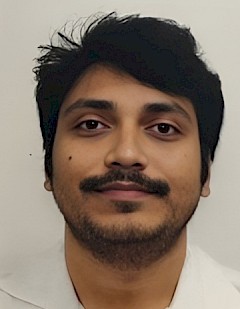
Debjoy Thakur
Assistant Professor
PhD (IIT Tirupati)
+91.79.61911000
https://scholar.google.com/citations?user=2VVChMUAAAAJ&hl=en
Research Interests: Spatial Statistics, Network Modelling, Learning Theory, Time Series Analysis, High-dimensional Statistical Modelling
Profile
Professor Debjoy Thakur is a statistician whose research lies at the intersection of spatial statistics, statistical machine learning, network modelling, and high-dimensional data analysis. He had worked as a Postdoctoral Lecturer in the Department of Statistics and Data Science at Washington University in St. Louis, USA. He received his PhD in Statistics from the Indian Institute of Technology Tirupati.
His research focuses on developing statistically rigorous and computationally efficient methods for analysing complex spatial, spatio-temporal, and high-dimensional datasets arising in environmental science, climate studies, public health, urban safety, and related disciplines. His current interests include spatial variable selection, statistical learning theory, neural-network-based modelling, spatial extremes, copula methods, and scalable inference for dependent data. He is also interested in emerging applications of statistics and artificial intelligence to neuroimaging, spatial omics, and environmental health. His work combines methodological innovation with interdisciplinary applications, bridging modern data science techniques and statistical theory.
Research
Professor Thakur’s research focuses on developing theoretical foundations for modern statistical learning in high-dimensional and dependent data settings. In particular, he studies how to obtain valid statistical inference, uncertainty quantification, and robustness guarantees for methods arising in machine learning and artificial intelligence. His work aims to bridge the gap between flexible learning algorithms and rigorous statistical theory by developing asymptotic theory, robust estimators, and scalable algorithms. During his PhD, Professor Thakur developed statistical methodologies for spatio-temporal processes with complex dependence structures.
- He introduced methods for quantifying the intervention effects of the COVID-19 lockdown on particulate matter emissions and modelled how the Air Quality Index varies across major economic zones, such as industrial, transport, and other areas.
- In spatial statistics, the Gaussianity assumption, or distributional restriction, is common for likelihood construction. But during the modleling of atmospheric events, many climate models that incorporate this distributional restriction may influence the predictive performance. In this context, in his graduate research, Professor Thakur introduced the spatial copula modelling for non-Gaussian data.
- In spatio-temporal modelling of rainfall data, there is a significant gap in probabilistic forecasting. In this context, a spatial copula-based long short-term memory recurrent neural network offers flexibility in spatio-temporal modelling and significantly improves predictive performance.
During his postdoctoral research, Professor focused on three areas with a significant modelling gap and solved three corresponding problems:
- In his first project, he worked on likelihood-free modelling for spatial extreme data, for example, extreme temperature, extreme streamflow, and more. In this context, he observed a significant gap in modelling the likelihood of spatial extreme processes, such as the Brown-Resnick and r-Pareto processes. He proposed a likelihood-free penalised convolutional neural network-based modelling for climate extreme data. Here, likelihood construction is not required, given the constraint that two closer locations will have similar shape parameters, which is important for tail probabilities.
- Professor Thakur’s second project addresses spatial high-dimensional data. While traditional methods rely on global dimensionality-reduction techniques such as LASSO and group LASSO, they fail to account for spatial proximity, where locations closer together should naturally share similar variables. To address this, he developed a novel wavelet-based local LASSO that enables precise local variable selection—useful for analysing localized events such as road-specific accidents or crimes. Furthermore, his framework establishes variable selection consistency under increasing-domain asymptotic without requiring the penalty parameter to converge to zero, ensuring robust consistency for irregularly spaced spatial data with a fixed design.
- In spatial statistics, one persistent challenge arises when working with areal data, where researchers generally assume a first- or second-order neighbourhood structure for spatial autoregressive models. However, when dealing with over-dispersed and non-stationary spatial data, such as gun violence data from the southeastern United States, the assumption often fails because the data exhibit strong non-stationarity and directional anisotropy in neighbourhood selection. To address this issue, Professor Thakur developed a framework for selecting spatial neighbourhood structures locally, allowing the model to better capture the underlying spatial dynamics.
Publications
- Thakur, D. (2026). Variational approximated restricted maximum likelihood estimation for spatial data [Manuscript submitted for publication]. Department of Statistics, arXiv. https://arxiv.org/pdf/2604.07635
- Thakur, D., Zhao, L., & Bandyopadhyay, S. (2025). Local variable and neighbourhood selection for firearm fatality in the Southeast USA [Manuscript submitted for publication]. Department of Statistics, arXiv. https://arxiv.org/abs/2601.19044
- Thakur, D., & Lahiri, S. (2025). Multi-resolution analysis of variable selection in spatial intensity functions for risky roads in St. Louis [Manuscript submitted for publication]. Department of Statistics, arXiv. https://arxiv.org/html/2601.00147v1
- Thakur, D., Das, I., & Chakravarty, S. (2023). Spatial copula interpolation in a random field with application to air pollution data. Modeling Earth Systems and Environment. https://doi.org/10.1007/s40808-022-01484-6
- Thakur, D., Bhattacharya, S., & Das, I. (2022). Univariate and bivariate inverted exponential–Teissier distributions in Bayesian and non-Bayesian frameworks for modelling stochastic climate dynamics. Theoretical and Applied Climatology. https://doi.org/10.1007/s00704-022-04238-7
- Thakur, D., & Das, I. (2022). Statistical assessment of spatio-temporal impact of COVID-19 lockdown on air pollution using different modelling approaches in India (2019–2020). Regional Statistics. https://doi.org/10.15196/RS120303
Teachings
Survival Analysis, Linear Models, Probability, Survival Analysis, Stochastic Processes