
Biological and Life Sciences
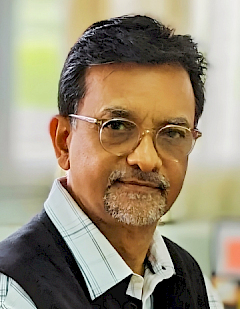
Ajay Kohli
Professor, School of Arts and Sciences
PhD (University of East Anglia)

Research Interests: Plant Abiotic Stress Tolerance, Crop Nitrogen Use Efficiency, Molecular and Evolutionary Genetics of Crop Adaptation, Redox Biology and Development in Plants, Rice Biotechnology, Translational Plant Biology for Climate-Resilient Agriculture, Agricultural Research Innovation and Systems Leadership for Food Security
Profile
Professor Kohli was Deputy Director General for Research and Innovation and, for nine months, the Interim Director General of one of the world’s foremost agricultural research institutes, the International Rice Research Institute (IRRI) in the Philippines, prior to joining Ahmedabad University in 2026. At IRRI he set strategic direction across molecular biology, genetics, breeding, physiology, agronomy, environmental science and socioeconomic research, to help reposition IRRI as an integrated agrifood-systems research organisation. Professor Kohli is a Pravasi Fellow of India's National Academy of Agricultural Sciences (FNAAS) and a recipient of the President of Vietnam's Friendship Medal for contributions to crop science, He serves on the Scientific Advisory Board of the M S Swaminathan Research Foundation, Chennai, and The Ignite Lifescience Foundation, Bengaluru.
A plant molecular biologist with 35 years of experience spanning crop genetics, genomics, and sustainable agricultural development across India, the UK, the USA and the Philippines, he has 140 publications, an h-index of 44, and patented innovations in rice yield, drought resistance, reproductive traits and plant transformation. He won two consecutive BBSRC Exceptional Performance Awards (UK) and held honorary or visiting fellowships at Newcastle University (UK), the University of Western Australia, and the Fraunhofer Institute for Molecular Biotechnology (Germany). Professor Kohli served as an Associate Editor of the journal Plant Molecular Biology and was a member of the editorial boards of Molecular Breeding, Transgenic Research, the Journal of Agricultural Sciences, Frontiers in Plant Science and Food Security, and he reviews grants for funding bodies in the UK, France, Portugal and India.
He supervised and mentored 5 postdoctoral researchers, 13 doctoral students, 10 master's students, 19 undergraduate researchers and numerous visiting fellows from countries around the world and sees mentorship as the mechanism through which interdisciplinary science becomes sustainable.
His research career spans plant genetic modification and epigenetics at the John Innes Centre, UK, to the role of human non-coding DNA in beta-thalassemia at the University of Washington, Seattle, to Jatropha as a biodiesel feedstock at Newcastle University, UK, and finally to rice biotechnology and executive leadership at IRRI, before returning to India. Throughout, he worked at the interface of fundamental discovery science and its application to real-world agricultural challenges, especially in Asia and Africa
During the early career, he demonstrated for the first time the structure of transgene integration into the rice genome following biolistic delivery, a foundational contribution to plant transformation research. Since then, his laboratory experimentally proved the existence of multi-gene large-effect QTL for drought tolerance – a paradigm shift from the then prevalent model of QTLs operational through a single fine-mapped causal gene. His lab then identified and characterised Osgda1, the first guanine deaminase gene in plants, though the enzyme activity was known in tea and coffee plants. Through extensive collaborations the lab produced discoveries and products relating to reproductive resilience, panicle architecture, yield and grain quality, and he led the whole-genome sequencing and de novo assembly of the NERICA rice varieties developed for African agriculture. His research lab has been supported by funders including the Indian Council of Agricultural Research, the UK Biotechnology and Biological Sciences Research Council, the Bill & Melinda Gates Foundation (through AfricaRice), the German Federal Ministry for Economic Cooperation and Development, and Taiwan's Council of Agriculture.
At IRRI, Professor Kohli’s contributions extended beyond his laboratory: he guided the institute through organisational restructuring, international integration and leadership transition, while mentoring scientists at different career stage and linking discovery science to varietal development, delivery and impact. He believes that innovation, collaboration, and engagement with stakeholders across the research-to-impact continuum is essential.
At Ahmedabad University, he will contribute to an intellectually vibrant and interdisciplinary academic environment, mentoring students and early-career researchers, and advancing research in challenges facing agriculture and food systems in the twenty-first century.
Research
Professor Kohli’s research focuses on understanding the genetic, molecular, and physiological basis of crop productivity, adaptation, and sustainability, with a particular emphasis on rice and other staple crops.
At Ahmedabad University, he is building a research and mentoring programme around two fundamental questions in crop biology. The first asks how cereals and other crops can use and recycle nitrogen more efficiently — sustaining productivity and grain quality while reducing fertiliser inputs and environmental impact — through an integration of genome editing, natural genetic diversity, biochemistry, crop physiology and field evaluation. The second investigates an unusual rice protein linked to reproductive development and grain formation, which his group has shown can acquire distinct biochemical activities through changes in oligomerisation and glycosylation; future work will characterise its native dimeric, hexameric and higher-order states, determine how glycosylation drives functional switching, and collaboratively pursue three-dimensional structural analysis, connecting protein structure and post-translational modification to enzyme function, grain development, starch properties and crop evolution. He will also be involved with peanut improvement research through close collaboration with other faculty in the Division.
In addition to laboratory and field-based research, he will contribute to the development and leadership of international research programs addressing food security, climate resilience, sustainable intensification, and agricultural innovation through the integration of fundamental biological discoveries from molecular genetics, functional genomics, and plant physiology to crop improvement and agricultural systems that can benefit farmers, consumers, and the environment.
A recent proposal extends his interdisciplinary approach further, bringing together plant molecular biology, stochastic and computational modelling, and organisational science to explore how biological and human systems allocate limited resources among competing units — using rice nitrogen allocation as the experimental foundation for mathematical models tested across both plant and organisational systems, as a falsifiable, data-driven research programme rather than a loose analogy.
Publications
- Kohli, A., Leech, M., Vain, P., Laurie, D.A., & Christou, P. (1998). Transgene organization in rice engineered through direct DNA transfer supports a two-phase integration mechanism mediated by the establishment of integration hot spots. Proceedings of the National Academy of Sciences USA, 95, 7203–7208.
- Kohli, A., Twyman, R.M., Abranches, R., Wegel, E., Stoger, E., & Christou, P. (2003). Transgene integration, organization and interaction in plants. Plant Molecular Biology, 52, 247–258.
- Kohli, A., Griffiths, S., Palacios, N., Twyman, R.M., Vain, P., Laurie, D.A., & Christou, P. (1999). Molecular characterization of transforming plasmid rearrangements in transgenic rice reveals a recombination hotspot in the CaMV 35S promoter. The Plant Journal, 17, 591–601.
- Dorschner, M.O., Hawrylycz, M., Humbert, R., Wallace, J.C., Shafer, A., Kawamoto, J., Hall, R., Bromiley, P., Kuchinsky, A., Kohli, A., et al. (2004). High-throughput localization of functional elements by quantitative chromatin profiling. Nature Methods, 1, 219–225.
- Sreenivasulu, N., Harshavardhan, V.T., Govind, G., Seiler, C., & Kohli, A. (2012). Contrapuntal role of ABA: does it mediate stress tolerance or plant growth retardation under long-term drought stress? Gene, 506, 265–273.
- Kohli, A., Sreenivasulu, N., Lakshmanan, P., & Kumar, P.P. (2013). The phytohormone crosstalk paradigm takes center stage in understanding how plants respond to abiotic stresses. Plant Cell Reports, 32, 945–957.
- Fujita, D., Kohli, A., & Horgan, F.G. (2013). Rice resistance to planthoppers and leafhoppers. Critical Reviews in Plant Sciences, 32, 162–191.
- Zaidi, S.S.A., Vanderschuren, H., Qaim, M., Mahfouz, M.M., Kohli, A., Mansoor, S., & Tester, M. (2019). New plant breeding technologies for food security. Science, 363, 1390–1391.
- Kohli, A., Miro, B., Balié, J., & d’A Hughes, J. (2020). Photosynthesis research: a model to bridge fundamental science, translational products, and socio-economic considerations in agriculture. Journal of Experimental Botany, 71, 2281–2298.
- Badoni, S., Pasion-Uy, E.A., Kor, S., Kim, S.R., Tiozon Jr., R.N., Misra, G., et al., & Kohli, A. (2024). Multiomics of a rice population identifies genes and genomic regions that bestow low glycemic index and high protein content. Proceedings of the National Academy of Sciences USA, 121, e2410598121.
Full publication list available at https://scholar.google.com/citations?user=KeDiv9cAAAAJ&hl=en