Do you have an Inner Monologue? How the Mind Uses Space and Language to Think
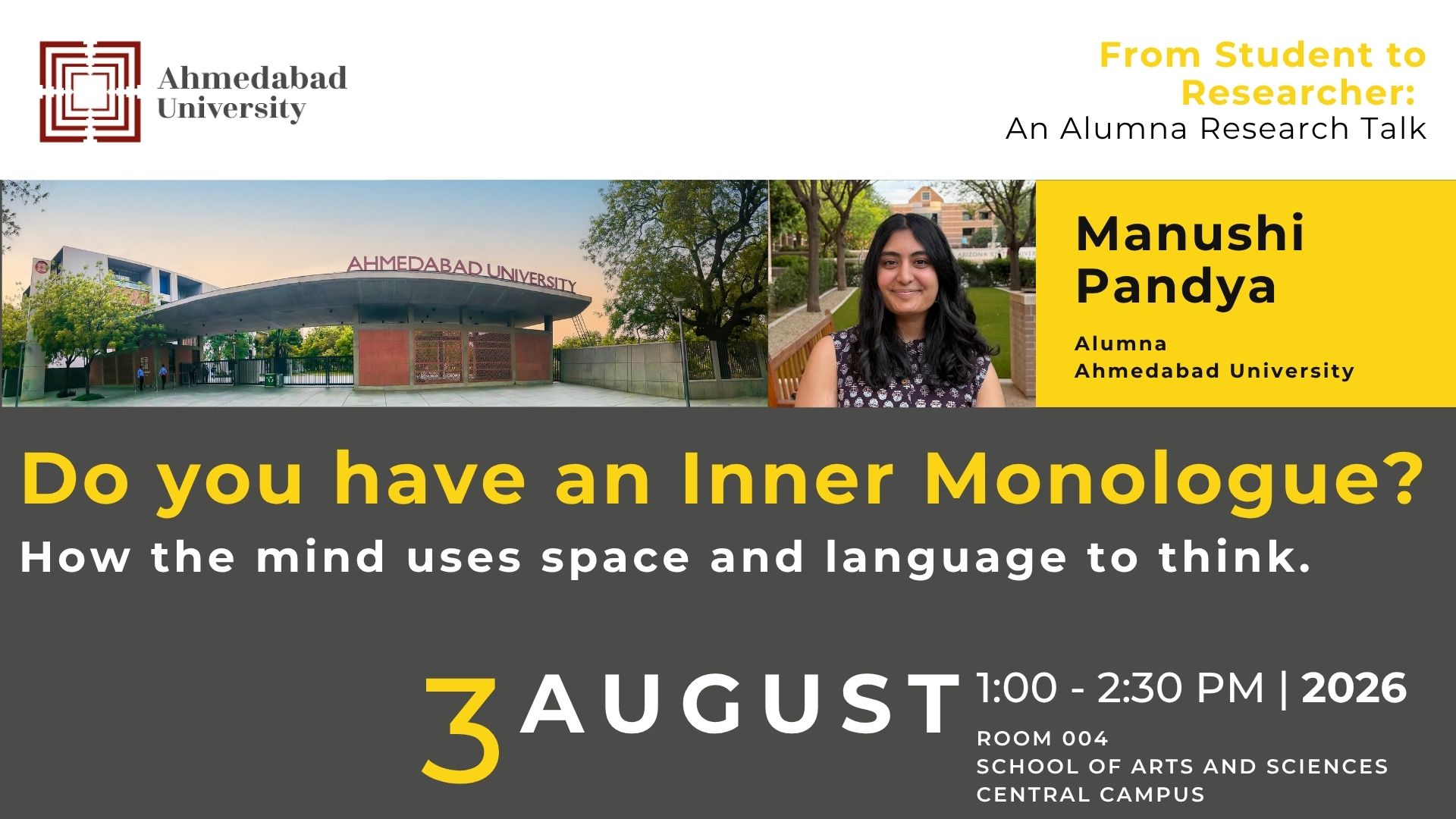
Why do we say we are “close” to some people and “distant” from others, even though there is no literal distance involved? Some meetings are “long”, and some are “short”. What are the other ways we can think? We often find ourselves using space and language, to represent abstract ideas such as memory, attention, and emotion.
This talk traces questions from my undergraduate thesis to graduate work such as: what makes a face memorable, and does it become more so if it resembles your own? How does an emotional image briefly “blind” us to whatever follows it, and what makes that blindness fade? Do all cultures think of happy as “up” and disgust as “down,” or does that mapping shift depending on how a culture feels emotions should be expressed? Do inner monologues differ between adults with autism and neurotypicals?