
Wednesday
07
October 2026
2:30 - 4:00 PM
Location
Room 209, School of Arts and Sciences
Central Campus
Share
Feeding the “Good” Mother? Knowing through Maternal Work
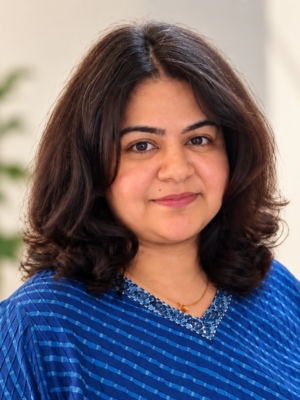
Akanksha Adya
Assistant Professor of Psychology
Krea University
Speaker
The child-centred development discourse and neoliberal health policies have reorganised child feeding into a moral minefield, reshaping what it means to be a “good” mother in contemporary India. In this talk, I discuss how some first-time mothers manage lactation, feeding work, and inhabit “new” maternal anxieties concerning risk, accuracy, and nutrition in New Delhi, India. By positioning mothers as legitimate subjects, I highlight mothers’ epistemic negotiations and how they navigate maternal responsibility. In telling their accounts, mothers mock unhelpful advice, question the purity of breast milk, and adopt silence in family settings, electing greater autonomy in making their feeding decisions. Through a constructive grounded theory analysis, I discuss infant feeding as a dynamic sensemaking process, where the lived experience of feeding, caring, and bonding with children shapes maternal knowledge. In turn, I theorise the situated emergence of maternal subjectivity and psychological negotiation of epistemic authority through feeding labour.
Speaker
Akanksha Adya
Akanksha Adya is an Assistant Professor of Psychology at Krea University. Her teaching and research aim to decolonise global psychology by developing a psychosocial understanding of maternal subjectivity. Her doctoral dissertation interrogated the first-time mothers’ meaning construction and negotiation of globally exported “child-centred” infant feeding advice in rapidly changing local contexts of family change and neoliberal globalisation in New Delhi, India. More recently, her scholarship explores maternal subjectivity and well-being in later life at the intersections of psychoanalysis, aging, and care. Previously, Dr Adya trained as a psychodynamic psychotherapist, and specialised in attending to mental health concerns of women.