
Wednesday
09
September 2026
3:00 - 4:00 PM IST
Location
Room 204, School of Arts and Sciences
Central Campus
Share
Evolutionary Adaptation to Heterogeneous Environments
Arts and Sciences Research Seminar Series
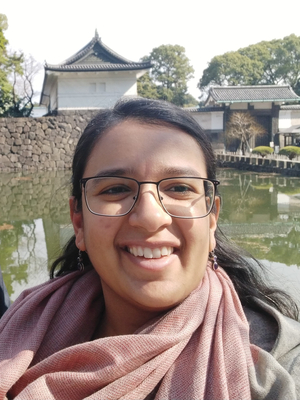
Nandita Chaturvedi
Visiting Scientist
National Centre for Biological Sciences
Bangalore
Speaker
Evolution in heterogeneous environments that pose a fitness trade-off has been the subject of numerous theoretical studies. First, we examine microbial adaptation to extreme stress, which often reveals fundamental trade-offs between survival and proliferation. We develop a quantitative model to investigate the adaptation of populations of yeast subjected to cycles of growth and extreme freeze-thaw stress. Crucially, our analysis reveals that populations optimized for growth-stress cycles can maintain viability alongside growth-optimized populations even in the absence of stress. This demonstrates that underlying physiological tradeoffs do not necessarily translate into fitness trade-offs at the population level, providing general insights into the complex interplay between environmental fluctuations, physiological constraints, and evolutionary dynamics. We ask whether it is possible to differentiate between evolution through mutations and a learning based mechanism by considering offspring phenotype statistics during the evolution process.
Second, we discuss optimal phenotypic strategies by modelling an environment to phenotype map using a single hidden layer neural network with linear activation and non-linear training dynamics. The action of the map approximates the combined effect of all genetic and epigenetic variables in an organism. We take the loss function to be analogous to fitness costs and learning to be analogous to the evolutionary process. We show how the optimal phenotypic strategies for different trade off strengths and environmental noise levels can be analytically derived. Our calculation unifies the results of existing numerical and geometric studies. We classify the regimes under which particular strategies are favourable and show how the map's training dynamics sheds light on the process of whole-organism evolution.
Speaker
Nandita Chaturvedi
Nandita Chaturvedi is a theoretical physicist working at the interface of statistical physics, ecology and evolutionary biology. She completed her PhD in soft condensed matter physics at the University of Pennsylvania and subsequently carried out postdoctoral research at the National Centre for Biological Sciences, TIFR, in mathematical ecology and evolution. Her research uses analytical and computational approaches to study adaptation in changing environments, non-genetic adaptation and cellular learning, and the structure of genotype- and environment-to-phenotype maps. More broadly, she is interested in using tools from statistical physics, dynamical systems and machine-learning theory to understand how biological systems adapt to heterogeneity and evolve across scales. She is currently a Visiting Scientist at the National Institute of Advanced Studies, Bangalore.