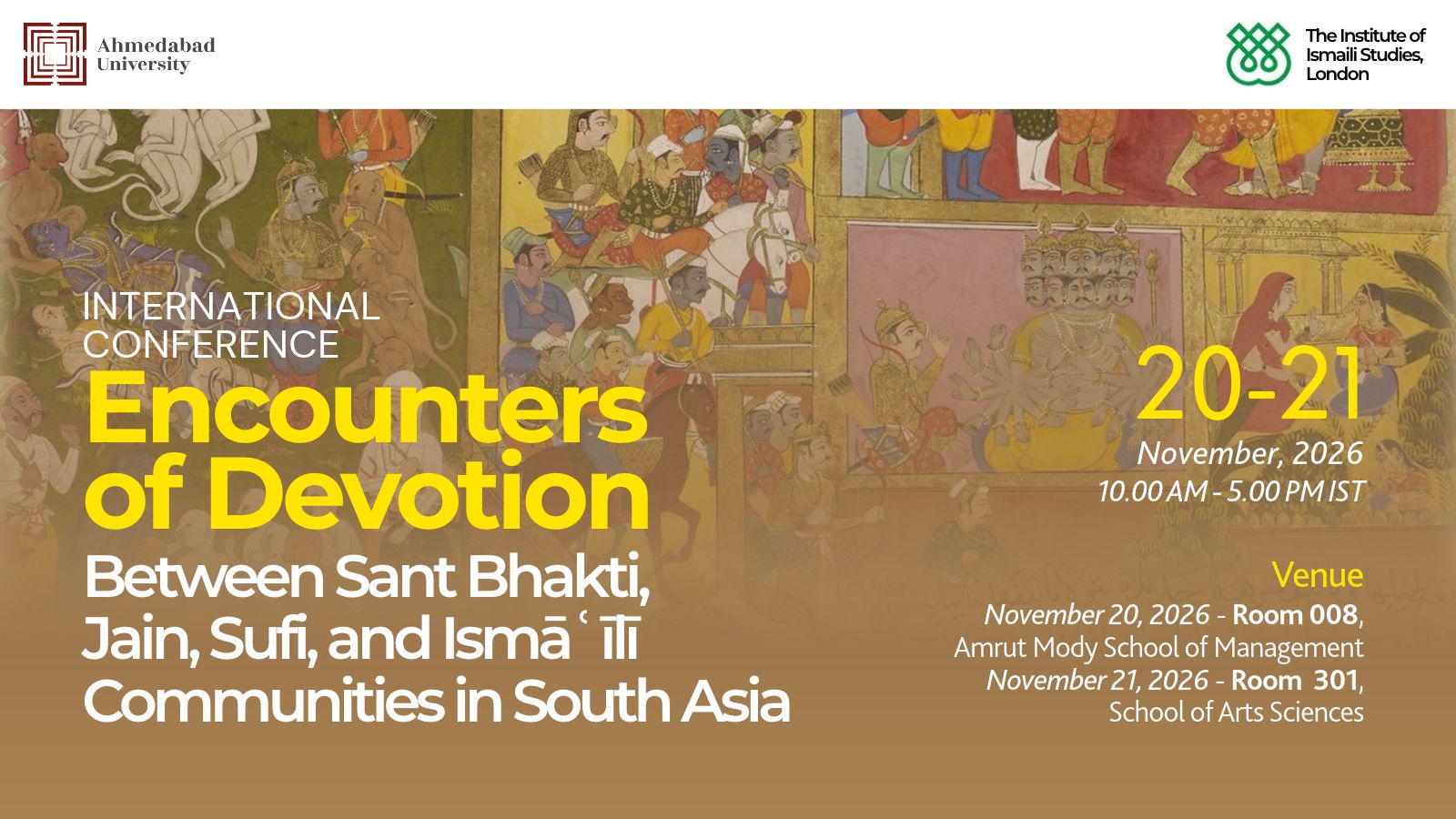
Encounters of Devotion Between Sant Bhakti, Jain, Sufi, and Ismāʿīlī Communities in South Asia
How was devotion articulated, transmitted, and transformed through the circulation of texts and practices across religious communities in South Asia? What happened when songs, poems, hagiographies, and other devotional compositions moved between diverse communities of interpreters, being sung, read, and heard amongst diverse audiences? How did Sant Bhakti communities such as the Dādūpanth incorporate, reframe, and re-accent the works of Sufi authors, or Ismāʿīlī traditions envelop Chishtī Sufi compositions as a way to express devotion to their Imams? In what ways did mahants of the Rāmānandī sect rearticulate devotion vis-á-vis emergent political configurations of the 19th century? What does devotion to gurus, pīrs, or Imams look like in contemporary time, and how are they remembered through rituals and sacred spaces? Such questions invite us to reconsider the ways in which devotional literature and practices formed dynamic textual, martial, and ritual cultures through exchange, adaptation, and reinterpretation.
While scholarship on Bhakti, Jain, Sufi, and Ismāʿīlī traditions has significantly advanced our understanding of these communities and shared textual and devotional practices, comparatively less attention has been paid to the re-inscription and reinterpretation of ‘othered’ texts and practices by distinct devotional communities. Moving beyond binary understandings of shared traditions, syncretism, influence, or religious competition, we foreground mobilities of texts and practices as the site of negotiation and encounter. This conference proposes investigating the textual encounters inscribed in such texts in order to examine how devotional communities engaged with inherited textual and ritual traditions, negotiated religious difference, and fashioned new forms of authority through acts of textual reuse and reinterpretation.
Bringing together scholars working on medieval to modern South Asia, the conference/workshop invites contributions that investigate the circulation, translation, adaptation, compilation, performance, and reception of devotional texts and practices among Bhakti, Jain, Sufi, and Ismāʿīlī communities. We bring together scholars who employ interdisciplinary approaches, including philology, manuscript and codicological studies, literary history, religious studies, translation studies, intellectual history, and the study of material and performative aspects of textual transmission and devotional practices.
This conference will stimulate new comparative perspectives on South Asian devotional cultures and encourage sustained dialogue among scholars working across religious, linguistic, and disciplinary boundaries, and between the Indian subcontinent and abroad.
Date: Friday-Saturday, November 20-21, 2026
Time: November 20, 2026: 10:00 AM - 5:00 PM IST
November 21, 2026: 10:00 AM - 1:00 PM IST
Venue: November 20, 2026: Room 008, Amrut Mody School of Management
November 21, 2026: Room 301, School of Arts and Sciences