Wednesday
28
October 2026
2:30 - 4:00 PM IST
Location
Room 300, School of Arts and Sciences
Central Campus
Share
Building Galaxies Across Cosmic Time
Arts and Sciences Research Seminar Series
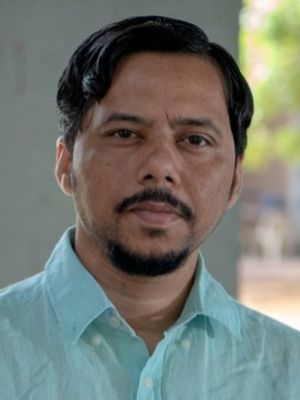
Kanak Saha
Professor
Inter-University Centre for Astronomy and Astrophysics
Speaker
Galaxies are the fundamental building blocks of the Universe, exhibiting a remarkable diversity in morphology and stellar mass. Multiple lines of evidence demonstrate that galaxies are not static island universes but dynamical systems that evolve over cosmic time. However, the physical processes governing their growth and structural transformation remain unclear. High-redshift galaxies often exhibit clumpy and amorphous morphologies, in contrast to the smoother and more structurally matured galaxies commonly observed in low-z universe. Understanding how these differences emerge presents significant observational and theoretical challenges. In this talk, the speaker will discuss the observational challenges involved in tracing galaxy evolution across cosmic time and highlight, in particular, on the role of clump migration in driving the dynamical evolution of galaxies.
Speaker
Kanak Saha
Kanak Saha is a Professor at the Inter-University Centre for Astronomy and Astrophysics (IUCAA, Pune). His research focuses on the formation and evolution of galaxies in the early Universe. He is a recipient of the prestigious Shanti Swarup Bhatnagar Prize in Physical Sciences awarded by the Government of India and the New Discovery Award from the Astronomical Society of India. Prior to joining IUCAA, he spent his postdoctoral years as an Alexander von Humboldt Fellow at the Max Planck Institute for Extraterrestrial Physics in Germany and at the Institute of Astronomy and Astrophysics, Academia Sinica, Taiwan. He completed his PhD at the Indian Institute of Science,Bengaluru.