Wednesday
14
October 2026
2:30 - 4:00 PM IST
Location
Room 209, School of Arts and Sciences
Central Campus
Share
Agency, Love, and Wisdom: Means of Liberation in Dvaita Philosophy
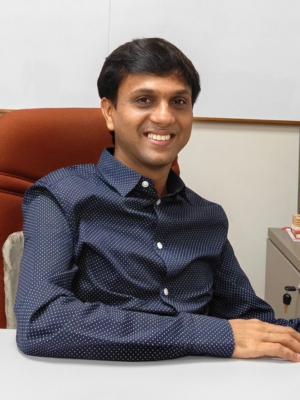
Srinivasa Kumar Acharya
Associate Professor (Philosophy)
Manipal Institute of Social Sciences
Humanities and Arts (MISHA)
Chief Editor, Manipal Universal Press (MUP)
Manipal Academy of Higher Education (MAHE)
Speaker
This paper examines the soteriological triad of agency (kartṛtva), devotional love (bhakti), and wisdom (jñāna) in Śrī Madhvācārya’s Dvaita Vedānta. Dvaita establishes a realistic ontology wherein individual souls possess real yet dependent agency (paratantra-kartṛtva), energised solely by the sovereign Divine (svatantra). Discarding mechanical ritualism and non-dual absorption, liberation (mokṣa) is conceptualised through supreme, unshakeable devotion anchored in profound philosophical understanding of God’s majesty (māhātmya-jñāna). By harmonising ethical responsibility with meditative insight and unyielding devotion, the tradition establishes that genuine spiritual freedom is not self-effacement, but the perfection of individualised divine communion actualised through Lord Viṣṇu’s supreme grace (prasāda).
Speaker
Srinivasa Kumar Acharya
Srinivasa Acharya is an Associate Professor (Philosophy) at MISHA and is also the Chief Editor of Manipal Universal Press at MAHE, and coordinates the Dvaita Philosophy Resource Centre (DPRC). An EU Erasmus+ Fellow trained at Purnaprajna Vidyapitha, he holds doctorates and master’s degrees across Nyāya, Alaṅkāra, and Sanskrit. Dr Acharya pursues his teaching and research in Indian discourses on ethics, epistemology, metaphysics and linguistics and guides PhD and PG students in IKS areas.