Organisational Democracy at Work
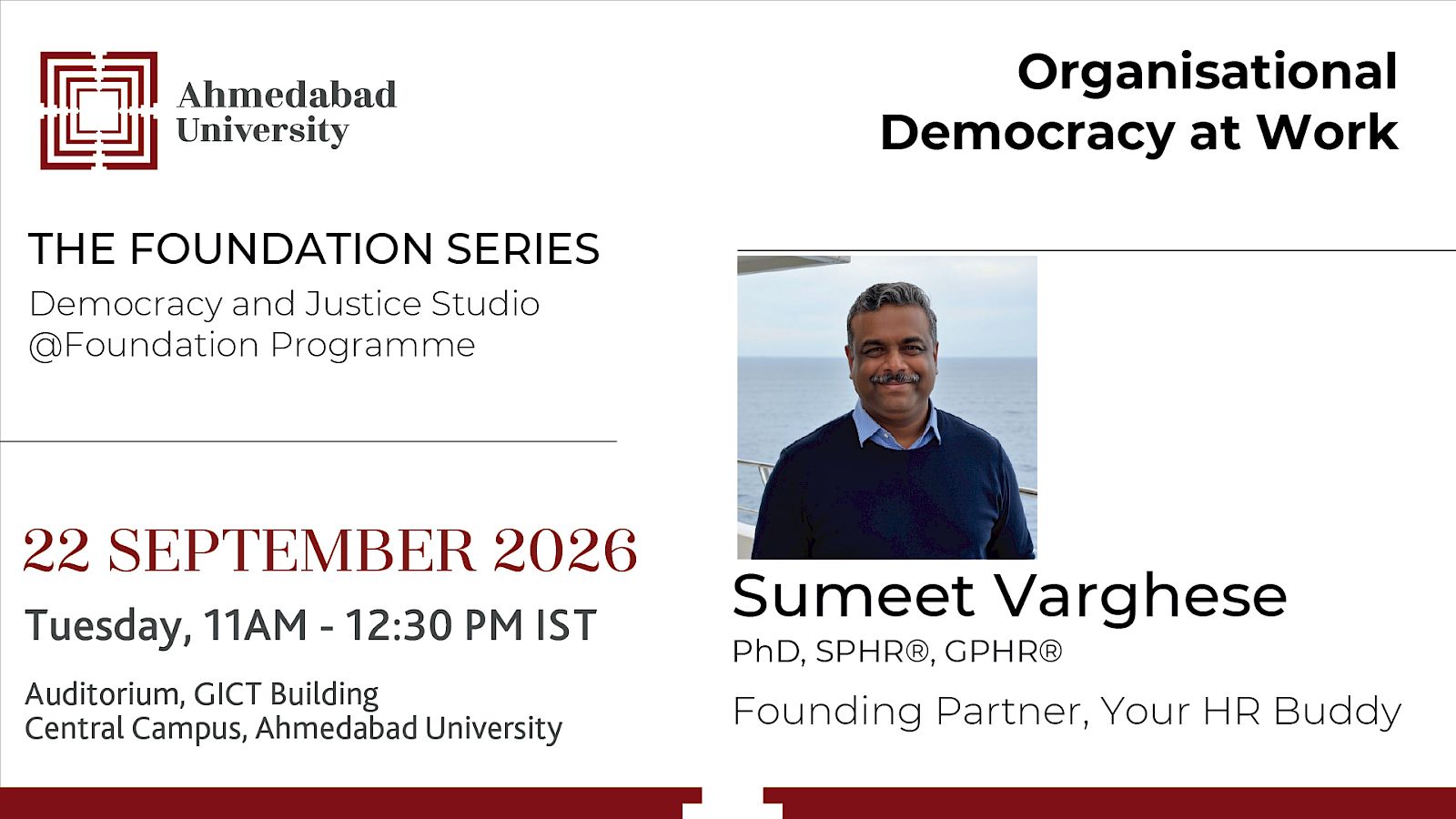
Citizens in a democracy enjoy fundamental rights: they vote for their leaders, participate in shaping laws, access information about governance, receive equal treatment under the law, and have recourse when these rights are violated. But what happens when these same citizens walk through the doors of their workplace? Do democratic principles travel with them — or do they stop at the office entrance? This session explores organisational democracy — the application of democratic principles such as participation, representation, transparency, accountability, and justice within the workplace.
Drawing on real-world examples from Indian cooperatives, multinational corporations, and small enterprises, the session examines how power is distributed inside organisations, who makes the rules and whether they are followed equally, what freedoms employees actually enjoy, and whether dignity, respect, and fairness are structural features of organisational life or merely aspirational values.
The session is designed to help students see organisations as political systems — sites where power, justice, voice, and rights operate in ways that are both parallel to and distinct from political democracy. By the end of the hour, students will have a framework for asking critical questions about any organisation they encounter: Who holds power? How were they chosen?
Are the rules fair — and fairly applied? Can people speak freely? Is dissent tolerated? Are people treated as citizens or as subjects?