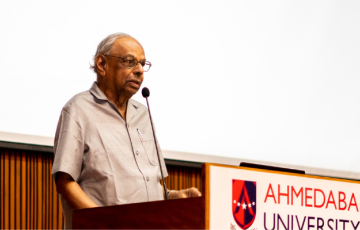
7th Annual Economics Conference
The Annual Economics Conference by Ahmedabad University offers a global forum for the dissemination of modern research in all areas of Economics and Finance. Over the years, it has garnered participation from active researchers both within India and abroad. The keynote lectures from eminent speakers and panel discussions among industry experts are also key attractions of this conference.
We will recognise outstanding submissions from young scholars by giving out “Best Paper Prizes.”
Please submit a full paper or an extended abstract (maximum 1000 words) as an attachment using the link. If you are submitting an extended abstract and your paper is selected, then you need to submit the full paper at the time of registration. We accept a maximum of one submission and presentation per person.
The 2026 Annual Economics Conference will be held on-site at the Central Campus of Ahmedabad University.
For Communication, please email to economicsconf@ahduni.edu.in
Submissions and online registrations are now closed. If you wish to attend but have not yet registered, please do so at the on-site registration desk during the event.
Schedule
Past Conferences
- Inaugural Conference (2019): 50 years of Bank Nationalisation - Indian Banking at Cross Roads
- 2nd Annual Economics Conference (2021): Economics in Challenging Times
- 3rd Annual Economics Conference (2022): The Road to an Inclusive Recovery - Post Pandemic Era
- 4th Annual Economics Conference (2023)
- 5th Annual Economics Conference (2024)
- 6th Annual Economics Conference (2025)
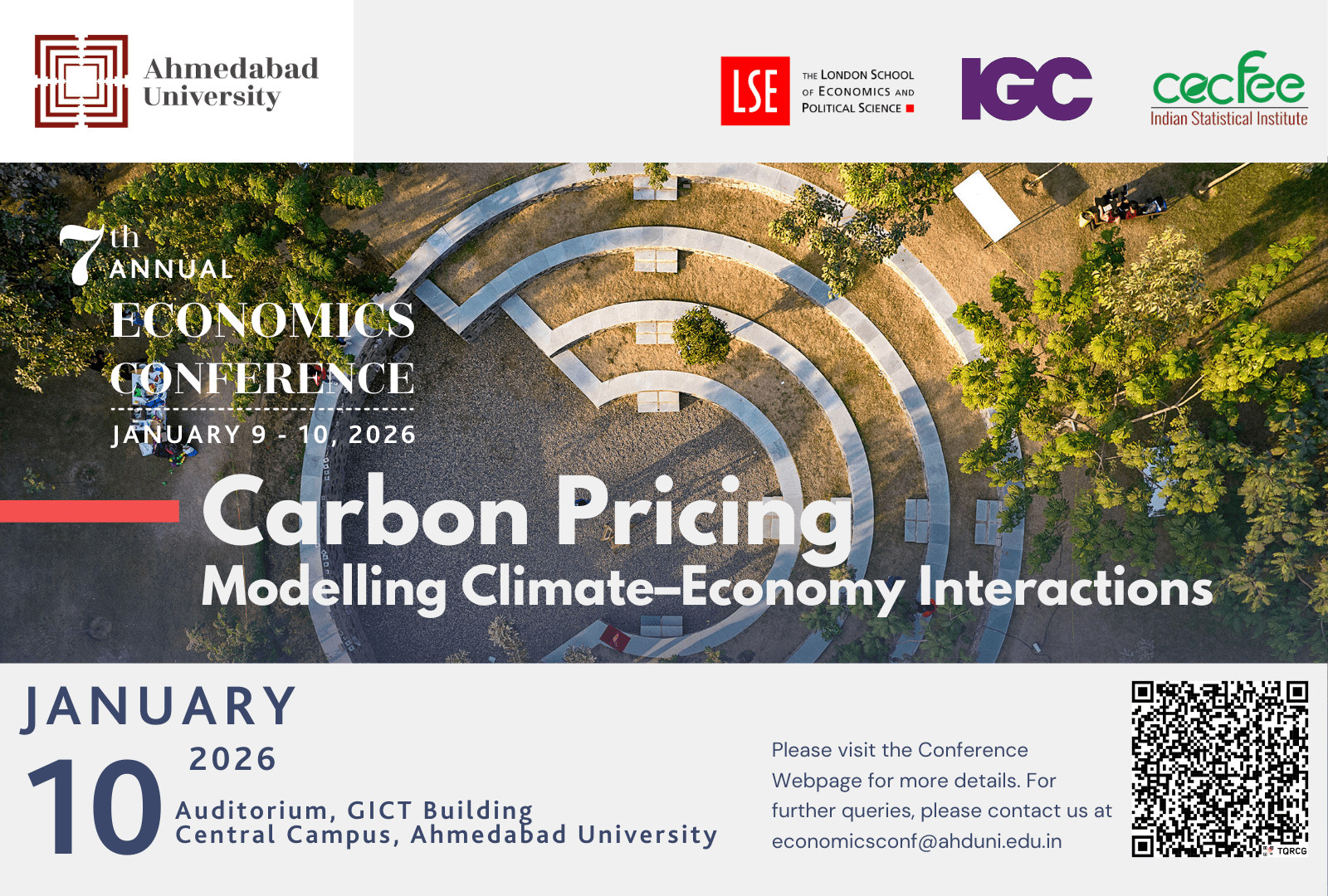
Carbon pricing is a policy mechanism that assigns a monetary value to greenhouse gas emissions, making the environmental costs of carbon pollution visible within economic decision-making. Instruments such as emissions trading systems and carbon border adjustment mechanisms (CBAMs) are increasingly shaping how countries manage competitiveness while pursuing decarbonisation. Together, they encourage firms and individuals to reduce their carbon footprint by improving efficiency and adopting cleaner technologies. As climate change intensifies and economies navigate the dual challenge of sustaining growth while reducing emissions, carbon pricing is gaining traction as a pragmatic, market-aligned solution. While CBAM-style measures aim to reduce carbon leakage and ensure that trade flows reflect comparable climate ambition, other measures support cost-efficient emissions reductions and stimulate technological innovation.
The conversation is particularly timely for India, as evolving international measures — such as the EU’s Carbon Border Adjustment Mechanism (CBAM) — may impact global competitiveness and raise concerns about fairness for lower-income trading partners. At the same time, India is operationalising the Indian Carbon Market (ICM), a national framework that will introduce market-based incentives for reducing emissions across sectors. Together, these global and domestic developments underscore the importance of evaluating how carbon pricing will shape industrial strategy, trade dynamics, and India’s low-carbon growth trajectory.
This session brings together leading experts to explore the latest evidence, methodological advances, and policy debates surrounding carbon pricing globally and in India. Featuring a keynote address followed by a panel discussion, the event aims to deepen academic, policy, and public understanding of how integrated carbon pricing approaches can support India’s trajectory toward a resilient, competitive, and low-carbon future.
About India Sustainable Growth Hub (ISGH)
The Centre for Research on the Economics of Climate, Food, Energy and Environment (CECFEE) at the Indian Statistical Institute (ISI), Delhi, and the International Growth Centre (IGC) at the London School of Economics and Political Science (LSE) co-established the India Sustainable Growth Hub (ISGH).
The ISGH gathers the latest economic research and analysis from leading academics and policymakers in India and around the globe to inform decision-making on sustainable growth in India. ISGH research focuses on policies for sustainable growth, specifically, new economic thinking on how to build a prosperous low-carbon economy in India. At its core, ISGH seeks to strengthen a domestic community of practice on low-carbon, inclusive development and to elevate the role of rigorous, policy-relevant research in shaping India’s climate and economic future.
About The Climate Institute
The Climate Institute at Ahmedabad University was established to shift the narrative around climate change in the Global South from vulnerability to agency and resilience. Bringing together interdisciplinary strengths from engineering, arts and sciences, public health, and innovation at Ahmedabad University, its work spans critical areas including air and water quality, climate–health linkages, urban climate resilience, and social behaviour, equity, and governance. These efforts are organised across three interconnected verticals: Energy and Climate Change, Cities and Settlements, and Air and Water. Rooted in education, research, and impact, the Institute aims to bridge knowledge, practice, and policy to create context-specific climate solutions.
Keynote Speakers

Panellists


Themes
We welcome both theoretical and empirical papers in all areas of economics, including but not limited to the following sub-themes:
- Economics of Digital Labour Platforms and Artificial Intelligence
- Environment, Sustainability and Climate Change
- Technological Advancement in Agriculture
- International Trade and Macroeconomic Challenges
- Urban Economy and Public Health
- Gender, Education, and Financial Inclusion
- Economics of Governance and Public Policy
- Economic Theory and Applications
Registration Fees
| Registered in India | Registered outside India | |
|---|---|---|
| PhD Scholar | INR 1200 + 18% GST | USD 75 + 18% GST |
| Other Participants | INR 3000 + 18% GST | USD 120 + 18% GST |
Submissions and online registrations are now closed. If you wish to attend but have not yet registered, please do so at the on-site registration desk during the event.
For Communication, please email to economicsconf@ahduni.edu.in
Important Dates
| Submission Starts | Friday, August 1, 2025 |
| Last Date of Submission | Friday, October 31, 2025 |
| Notification of Decisions | Monday, November 10, 2025 |
| Last Date of Registration | Sunday, November 30, 2025 |
Submissions and online registrations are now closed. If you wish to attend but have not yet registered, please do so at the on-site registration desk during the event.
Keynote Speakers


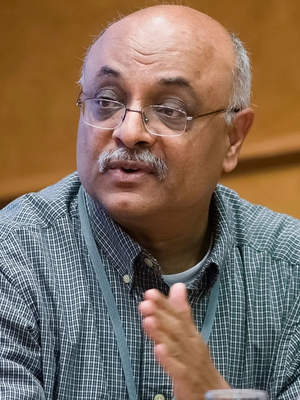
RAVI KANBUR
T. H. Lee Professor of World Affairs
International Professor of Applied Economics and Management
Professor of Economics
Cornell University

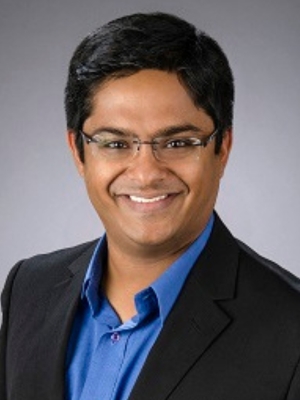
KARTHIK MURALIDHARAN
Tata Chancellor's Professor of Economics
University of California, San Diego, USA