17 February 2026
How is Additive Manufacturing Leading the Future of Space Exploration?
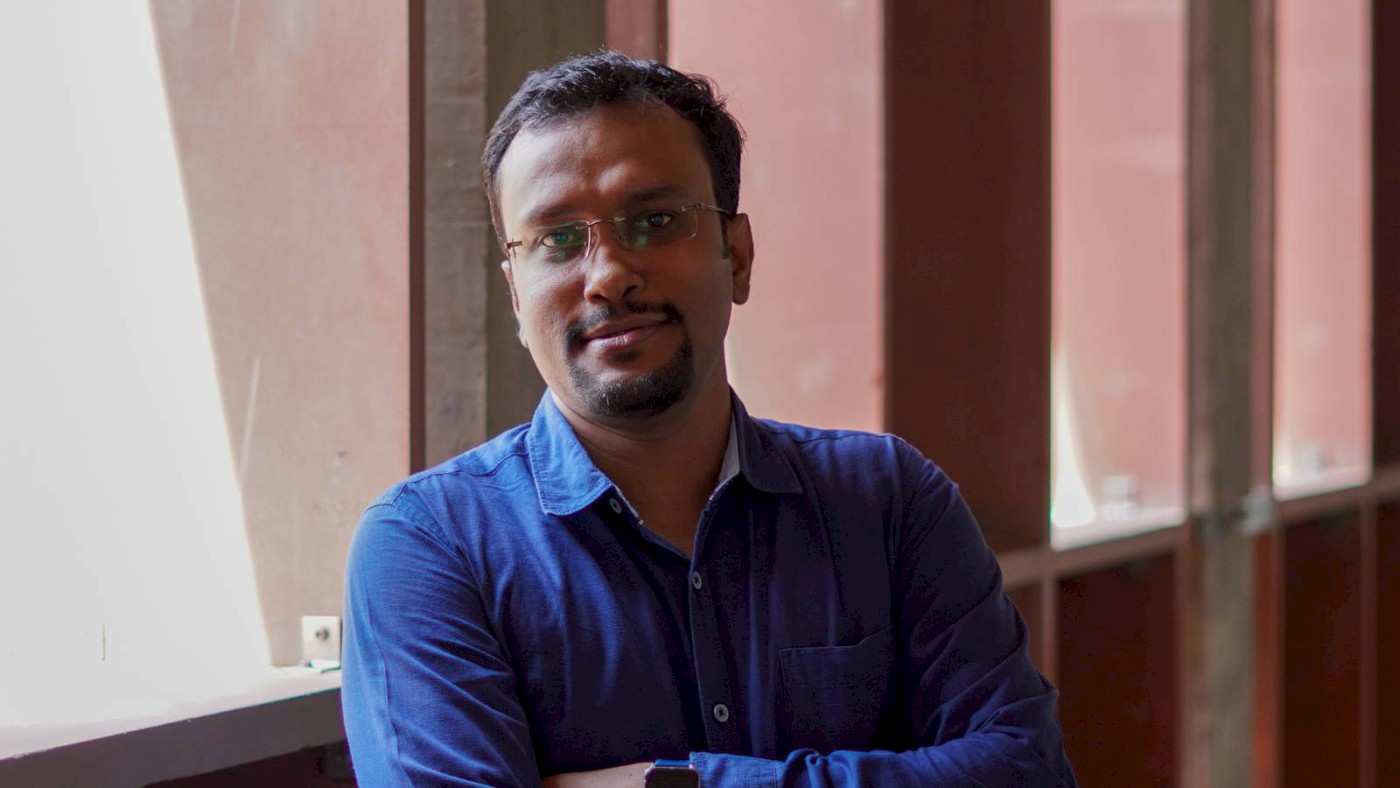
Aluminium alloys, lauded for their light weight and strength, offer immense value in the aerospace industry. However, the increasing complexity of modern satellites demands intricate geometries that traditional casting or forging techniques cannot achieve. By re-evaluating familiar materials under unfamiliar conditions, Professor Bimal Das from the School of Engineering and Applied Science has redefined how we utilise materials in space.
Professor Das's research challenges conventional understanding by revealing that additive manufacturing (3D-printed) aluminium alloys can grow stronger when exposed to harsh, space-like conditions, such as radiation and humidity. Additive manufacturing enables the creation of complex, single-piece components. By eliminating joints, bolts, and welds, this process removes potential points of failure and expands the boundaries of engineering design. This discovery shifts the narrative on material durability for the next generation of space exploration.
The study shows that when 3D-printed AlSi10Mg alloy is exposed to harsh, space-like environments, including radiation, humidity, vacuum, and thermal shock, it does not simply endure these conditions but becomes stronger. The study, conducted in collaboration with experts at ISRO's Space Applications Centre (SAC) and Pandit Deendayal Energy University, showed that samples exposed to radiation and humidity exhibited greater fatigue resistance than untreated samples.
At the microscopic level, this improvement came from three related changes. First, the aluminium grains within the metal became smaller and more tightly packed, creating more boundaries that slow down the initiation and spread of cracks. Second, environmental exposure increased the density of dislocations within the crystal structure, triggering work hardening that made the material more resistant to deformation at high-stress points. Finally, radiation and humidity helped stabilise the unique microstructure created by additive manufacturing, reducing internal stress concentrations and allowing stresses to be distributed more evenly during repeated loading.
In simple terms, controlled exposure to extreme conditions helped "toughen" the material from the inside. Instead of degrading performance, humidity and radiation improved the alloy's durability, making it better suited for long-term space applications.
The work illustrates how innovation can emerge not from entirely new materials, but from understanding how familiar ones respond when manufacturing methods and operating environments are reimagined through interdisciplinary collaboration and research that encourages careful, mechanism-driven inquiry.
Read more about the study titled "Fatigue Behavior of Additively Manufactured AlSi10Mg Alloy Under Extreme Environment for Space Applications," published in the Journal of Materials Engineering and Performance.