29 September 2026
Ahmedabad University Researchers Advance Accessible Assessment of Fetal Growth
Monitoring fetal progress serves as a crucial component of comprehensive prenatal health tracking. Ultrasound imaging provides clinicians with a way to assess fetal development and help identify patterns that may indicate growth abnormalities. However, in many low-resource settings, access to trained sonographers and conventional ultrasound analysis is limited. Even if a portable ultrasound is available, image quality, movement and differences in how scans are performed can make accurate assessment difficult.
The study by Vrushti Patel, under the supervision of Professor Jayendra Bhalodiya, explores how artificial intelligence could help address this challenge. What makes the work particularly relevant to resource-constrained settings is the type of ultrasound data used. The researchers worked with 300 cases from public health units in Sierra Leone, collected by novice users using blind-sweep ultrasound. The images include motion artefacts, speckle noise and irregular anatomical views, reflecting some of the conditions under which ultrasound may be performed outside specialist clinical settings.
Rather than requiring every scan to produce a perfectly positioned image, the researchers developed a deep-learning model that can operate on a short sequence of neighbouring ultrasound frames. The approach follows deep learning principles by developing a U-shaped encoder-decoder architecture that incorporates state-space model-inspired Mamba2D blocks to capture information across a larger image area while suppressing noisy or less useful features. The neighbouring frames are also combined to provide short-range context and reduce some of the effects of speckle noise and frame-to-frame variation.
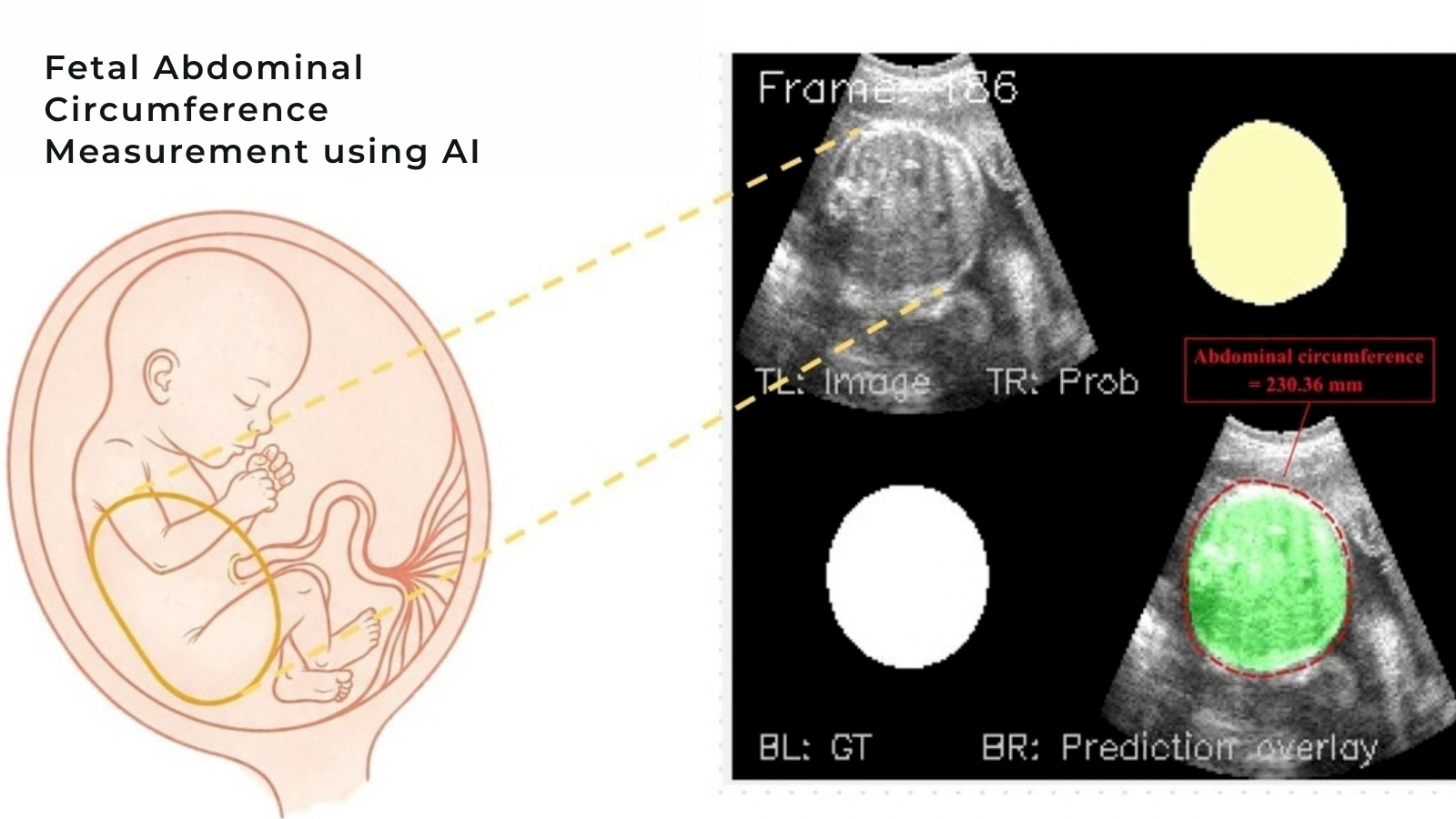
Carried out at the Stepwell High-Performance Computing (HPC) facility, the deep-learning system developed by the researchers can automatically identify the fetal abdomen and measure its circumference, commonly used as an indicator of fetal growth and nutritional status. Reducing the need for specialised operators could make prenatal screening more accessible, mainly in areas with limited medical resources.